Fuentes Carlos Скачать все книги 35 Количество книг




Жанр в блоке книги Современная Проза
El Domingo de Ramos de 1965 cuatro personajes inician un viaje hacia Veracruz y se detienen en Cholula, ciudad de las pirámides aztecas. En el laberinto de sus galerías se internarán las dos parejas, como en un descenso a los infiernos, que concluirá con una tragedia ritual inesperada. `Ficción total` en palabras del propio autor, `Cambio de piel` indaga en el mito del México prehispánico y en el holocausto europeo a través de la memoria de sus protagonistas para decirnos que, en definitiva, todas las violencias son la misma violencia. Un retrato del hombre de nuestro siglo, atormentado por las dudas sobre el presente, la carga del pasado y el miedo del porvenir.
Жанр в блоке книги Современная Проза
En este breve ensayo-reseña se pretenderá distinguir el leitmotiv dentro de su cuento Chac Mool: las reminiscencias prehispánicas y el pasado indígena, pulsiones constantes en el trabajo del escritor. Conscientes estamos que intentar aprehender las fuentes del discurso literario de Fuentes es una tarea titánica, ya que independientemente de la vastedad de su obra y de la densidad de sus historias, determinar las ideas o mociones de un autor tan prolífico es adentrarse dentro de un maremágnum que no admite clasificación. Por tal razón sólo me atreveré a esbozar ideas y sugerir motivos. Impulsos esenciales e innegables que nos permiten comprender el mundo representando y ficticio del autor.
Fuentes no olvida, o al menos pretende no hacerlo, construye amalgamas que nos intuyen y justifican. Pensemos en el difuminado y nebuloso personaje Ixca Cienfuegos de La región más transparente, o en el Cristóbal Nonato, o en el misticismo de Aura o en La muerte de Artemio Cruz. En todos lados el escritor recurre a su herencia, aunque francamente en algunas ocasiones sus radiografías sociales parezcan más una especie de turismo sociológico o análisis de vitrina (Agua Quemada, Los años con Laura Díaz, Cambio de piel y La misma Región…). Sin embargo, la calidad de sus obras como su alta cota literaria es indiscutible, considero que tanto Cantar de ciegos como Los días enmascarados son libros excelentes. Sobre este último, o mejor dicho, sobre el cuento del Chac Mool, versa este opúsculo.
Жанр в блоке книги Современная Проза
En 1994 presenta su novela Diana o la cazadora solitaria, obra de carácter autobiográfico en la que refle ja el México de la década de los sesenta
¿Qué pasiones o ideales mueven al ser humano y lo arrastran hasta su propia muerte?Ésta parece ser la pregunta que se hace Carlos Fuentes al reflexionar acerca de la vida y la muerte de la actriz Diana Soren: tan solitaria como bella, tan fuerte como vulnerable. Una mujer que encierra en su persona y en el apasionado episodio erótico que vive con un escritor mexicano los ideales de toda una generación, la de los años sesenta, cuando las ilusiones de una década se resistían a morir.
Жанр в блоке книги Современная Проза
A su vasta y primordial obra, Carlos Fuentes aporta ahora un nuevo y singular libro que se convertirá en un clásico en su género. Especie original de autobiografía literaria que, como en un diccionario de la vida, se construye con cuarenta y una voces, de la A a la Z, que van de Amistad a Zurich, pasando por Balzac, Buñuel, Cine, Familia, Faulkner, Hijos, Izquierda, Jesús, Muerte, Novela, Política, Quijote, Revolución, Sexo, Velázquez, Wittgenstein, Yo…
Acto de fe en los valores humanos, bitácora de vuelo de las grandes ideas, diario de navegación de las experiencias fundamentales, en estas páginas se recorta el perfil de un escritor contemporáneo excepcional, que desde el dominio inigualable de nuestra lengua ha ingresado en la literatura universal de todos los tiempos.
De modo paralelo a sus amplias y varias creaciones narrativas, que llevan implícitas en sí mismas una dimensión ensayística, Carlos Fuentes ha ido construyendo una extensa y fundacional obra de ensayista puro, a la vez recapitulador de su experiencia y reinterpretador del mundo circundante, en la tradición que inauguró Montaigne. En esto creo supone el compendio de una trayectoria de escritor reflexivo, y la respuesta de un teórico lúcido y combativo a las acuciantes interrogaciones de la vida contemporánea.
Жанр в блоке книги Современная Проза
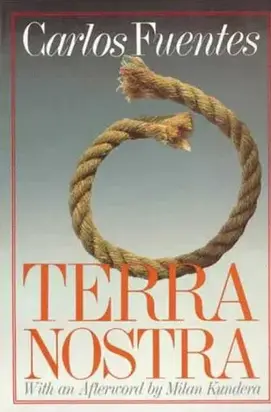
One of the great masterpieces of modern Latin American fiction, "Terra Nostra" is concerned with nothing less than the history of Spain and of South America, with the Indian Gods and with Christianity, with the birth, the passion, and the death of civilizations. Fuentes skillfully blends a wide range of literary forms, stories within stories, Mexican and Spanish myth, and famous literary characters in this novel that is both a historical epic and an apocalyptic vision of modern times. "Terra Nostra" is that most ambitious and rare of creations-a total work of art.
Жанр в блоке книги Публицистика
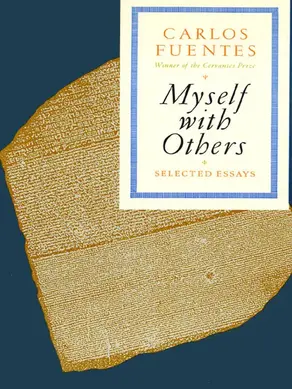
In , Fuentes has assembled essays reflecting three of the great elements of his work: autobiography, love of literature, and politics. They include his reflections on his beginning as a writer, his celebrated Harvard University commencement address, and his trenchant examinations of Cervantes, Gabriel Garcia Marquez, and Borges.
Жанр в блоке книги Современная Проза
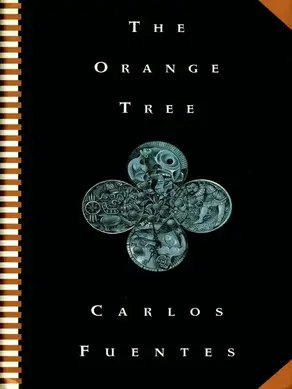
In the five novellas that comprise The Orange Tree, Carlos Fuentes continues the passionate and imaginative reconstruction of past and present history that has distinguished Terra Nostra and The Campaign. From the story of Columbus's arrival in the Caribbean, to the fate of Hernan Cortes's two sons, to the destruction of the Spanish city of Numantia by the Romans and the annihilation of Hollywood by Acapulco, Fuentes couples the epic grandeur of the spiritual and the historical with the many pleasures of the flesh. "In The Orange Tree," he remarks, "I gather together not only all my most immediate sensual pleasures — I see, touch, peel, bite, swallow — but also the most primordial sensations: my mother, wet nurses, breasts, the sphere, the world, the egg." The result is a sensitive exploration of cultural conflict that is also a feast for the senses.

Жанр в блоке книги Современная Проза
Where, Carlos Fuentes asks, is a modern-day vampire to roost? Why not Mexico City, populated by ten million blood sausages (that is, people), and a police force who won't mind a few disappearances? "Vlad" is Vlad the Impaler, of course, whose mythic cruelty was an inspiration for Bram Stoker's Dracula. In this sly sequel, Vlad really is undead: dispossessed after centuries of mayhem by Eastern European wars and rampant blood shortages. More than a postmodern riff on "the vampire craze," Vlad is also an anatomy of the Mexican bourgeoisie, as well as our culture's ways of dealing with death. For-as in Dracula-Vlad has need of both a lawyer and a real-estate agent in order to establish his new kingdom, and Yves Navarro and his wife Asunci n fit the bill nicely. Having recently lost a son, might they not welcome the chance to see their remaining child live forever? More importantly, are the pleasures of middle-class life enough to keep one from joining the legions of the damned?

Жанр в блоке книги Современная Проза
This inspired novel is narrated by the as yet unborn first child to be born on October 12, 1992, the five hundredth anniversary of Columbus's discovery of America; his conception and birth bracket the novel. A playfully savage masterpiece.
Жанр в блоке книги Современная Проза
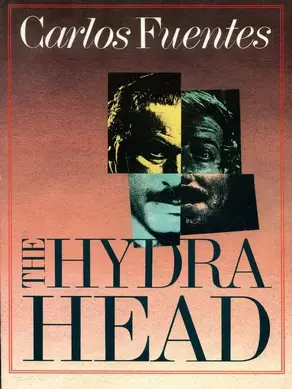
First published in 1978, this novel of international intrigue by Carlos Fuentes is set in Mexico, and features the Mexican secret service. It is the story of the attempt by the Mexican government to retain control of a recently discovered national oil field. Secret agents from Arab lands, Israel, and the United States attempt to wrest control of the source for their own purposes. In a plot thick with dirty tricks, violence, sex, amazing coincidences, and betrayals, the novel's movie-loving hero, Felix Maldonado, confronts the villains.

Жанр в блоке книги Современная Проза
During a long, lingering lunch at the Automobile Club de France, the elderly Comte de Branly tells a story to a friend, unnamed until the closing pages, who is in fact the first-person narrator of the novel. Branly's story is of a family named Heredia: Hugo, a noted Mexican archaeologist, and his young son, Victor, whom Branly met in Cuernavaca and who became his house guest in Paris. There they are gradually drawn into a mysterious connection with the French Victor Heredia and his son, known as Andre. There is a hard-edged emphasis on the theme of relations between the Old World and the New, as Branly's twilit, Proustian existence is invaded and overcome by the hot, chaotic, and baroque proliferation of the Caribbean jungle.
Жанр в блоке книги Современная Проза
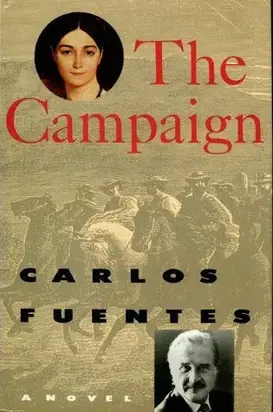
In this witty and enthralling saga of revolutionary South America, Carlos Fuentes explores the period of profound upheaval he calls" the romantic time." His hero, Baltasar Bustos, the son of a wealthy landowner, kidnaps the baby of a prominent judge, replacing it with the black baby of a prostitute. When he catches sight of the baby's mother, though, he falls instatnly in love with her and sets off on an anguished journey to repent his act and win her love.
Жанр в блоке книги Современная Проза
Four people, each in search of some real value in life, drive from Mexico City to Veracruz for Semana Santa — Holy Week.
Жанр в блоке книги Современная Проза
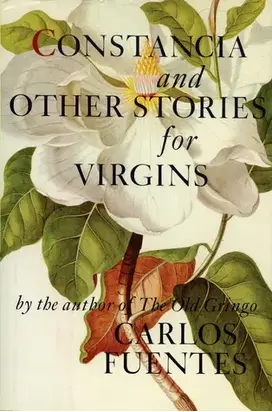
Renowned as a novelist of unsurpassed invention, Carlos Fuentes here presents his second collection of stories to appear in English. Where his first, , published in 1980, had as its underlying theme Mexico City itself, extends its imaginative boundaries out to Savannah, to Cadiz, to Glasgow, to Seville and Madrid, both past and present. This new collection is more mysterious, more magical, too, than its predecessor, and in its five related stories Fuentes comes closer to the registers of language and feeling that he explored so memorably in . It reveals Fuentes at the height of his powers-bold, erudite, enthralling.
In the title story, a man discovers his wife's secret complicity with the Russian actor who is their neighbor-a complicity that includes not just a previous life but possibly a previous death as well. He finds himself "a mediator. . a point between one sorrow and the next, between one hope and the next, between two languages, two memories, two ages, and two deaths." In "La Desdichada," two students steal-and fall in love with-a store-window mannequin. In "The Prisoner of Las Lomas," a wealthy lawyer in possession of a powerful secret is held hostage by the past he has attempted to subvert and keep at bay. The celebrated bullfighter whose fame is the theme of "" steps from the present into a past immortalized by Goya's portrait of the matador Pedro Romero; and the architects who are the "Reasonable People" of that story find themselves drawn into the irrational mysteries not only of religious fervor but of their famous mentor's identity-they discover "there are no empty houses," only a present fraught with the past.
Though each of these novella-length stories offers compelling evidence of Fuentes's talent for narrative free rein as well as for containment and closure, they are also brilliantly interwoven. Readers of his earlier work, especially of his acclaimed ribald epic, , will recognize with pleasure Fuentes's undiminished mastery of recurrent images and themes, and all readers will delight in the witty and evocative changes he rings on them. For those few readers who do not yet know the work of Mexico's foremost man of letters, these stories offer them the full gift of his imaginative resourcefulness.

Жанр в блоке книги Современная Проза
A collection of four short stories: "El Dia de las Madres", "Estos Fueron losPalacios", "Las Mananitas", and "El Hijo de Andres Aparicio".

Жанр в блоке книги Публицистика
In this masterly, deeply personal, and provocative book, the internationally renowned Mexican writer Carlos Fuentes, whose work has been called “a combination of Poe, Baudelaire, and Isak Dinesen” (), steps back to survey the wellsprings of art and ideology, the events that have shaped our time, and his extraordinary life and fiercest passions.
Arranged alphabetically from “Amore” to “Zurich,” takes us on a marvelous inner journey with a great writer. Fuentes ranges wide, from contradictions inherent in Latin American culture and politics to his long friendship with director Luis Buñuel.
Along the way, we find reflection on the mixed curse and blessing of globalization; memories of a sexual initiation in Zurich; a fond tracing of a family tree heavy with poets, dreamers, and diplomats; evocations of the streets, cafés, and bedrooms of Washington, Paris, Santiago de Chile, Cambridge, Oaxaca, and New York; and a celebration of literary heroes including Balzac, Cervantes, Faulkner, Kafka, and Shakespeare. Throughout, Fuentes captivates with the power of his intellect and his prose.
Here, too, are vivid, often heartbreaking glimpses into his personal life. “Silvia” is a powerful love letter to his beloved wife. In “Children,” Fuentes recalls the births of his daughters and the tragic death of his son; in “Cinema” he relives the magic of films such as and . Further extending his reach, he examines the collision between history and contemporary life in “Civil Society,” “Left,” and “Revolution.”
And he poignantly addresses the experiences we all hold in common as he grapples with beauty, death, freedom, God, and sex. By turns provocative and intimate, partisan and universal, this book is a brilliant summation of an international literary career. Revisiting the influences, commitments, readings, and insights of a lifetime, Fuentes has fashioned a magnificently coherent statement of his view of the world, reminding us once again why reading Fuentes is “like standing beneath the dome of the Sistine Chapel. . The breadth and enormity of this accomplishment is breathtaking” ().

Жанр в блоке книги Современная Проза
In this comic novel of political intrigue, Adam Gorozpe, a respected businessman in Mexico, has a life so perfect that he might as well be his namesake in the Garden. But there are snakes in this Garden too, and in order to save his relationship, his marriage, his life, and the soul of his country, he may have to call upon the wrath of the angels to expel all these serpents from his Mexican Eden.
In this comic novel of political intrigue, Adam Gorozpe, a respected businessman in Mexico, has a life so perfect that he might as well be his namesake in the Garden of Eden — but there are snakes in this Eden too. For one thing, Adam’s wife Priscila has fallen in love with the brash director of national security — also named Adam — who uses violence against token victims to hide the fact that he’s letting drug runners, murderers, and kidnappers go free. Another unlikely snake is the little Boy-God who’s started preaching in the street wearing a white tunic and stick-on wings, inspiring Adam’s brother-in-law to give up his job writing soap operas to follow this junior deity and implore Adam to do the same. Even Elle, Adam’s mistress, thinks the boy is important to their salvation — especially now that it seems the other Adam has put out a contract on Adam Gorozpe. To save his relationship, his marriage, his life, and the soul of his country, perhaps Adam will indeed have to call upon the wrath of the angels to expel all these snakes from his Mexican Eden.

Жанр в блоке книги Современная Проза
The nine stories comprising this brilliant new work of fiction from Carlos Fuentes all concern people who in one way or another have had something to do with, or still are part of, the family of one Leonardo Barroso, a powerful oligarch of northern Mexico with manifold connections to the United States. Each story concerns an encounter — sometimes hilarious, often tragic, frequently ambivalent, inevitably poignant — that in its own dramatic way epitomizes some striking contrast along the invisible, reflective, dangerous frontier that divides the North American world.Yet beyond the emblematic power of Fuentes's fiction to make us think about the political and cultural themes defining that world, there is the sheer human diversity of life on the "crystal frontier": these extraordinary stories pulse with vivid experience — of love in its many guises, of loneliness, of youth and old age, of heartbreak and redemption. Like many of the greatest Spanish-language novels, this exuberant fiction contains and alludes to journalism, politics, economics, famous tall tales, and picaresque adventures, all united by the "vitality, variety, and narrative force that Fuentes always gives his work" (La Jornada).

Жанр в блоке книги Современная Проза
An exploration of love, lust and betrayal. The central character is Diana Soren, an elegy for a decade that refused to die. She is a predator set on self-destruction, and a casualty of her own times and beauty. Carlos Fuentes is the author of "Terra Nostra" and "Old Gringo".

Жанр в блоке книги Современная Проза
The internationally acclaimed author Carlos Fuentes, winner of the Cervantes Prize and the Latin Civilization Award, delivers a stunning work of fiction about family and love across an expanse of Mexican life, reminding us why he has been called “a combination of Poe, Baudelaire, and Isak Dinesen” ().
In these masterly vignettes, Fuentes explores Tolstoy’s classic observation that “happy families are all alike; every unhappy family is unhappy in its own way.” In “A Family Like Any Other,” each member of the Pagan family lives in isolation, despite sharing a tiny house. In “The Mariachi’s Mother,” the limitless devotion of a woman is revealed as she secretly tends to her estranged son’s wounds. “Sweethearts” reunites old lovers unexpectedly and opens up the possibilities for other lives and other loves. These are just a few of the remarkable stories in , but they all inhabit Fuentes’s trademark Mexico, where modern obsessions bump up against those of the mythic past, and the result is a triumphant display of the many ways we reach out to one another and find salvation through irrepressible acts of love.
In this spectacular translation, the acclaimed Edith Grossman captures the full weight of Fuentes’s range. Whether writing in the language of the street or in straightforward, elegant prose, Fuentes gives us stories connected by love, including the failure of love — between spouses, lovers, parents and children, siblings. From the Mexican presidential palace to the novels of the poor and the vast expanse of humanity in between, is a magnificent portrait of modern life in all its complicated beauty, as told by one of the world’s most celebrated writers.
Жанр в блоке книги Современная Проза
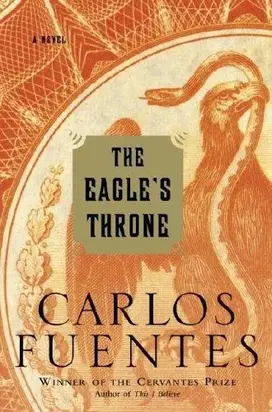
Here is a true literary event — the long-awaited new novel by Carlos Fuentes, one of the world’s great writers. By turns a tragedy and a farce, an acidic black comedy and an indictment of modern politics, The Eagle’s Throne is a seriously entertaining and perceptive story of international intrigue, sexual deception, naked ambition, and treacherous betrayal.
In the near future, at a meeting of the United Nations Security Council, Mexico’s idealistic president has dared to vote against the U.S. occupation of Colombia and Washington’s refusal to pay OPEC prices for oil. Retaliation is swift. Concocting a “glitch” in a Florida satellite, America’s president cuts Mexico’s communications systems — no phones, faxes, or e-mails — and plunges the country into an administrative nightmare of colossal proportions.
Now, despite the motto that “a Mexican politician never puts anything in writing,” people have no choice but to communicate through letters, which Fuentes crafts with a keen understanding of man’s motives and desires. As the blizzard of activity grows more and more complex, political adversaries come out to prey. The ineffectual president, his scheming cabinet secretary, a thuggish and ruthless police chief, and an unscrupulous, sensual kingmaker are just a few of the fascinating characters maneuvering and jockeying for position to achieve the power they all so desperately crave.
Жанр в блоке книги Современная Проза
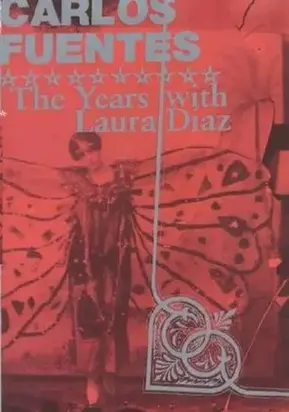
A radiant family saga set in a century of Mexican history, by one of the world's greatest writers.Carlos Fuentes's hope-filled new novel sees the twentieth century through the eyes of Laura D'az, a woman who becomes as much a part of our history as of the Mexican history she observes and helps to create. Born in 1898, this extraordinary woman grows into a wife and mother, becomes the lover of great men, and, before her death in 1972, is celebrated as a politically committed artist. A complicated and alluring heroine, she lives a happy life despite the tragedies and losses she experiences, for she has borne witness to great changes in her country's life, and she has loved and understood with unflinching honesty.In his most important novel in decades, Carlos Fuentes has created a world filled with brilliantly colored scenes and heartbreaking dramas. The result is a novel of subtle, penetrating insight and immense power.

Жанр в блоке книги Современная Проза
The Years with Laura Diaz is Carlos Fuentes's most important novel in several decades. Like his masterpiece The Death of Artemio Cruz, the action begins in the state of Veracruz and moves to Mexico City — tracing a migration during the Revolution and its aftermath that was a feature of Mexico's demographic history and is a significant element in Fuentes's fictional world.Now the principal figure is not Artemio Cruz (who, however, makes a brief appearance) but Fuentes's first major female protagonist, the extraordinary Laura Diaz. Fuentes's richly woven narrative tapestry of her life from 1905 to 1978 — filled with a multitude of witty, heartbreaking scenes and the sounds and colors, tastes and scents of Mexico — shows us this wonderful woman as she grows into a politically committed artist who is also a wife and mother, a lover of great men, and a complicated and alluring heroine whose brave honesty prevails despite her losing a brother, son, and grandson to the darkest forces of Mexico's turbulent, often corrupt politics. In the end, Laura Diaz herself dies, after a life filled with tragedy and loss, but she is a happy woman, for she has borne witness to and helped to affect the course of history, and has loved and understood with unflinching honesty.

Жанр в блоке книги Триллер
Carlos Fuentes w tej niedużej, ale fascynującej bogactwem nastrojów i przemyśleń opowieści, mówi, że "wszystko, co ukryte, czeka po prostu na nasze uważne spojrzenie". Pozornie banalny romans, stanowiący główny wątek powieści, eksploduje dramatyzmem, skłaniając czytelnika do zastanowienia się nad zagadką mijającego czasu i odradzającej się w kolejnych wcieleniach miłości.
Zagłębiając się w "podwójny", stworzony przez Fuentesa świat, znajdujemy odpowiedź na pytania, które przed nami stawia. Ale może nie będzie to odpowiedź jednoznaczna, lecz inna dla każdego z nas?
Powieść zaczyna się jakby od środka – głównego bohatera poznajemy jako 93-letniego starca (niegdyś cenionego dyrygenta), wpatrującego się w pewien przedmiot, stanowiący ważny rekwizyt w całej książce. Jest to kryształowa pieczęć (autor opisuje ją dokładnie), będąca czymś w rodzaju amuletu czy symbolu doskonałości (jest okrągła i gładka). Stary dyrygent nie potrafi się bez niej obejść, chociaż z całą pewnością nie służy ona do pieczętowania czegokolwiek. Motyw pieczęci przewija się przez całą książkę. Główny wątek fabularny powieści to historia niespełnionej miłości dyrygenta i utalentowanej śpiewaczki o imieniu Inez. Historię tę poznajemy poprzez retrospekcję. Oto lata II wojny światowej, Anglia, bombardowany Londyn. Dyrygent (wówczas młody, ale już sławny) wywozi piękną Inez do nadmorskiej miejscowości, gdzie jednak miłosna przygoda nie znajdzie spełnienia, natomiast czytelnik dowiaduje się o istnieniu tajemniczej "trzeciej osoby". Jednocześnie z tym wątkiem pojawia się drugi: opowieść o związku dwojga ludzi z prehistorycznej przeszłości – będzie się ona przeplatać z historią dwojga poznanych już bohaterów. Dyrygent i śpiewaczka, po latach sukcesów artystycznych, spotykają się tylko raz, w 19 lat po pamiętnym (i na dobrą sprawę, niezrozumiałym) rozstaniu. Po wspólnym występie – jest to "Potępienie Fausta" Berlioza widzą się już tylko po to, aby się pożegnać i stwierdzić, że nie byli sobie przeznaczeni. Książka Fuentesa zadziwia nieoczekiwanymi chwytami, nagłą zmianą stylistyki i nastrojów. Wielki urok ma też subtelna analiza wątków miłosnych. Ważne miejsce w powieści zajmuje muzyka. W tle wciąż obecny jest motyw ze wspomnianego utworu Berlioza, analizowanego w ciekawy sposób. Na końcowych stronach książki żegnamy się ze starym dyrygentem, który, wiedząc, że niedługo umrze, wraca myślą do Inez i… kryształowej pieczęci.