

la Guardia Miguel de Скачать все книги 2 Количество книг



Жанр в блоке книги Мукомольное Производство
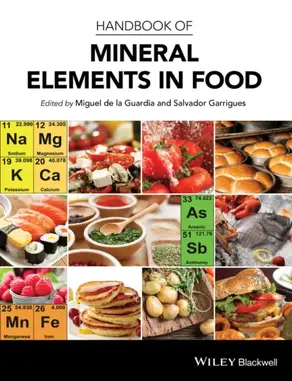
Mineral elements are found in foods and drink of all different types, from drinking water through to mothers’ milk. The search for mineral elements has shown that many trace and ultratrace-level elements presented in food are required for a healthy life. By identifying and analysing these elements, it is possible to evaluate them for their specific health-giving properties, and conversely, to isolate their less desirable properties with a view to reducing or removing them altogether from some foods. The analysis of mineral elements requires a number of different techniques – some methods may be suitable for one food type yet completely unsuited to another. The Handbook of Mineral Elements in Food is the first book to bring together the analytical techniques, the regulatory and legislative framework, and the widest possible range of food types into one comprehensive handbook for food scientists and technologists. Much of the book is based on the authors’ own data, most of which is previously unpublished, making the Handbook of Mineral Elements in Food a vital and up-to-the-minute reference for food scientists in industry and academia alike. Analytical chemists, nutritionists and food policy makers will also find it an invaluable resource. Showcasing contributions from international researchers, and constituting a major resource for our future understanding of the topic, the Handbook of Mineral Elements in Food is an essential reference and should be found wherever food science and technology are researched and taught.
Жанр в блоке книги Зарубежная Образовательная Литература
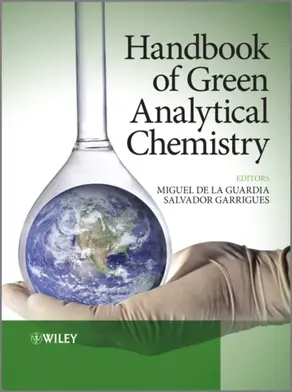
The emerging field of green analytical chemistry is concerned with the development of analytical procedures that minimize consumption of hazardous reagents and solvents, and maximize safety for operators and the environment. In recent years there have been significant developments in methodological and technological tools to prevent and reduce the deleterious effects of analytical activities; key strategies include recycling, replacement, reduction and detoxification of reagents and solvents. The Handbook of Green Analytical Chemistry provides a comprehensive overview of the present state and recent developments in green chemical analysis. A series of detailed chapters, written by international specialists in the field, discuss the fundamental principles of green analytical chemistry and present a catalogue of tools for developing environmentally friendly analytical techniques. Topics covered include: Concepts: Fundamental principles, education, laboratory experiments and publication in green analytical chemistry. The Analytical Process: Green sampling techniques and sample preparation, direct analysis of samples, green methods for capillary electrophoresis, chromatography, atomic spectroscopy, solid phase molecular spectroscopy, derivative molecular spectroscopy and electroanalytical methods. Strategies: Energy saving, automation, miniaturization and photocatalytic treatment of laboratory wastes. Fields of Application: Green bioanalytical chemistry, biodiagnostics, environmental analysis and industrial analysis. This advanced handbook is a practical resource for experienced analytical chemists who are interested in implementing green approaches in their work.

10 Количество книг
2 Количество книг
1 Количество книг
