

S. Gary Lynch Скачать все книги 3 Количество книг



Жанр в блоке книги Техническая Литература
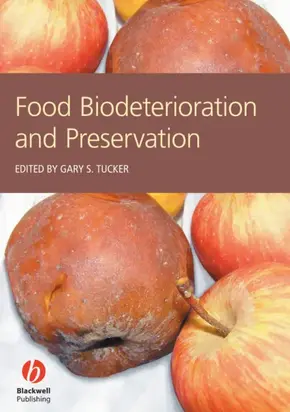
Biodeterioration can be defined as the breakdown of food by agents of microbiological origin, either directly or from products of their metabolism. Microbiological sources can be present in foods prior to packaging or on the surfaces of packaging materials. The shelf life and safety of the food will depend on the type and quantity of microorganism, as well as the hurdles to their growth offered by various preservation techniques. This book discusses how the agents of food biodeterioration operate, and examines the commercially-used industrial methods available to control them, allowing the production of safe and wholesome foods. There is an emphasis on the equipment employed to carry out the various methods of preservation. The introductory chapter describes in detail the microorganisms and mechanisms of food breakdown intrinsic to various key food types; dairy, meat and fish, fruit, and vegetables. Direct microorganism action will be covered in addition to enzymatic breakdown. The second chapter addresses HACCP, including food safety legislation. Subsequent chapters outline the principal, commercially-used methods of preserving foods. These chapters follow a common structure: theoretical background; flow sheets of operations; food preparation/processing equipment; special features of hygiene; packaging; shelf life; and product safety. Food Biodeterioration and Preservation is directed at food scientists and technologists in industry and academia. Since it covers all the commonly-used methods of food preservation, it will be relevant across the entire food manufacturing industry.
Жанр в блоке книги Мукомольное Производство
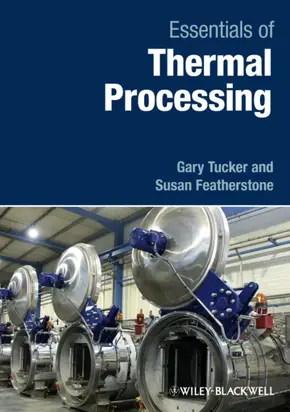
Thermal processing remains the most important method of food preservation in use today, and the scale of the industry is immense. The large scale of these production operations makes it more important than ever that the process is performed perfectly every time: failure will lead to product deterioration and loss of sales at best, and at worst to serious illness or death. This volume is a definitive modern-day reference for all those involved in thermal processing. It covers all of the essential information regarding the preservation of food products by heat. It includes all types of food product, from those high in acid and given a mild heat process to the low-acid sterilised foods that require a full botulinum cook. Different chapters deal with the manufacturing steps from raw material microbiology, through various processing regimes, validation methods, packaging, incubation testing and spoilage incidents. The authors have extensive knowledge of heat preservation covering all parts of the world and represent organisations with formidable reputations in this field. This book is an essential resource for all scientists and technologists in the food manufacturing industry as well as researchers and students of food science and technology.
Жанр в блоке книги Зарубежная Деловая Литература
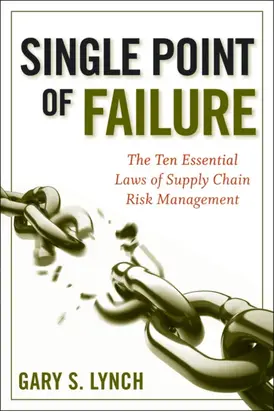
Over the past decade organizations have faced relentless customer demand for better value at less cost, individual customization, greater choice, faster delivery, higher quality, exceptional service, and more recently – increased environmental and social consciousness. The organization’s weapon of choice to address this increasing demand has been the supply chain. However, as the supply chain footprint changed (e.g. outsourcing, off-shoring and customer/vendor empowerment) so did the organization’s exposure to uncertainty. Organizations were taken by surprise since this exposure was unanticipated, complex and beyond their ability to manage. As customers become more demanding and change occurs at an even greater pace, supply chain risk continues to propagate like a parasite. Organizations and societies are at much greater risk of systemic failure because of the massive interdependency throughout global supply chains. The priority now is two-fold; play catch-up and address these massive gaps while deploying more intelligent and integrated strategies (i.e. social aware, instinctive, dynamic and predictive) for dealing with continuous change. Single Point of Failure: The 10 Essential Laws of Supply Chain Risk Management uses analogies and dozens of case histories to describe the risk parasite that infects all supply chains while revealing methods to neutralize that parasite. The book addresses the questions: What are the «single points of failure»? How exposed are customers, investors, other stakeholders and ultimately the organization? What is the measurable impact (i.e. brand, financial, strategic, and non-compliance)? Who establishes the «risk paradigm»? How does the organization efficiently and effectively allocate precious resources – time, people, management attention, and capital? How is success measured? This book is both technically powerful and effectively realistic, based on today's complex global economy.

6 Количество книг
2 Количество книг
2 Количество книг
