

Shahidi Fereidoon Скачать все книги 2 Количество книг



Жанр в блоке книги Техническая Литература
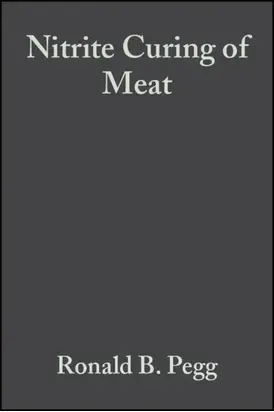
Meat has been treated for centuries with rock salt as a means of preservation. However, only one century has passed since the German researchers, Polenske in 1891, Kisshalt in 1899, and Lehmann in 1899, discovered that the active component in the curing process was nitrite. Soon after the role of nitrite as a meat curing agent was revealed, government regulators placed guidelines on the level of nitrite and nitrate permitted for use in cured meat formulations. In the late 1960s and early 1970s, the development of the so-called «nitrite problem» surfaced because of the detection of N-nitrosamines in processed meats. The industry was in an uproar and the issue was of paramount interest to scientists and the public. A major technical advance in the analytical technique for N-nitrosamine detection was achieved when Thermo Electron of Waltham, Massachusetts introduced the thermal energy analyzer (TEA). This unit allowed the screening of a large number of samples for nitrosamine with only a minimum preparation. The role of nitrite in revealing the desired and unique flavor of cured products, perhaps by suppressing the formation of lipid oxidation products was another development in revealing other properties of nitrite. Above all, the antimicrobial role of nitrite, together with salt, had a major influence on the popularity of nitrite/nitrate in food preservation. This book provides a review of the desirable attributes which sodium nitrite confers to meat during processing, as well as drawbacks of nitrite usage, i.e., the presence of N-nitrosoamines. In addition, solutions for the curing of meat without the use of nitrite are presented. An examination of a multicomponent nitrite-free curing system entailing the color, flavor, and microbial protection of such a system is given.
Жанр в блоке книги Мукомольное Производство
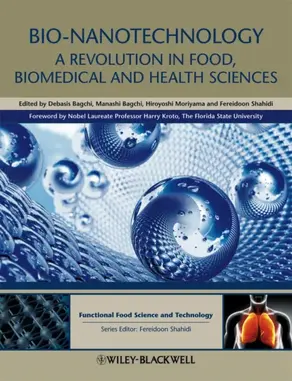
Bio-nanotechnology is the key functional technology of the 21st century. It is a fusion of biology and nanotechnology based on the principles and chemical pathways of living organisms, and refers to the functional applications of biomolecules in nanotechnology. It encompasses the study, creation, and illumination of the connections between structural molecular biology, nutrition and nanotechnology, since the development of techniques of nanotechnology might be guided by studying the structure and function of the natural nano-molecules found in living cells. Biology offers a window into the most sophisticated collection of functional nanostructures that exists. This book is a comprehensive review of the state of the art in bio-nanotechnology with an emphasis on the diverse applications in food and nutrition sciences, biomedicine, agriculture and other fields. It describes in detail the currently available methods and contains numerous references to the primary literature, making this the perfect “field guide” for scientists who want to explore the fascinating world of bio-nanotechnology. Safety issues regarding these new technologies are examined in detail. The book is divided into nine sections – an introductory section, plus: Nanotechnology in nutrition and medicine Nanotechnology, health and food technology applications Nanotechnology and other versatile applications Nanomaterial manufacturing Applications of microscopy and magnetic resonance in nanotechnology Applications in enhancing bioavailability and controlling pathogens Safety, toxicology and regulatory aspects Future directions of bio-nanotechnology The book will be of interest to a diverse range of readers in industry, research and academia, including biologists, biochemists, food scientists, nutritionists and health professionals.

10 Количество книг
2 Количество книг
1 Количество книг
