

Bauman Zygmunt Скачать все книги 37 Количество книг



Жанр в блоке книги Социология
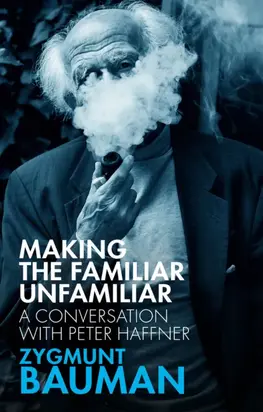
Shortly before his death, Zygmunt Bauman spent several days in conversation with the Swiss journalist Peter Haffner. Out of these conversations emerged this book in which Bauman shows himself to be the pre-eminent social thinker for which he became world renowned, a thinker who never shied away from addressing the great issues of our time and always strove to interrogate received wisdom and common sense, to make the familiar unfamiliar. <br /><br />As in Bauman’s work more generally, the personal and the political are interwoven in this book. Bauman’s life, which followed the same trajectory as the social and political upheavals of the 20th century, left its trace on his thought. Bauman describes his upbringing in Poland, military service in the Red Army, working for the Polish Secret Service after the war and expulsion from Poland in 1968, providing personal accounts of the historical events on which he brings his social and political insights to bear. His reflections on history, identity, Jewishness, morality, happiness and love are rooted in his own personal journey through the turbulent events of the 20th century to which he bore witness. <br /><br />These last conversations shed new light on one of the greatest social thinkers of our time, offering a more personal perspective on a man who changed our way of thinking about the modern world.

Жанр в блоке книги Социология
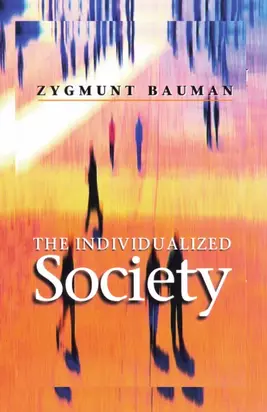
We are spurred into action by our troubles and fears; but all too often our action fails to address the true causes of our worries. When trying to make sense of our lives, we tend to blame our own failings and weaknesses for our discomforts and defeats. And in doing so, we make things worse rather than better. Reasonable beings that we are, how does this happen and why does it go on happening? These are the questions addressed in this new book by Zygmunt Bauman – one of the most original and perceptive social thinkers writing today. For Bauman, the task of sociology is not to censor or correct the stories we tell of our lives, but to show that there are more ways in which our life stories can be told. By bringing into view the many complex dependencies invisible from the vantage point of private experience, sociology can help us to link our individual decisions and actions to the deeper causes of our troubles and fears – to the ways we live, to the conditions under which we act, to the socially drawn limits of our imagination and ambition. Sociology can help us to understand the processes that have shaped the society in which we live today, a society in which individualization has become our fate. And sociology can also help us to see that if our individual but shared anxieties are to be effectively tackled, they need to be addressed collectively, true to their social, not individual, nature. The Individualized Society will be of great interest to students of sociology, politics and the social sciences and humanities generally. It will also appeal to a broader range of readers who are interested in the changing nature of our social and political life today.

Жанр в блоке книги Детская Познавательная И Развивающая Литература
Alice Babel ist das reichste Mädchen der Erde. Von allem Luxus umgeben, aber isoliert und nach einem Terroranschlag gelähmt, lebt sie im obersten Stockwerk des weltweit höchsten Gebäudes und blickt auf den riesigen Stadtdschungel tief unter ihr, in dem die Menschen wie Ameisen herumwuseln. Da taucht plötzlich die undurchschaubare gleichaltrige Naomi bei ihr auf und bringt neues Leben mit sich – aber auch neue Gefahren … Können sich die beiden in einer rätselhaften Welt von silbernen Schlangen, Tarotkarten, verlorenen Existenzen und religiösen Fanatikern nahekommen? Der preisgekrönte Jugendbuchautor Jan de Leeuw zeichnet in «Babel» die Zerrissenheit und Vielstimmigkeit unserer modernen Welt nach – ein atemberaubender, symbolisch aufgeladener Roman von Macht und Hybris, Unterdrückung und Verrat und der zarten Suche nach Freundschaft.
Жанр в блоке книги Социология
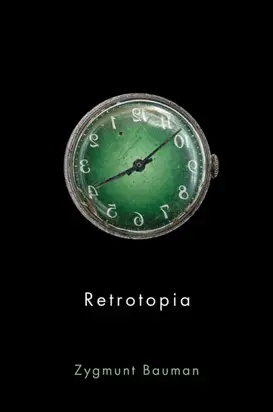
We have long since lost our faith in the idea that human beings could achieve human happiness in some future ideal state—a state that Thomas More, writing five centuries ago, tied to a topos, a fixed place, a land, an island, a sovereign state under a wise and benevolent ruler. But while we have lost our faith in utopias of all hues, the human aspiration that made this vision so compelling has not died. Instead it is re-emerging today as a vision focused not on the future but on the past, not on a future-to-be-created but on an abandoned and undead past that we could call retrotopia. The emergence of retrotopia is interwoven with the deepening gulf between power and politics that is a defining feature of our contemporary liquid-modern world—the gulf between the ability to get things done and the capability of deciding what things need to be done, a capability once vested with the territorially sovereign state. This deepening gulf has rendered nation-states unable to deliver on their promises, giving rise to a widespread disenchantment with the idea that the future will improve the human condition and a mistrust in the ability of nation-states to make this happen. True to the utopian spirit, retrotopia derives its stimulus from the urge to rectify the failings of the present human condition—though now by resurrecting the failed and forgotten potentials of the past. Imagined aspects of the past, genuine or putative, serve as the main landmarks today in drawing the road-map to a better world. Having lost all faith in the idea of building an alternative society of the future, many turn instead to the grand ideas of the past, buried but not yet dead. Such is retrotopia, the contours of which are examined by Zygmunt Bauman in this sharp dissection of our contemporary romance with the past.
Жанр в блоке книги Социология
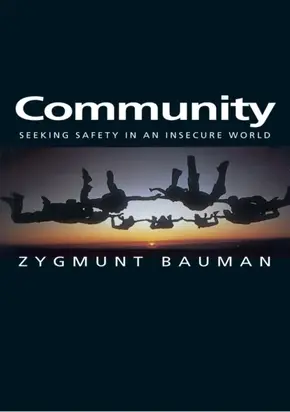
'Community' is one of those words that feels good: it is good 'to have a community', 'to be in a community'. And 'community' feels good because of the meanings which the word conveys, all of them promising pleasures, and more often than not the kind of pleasures which we would like to experience but seem to miss. 'Community' conveys the image of a warm and comfortable place, like a fireplace at which we warm our hands on a frosty day. Out there, in the street, all sorts of dangers lie in ambush; in here, in the community, we can relax and feel safe. 'Community' stands for the kind of world which we long to inhabit but which is not, regrettably, available to us. Today 'community' is another name for paradise lost – but for a paradise which we still hope to find, as we feverishly search for the roads that may lead us there. But there is a price to be paid for the privilege of being in a community. Community promises security but seems to deprive us of freedom, of the right to be ourselves. Security and freedom are two equally precious and coveted values which could be balanced to some degree, but hardly ever fully reconciled. The tension between security and freedom, and between community and individuality, is unlikely ever to be resolved. We cannot escape the dilemma but we can take stock of the opportunities and the dangers, and at least try to avoid repeating past errors. In this important new book, Zygmunt Bauman takes stock of these opportunities and dangers and, in his distinctive and brilliant fashion, offers a much-needed reappraisal of a concept that has become central to current debates about the nature and future of our societies.

Жанр в блоке книги Социология
This book is about the central figure of our contemporary, ‘liquid modern’ times – the man or woman with no bonds, and particularly with none of the fixed or durable bonds that would allow the effort of self-definition and self-assertion to come to a rest. Having no permanent bonds, the denizen of our liquid modern society must tie whatever bonds they can to engage with others, using their own wits, skill and dedication. But none of these bonds are guaranteed to last. Moreover, they must be tied loosely so that they can be untied again, quickly and as effortlessly as possible, when circumstances change – as they surely will in our liquid modern society, over and over again. The uncanny frailty of human bonds, the feeling of insecurity that frailty inspires, and the conflicting desires to tighten the bonds yet keep them loose, are the principal themes of this important new book by Zygmunt Bauman, one of the most original and influential social thinkers of our time. It will be of great interest to students and scholars in sociology and in the social sciences and humanities generally, and it will appeal to anyone interested in the changing nature of human relationships.
Жанр в блоке книги Социология
With the advent of liquid modernity, the society of producers is transformed into a society of consumers. In this new consumer society, individuals become simultaneously the promoters of commodities and the commodities they promote. They are, at one and the same time, the merchandise and the marketer, the goods and the travelling salespeople. They all inhabit the same social space that is customarily described by the term the market. The test they need to pass in order to acquire the social prizes they covet requires them to recast themselves as products capable of drawing attention to themselves. This subtle and pervasive transformation of consumers into commodities is the most important feature of the society of consumers. It is the hidden truth, the deepest and most closely guarded secret, of the consumer society in which we now live. In this new book Zygmunt Bauman examines the impact of consumerist attitudes and patterns of conduct on various apparently unconnected aspects of social life politics and democracy, social divisions and stratification, communities and partnerships, identity building, the production and use of knowledge, and value preferences. The invasion and colonization of the web of human relations by the worldviews and behavioural patterns inspired and shaped by commodity markets, and the sources of resentment, dissent and occasional resistance to the occupying forces, are the central themes of this brilliant new book by one of the worlds most original and insightful social thinkers.

Жанр в блоке книги Социология
In this new book, Bauman examines how we have moved away from a 'heavy' and 'solid', hardware-focused modernity to a 'light' and 'liquid', software-based modernity. This passage, he argues, has brought profound change to all aspects of the human condition. The new remoteness and un-reachability of global systemic structure coupled with the unstructured and under-defined, fluid state of the immediate setting of life-politics and human togetherness, call for the rethinking of the concepts and cognitive frames used to narrate human individual experience and their joint history. This book is dedicated to this task. Bauman selects five of the basic concepts which have served to make sense of shared human life – emancipation, individuality, time/space, work and community – and traces their successive incarnations and changes of meaning. Liquid Modernity concludes the analysis undertaken in Bauman's two previous books Globalization: The Human Consequences and In Search of Politics. Together these volumes form a brilliant analysis of the changing conditions of social and political life by one of the most original thinkers writing today.
Жанр в блоке книги Социология
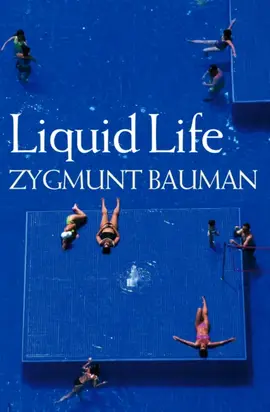
'Liquid life’ is the kind of life commonly lived in our contemporary, liquid-modern society. Liquid life cannot stay on course, as liquid-modern society cannot keep its shape for long. Liquid life is a precarious life, lived under conditions of constant uncertainty. The most acute and stubborn worries that haunt this liquid life are the fears of being caught napping, of failing to catch up with fast moving events, of overlooking the ‘use by’ dates and being saddled with worthless possessions, of missing the moment calling for a change of tack and being left behind. Liquid life is also shot through by a contradiction: it ought to be a (possibly unending) series of new beginnings, yet precisely for that reason it is full of worries about swift and painless endings, without which new beginnings would be unthinkable. Among the arts of liquid-modern living and the skills needed to practice them, getting rid of things takes precedence over their acquisition. This and other challenges of life in a liquid-modern society are traced and unravelled in the successive chapters of this new book by one of the most brilliant and original social thinkers of our time.
Жанр в блоке книги Социология
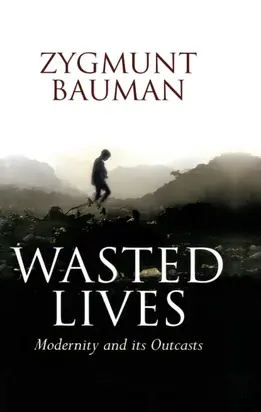
The production of ‘human waste’ – or more precisely, wasted lives, the ‘superfluous’ populations of migrants, refugees and other outcasts – is an inevitable outcome of modernization. It is an unavoidable side-effect of economic progress and the quest for order which is characteristic of modernity. As long as large parts of the world remained wholly or partly unaffected by modernization, they were treated by modernizing societies as lands that were able to absorb the excess of population in the ‘developed countries’. Global solutions were sought, and temporarily found, to locally produced overpopulation problems. But as modernization has reached the furthest lands of the planet, ‘redundant population’ is produced everywhere and all localities have to bear the consequences of modernity’s global triumph. They are now confronted with the need to seek – in vain, it seems – local solutions to globally produced problems. The global spread of the modernity has given rise to growing quantities of human beings who are deprived of adequate means of survival, but the planet is fast running out of places to put them. Hence the new anxieties about ‘immigrants’ and ‘asylum seekers’ and the growing role played by diffuse ‘security fears’ on the contemporary political agenda. With characteristic brilliance, this new book by Zygmunt Bauman unravels the impact of this transformation on our contemporary culture and politics and shows that the problem of coping with ‘human waste’ provides a key for understanding some otherwise baffling features of our shared life, from the strategies of global domination to the most intimate aspects of human relationships.
Жанр в блоке книги Социология
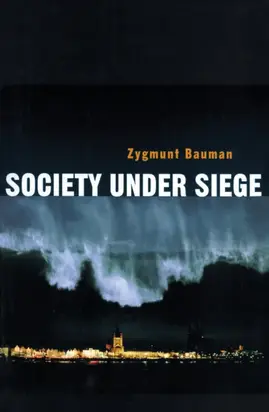
Society is under siege – under attack on two fronts: from the global frontier-land where old structures and rules do not hold and new ones are slow to take shape, and from the fluid, undefined domain of life politics. The space between these two fronts, until recently ruled by the sovereign nation-state and identified by social scientists as ‘society' is ever more difficult to conceive of as a self-enclosed entity. And this confronts the established wisdom of the social sciences with a new challenge: sovereignty and power are becoming separated from the politics of the territorial nation-state but are not becoming institutionalized in a new space. What are the consequences of this profound transformation of social life? What kind of world will it create for the twenty-first century? This remarkable book – by one of the most original social thinkers writing today – attempts to trace this transformation and to assess its consequences for the life conditions of ordinary individuals. The first part of the book is devoted to the new global arena in which, thanks to the powerful forces of globalization, there is no 'outside', no secluded place to which one can retreat and hide away, and where the territorial wars of the past have given way to a new breed of 'reconnaissance wars'. The second part deals with settings in which life politics has taken hold and flourished. Bauman argues that the great challenge facing us today is whether we can find new ways to reforge the human diversity that is our fate into the vocation of human solidarity.
Жанр в блоке книги Социология
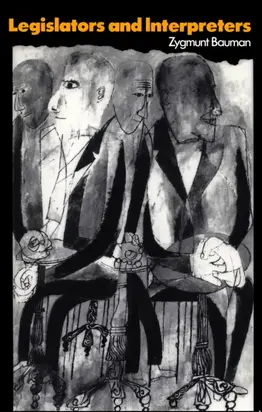
The book discusses the role of intellectuals in the modern world. Bauman connects this with current analyses of modernity and post-modernity. The theme of the book is that the tasks of intellectuals change from being 'legislators' to 'interpreters' with the transition from modernity to post-modernity. The book discusses the role of intellectuals in the modern world. Bauman connects this with current analyses of modernity and post-modernity. The theme of the book is that the tasks of intellectuals change from being 'legislators' to 'interpreters' with the transition from modernity to post-modernity.
Жанр в блоке книги Социология
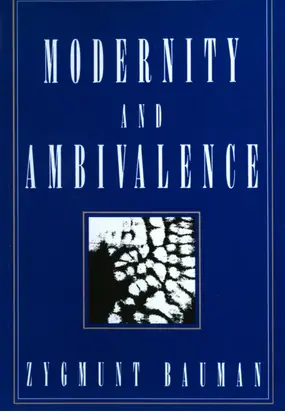
Modern civilization, Bauman argues, promised to make our lives understandable and open to our control. This has not happened and today we no longer believe it ever will. In this book, now available in paperback, Bauman argues that our postmodern age is the time for reconciliation with ambivalence, we must learn how to live in an incurably ambiguous world.
Жанр в блоке книги Социология
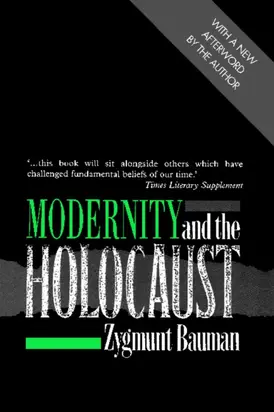
Sociology is concerned with modern society, but has never come to terms with one of the most distinctive and horrific aspects of modernity – the Holocaust. The book examines what sociology can teach us about the Holocaust, but more particularly concentrates upon the lessons which the Holocaust has for sociology. Bauman's work demonstrates that the Holocaust has to be understood as deeply involved with the nature of modernity. There is nothing comparable to this work available in the sociological literature.
Жанр в блоке книги Социология
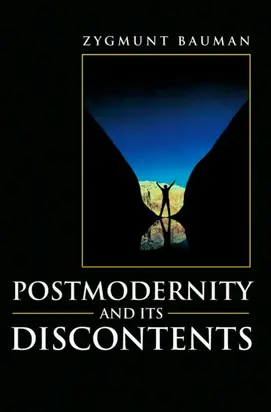
When Freud wrote his classic Civilization and its Discontents, he was concerned with repression. Modern civilization depends upon the constraint of impulse, the limiting of self expression. Today, in the time of modernity, Bauman argues, Freud's analysis no longer holds good, if it ever did. The regulation of desire turns from an irritating necessity into an assault against individual freedom. In the postmodern era, the liberty of the individual is the overriding value, the criterion in terms of which all social rules and regulations are assessed. Postmodernity is governed by the 'will to happiness': the result, however, is a sacrificing of security. The most prominent anxieties in our society today, Bauman shows, derive from the removal of security. The world is experienced as overwhelmingly uncertain, uncontrollable and frightening. Totalitarian politics frightened by its awesome power; the new social disorder frightens by its lack of consistency and direction. The very pursuit of individual happiness corrupts and undermines those systems of authority needed for a stable life. This book builds imaginatively upon Bauman's earlier contributions to social theory. It consolidates his reputation as the interpreter of postmodernity. The book will appeal to second-year undergraduates and above in sociology, cultural studies, philosophy and anthropology.
Жанр в блоке книги Социология
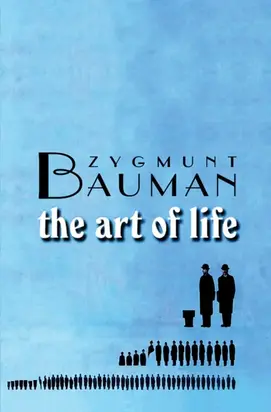
In our individualized society we are all artists of life – whether we know it or not, will it or not and like it or not, by decree of society if not by our own choice. In this society we are all expected, rightly or wrongly, to give our lives purpose and form by using our own skills and resources, even if we lack the tools and materials with which artists’ studios need to be equipped for the artist’s work to be conceived and executed. And we are praised or censured for the results – for what we have managed or failed to accomplish and for what we have achieved and lost. In our liquid modern society we are also taught to believe that the purpose of the art of life should be and can be happiness – though it’s not clear what happiness is, the images of a happy state keep changing and the state of happiness remains most of the time something yet-to-be-reached. This new book by Zygmunt Bauman – one of the most original and influential social thinkers writing today – is not a book of designs for the art of life nor a ‘how to’ book: the construction of a design for life and the way it is pursued is and cannot but be an individual responsibility and individual accomplishment. It is instead a brilliant account of conditions under which our designs-for-life are chosen, of the constraints that might be imposed on their choice and of the interplay of design, accident and character that shape their implementation. Last but not least, it is a study of the ways in which our society – the liquid modern, individualized society of consumers – influences (but does not determine) the way we construct and narrate our life trajectories.
Жанр в блоке книги Социология
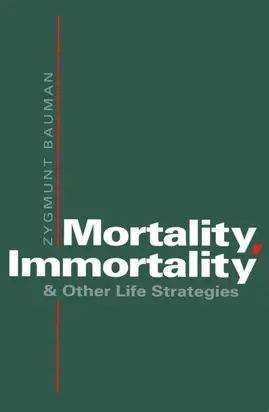
Zygmunt Bauman's new book is a brilliant exploration, from a sociological point of view, of the 'taboo' subject in modern societies: death and dying. The book develops a new theory of the ways in which human mortality is reacted to, and dealt with, in social institutions and culture. The hypothesis explored in the book is that the necessity of human beings to live with the constant awareness of death accounts for crucial aspects of the social organization of all known societies. Two different 'life strategies' are distinguished in respect of reactions to mortality. One, 'the modern strategy', deconstructs mortality by translating the insoluble issue of death into many specific problems of health and disease which are 'soluble in principle'. The 'post-modern strategy' is one of deconstructing immortality: life is transformed into a constant rehearsal of 'reversible death', a substitution of 'temporary disappearance' for the irrevocable termination of life. This profound and provocative book will appeal to a wide audience. It will also be of particular interest to students and professionals in the areas of sociology, anthropology, theology and philosophy.

Жанр в блоке книги Социология
The future of Europe and the role it will play in the 21st century are among the most important political questions of our time. The optimism of a decade ago has now faded but the stakes are higher than ever. The way these questions are answered will have enormous implications not only for all Europeans but also for the citizens of Europe’s closest and oldest ally – the USA. In this new book, one of Europe’s leading intellectuals examines the political alternatives facing Europe today and outlines a course of action for the future. Habermas advocates a policy of gradual integration of Europe in which key decisions about Europe’s future are put in the hands of its peoples, and a ‘bipolar commonality’ of the West in which a more unified Europe is able to work closely with the United States to build a more stable and equitable international order. This book includes Habermas’s portraits of three long-time philosophical companions, Richard Rorty, Jacques Derrida and Ronald Dworkin. It also includes several important new texts by Habermas on the impact of the media on the public sphere, on the enduring importance religion in “post-secular” societies, and on the design of a democratic constitutional order for the emergent world society.

Жанр в блоке книги Критика
In this new book Zygmunt Bauman and Riccardo Mazzeo examine the contentious issue of the relation between literature (and the arts in general) and sociology (or, more generally, a branch of the humanities claiming scientific status). While many commentators see literature and sociology as radically different vocations, Bauman and Mazzeo argue that they are bound together by a common purpose and a shared subject matter. Despite the many differences in terms of their methods and their ways of presenting their findings, novels and sociological texts are not at cross-purposes. Indeed, it is precisely their differences that make them at once indispensable to each other and mutually complementary. The writers of novels and of sociological texts may explore their world from different perspectives, seeking and producing different types of ‘data’, but their products bear the unmistakable marks of their shared origin. They feed each other and depend on each other in terms of their agenda, their discoveries and the contents of their messages. In a world characterized by the continuous search for new sensations and the fetishism of consumption, they bring fundamental existential questions back to the public agenda. Literature and sociology reveal the truth of the human condition only when they stay in one another's company, remaining attentive to each other's findings and engaged in a continuous dialogue. For only together can they rise to the challenging task of untangling and laying bare the complex intertwining of biography and history as well as of individual and society that totality we are constantly shaping while being shaped by it.
Жанр в блоке книги Социология
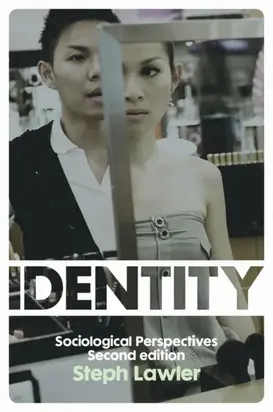
Questions about who we are, who we can be, and who is like and unlike us underpin a vast range of contemporary social issues. What makes our families so important to us? What do the often stark differences between how we self-identify and the way others see and define us reveal about our social world? Why do we attach such significance to 'being ourselves'? In this new edition of her popular and inviting introduction, Steph Lawler examines a range of important debates about identity. Taking a sociological perspective, she shows how identity is produced and embedded in social relationships, and worked out in the practice of people's everyday lives. She challenges the perception of identity as belonging within the person, arguing instead that it is produced and negotiated between persons. Chapter-by-chapter her book explores topics such as the relationships between lives and life-stories, the continuing significance of kinship in the face of social change, and how taste works to define identity. In particular, the updated edition has a new chapter on identity politics, as well as carefully compiled guides for further reading that reflect the broad importance and impact of these ideas, and the fact that, without understanding identity, we can't adequately begin to understand the social world. This book is essential reading for upper-level courses across the social sciences that focus on the compelling issues surrounding identity.
Жанр в блоке книги Социология
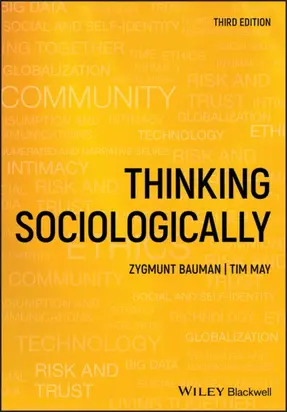
Widely acclaimed insight on the human condition, updated to view modern issues through a sociological lens Now in its third edition, Thinking Sociologically continues to offer a stimulating exploration of the underlying assumptions and tacit expectations which structure our view of the world. This best-seller has been translated into 12 languages to bring key sociological concepts to students and general readers around the globe. The authors review recent developments in society and examine the applicability of sociology to everyday life. The world has changed a great deal since the second edition’s publication. Issues of climate change, sustainability, inequality, social justice, inclusion and the role of social media have risen to prominence, and we are collectively challenging our ways of thinking about intimacy, community, consumption, ethics, social identity, and more. This new third edition has been revised to reflect these and other transformations in our lives, helping us to think sociologically about the consequences of these burgeoning issues, how we organize our societies, understand ourselves and lead our lives. This dynamic book: Applies sociology to everyday life in the context of current issues Contains contributions from major theorists that introduce central sociological concepts with modern relevance Features a highly engaging and stimulating style that promotes critical thought and independent study Includes a companion website to view sample material from the new edition, sociology resources for lecturers and students, plus information on related titles. Written for undergraduates, postgraduates, practicing sociologists and social scientists, this book also holds a broad appeal to a general audience. The third edition of Thinking Sociologically offers a compelling survey of sociological issues, recent changes in society and their influence on our day-to-day lives and identities.
Жанр в блоке книги Социология
Unde malum from where does evil come? That is the question that has plagued humankind ever since Eve, seduced by the serpent, tempted Adam to taste the forbidden fruit of the tree of knowledge of good and evil. Throughout history the awareness of good and evil has always been linked to the awareness of choice and to the freedom and responsibility to choose this is what makes us human. But the responsibility to choose is a burden that weighs heavily on our shoulders, and the temptation to hand this over to someone else be they a demagogue or a scientist who claims to trace everything back to our genes is a tempting illusion, like the paradise in which humans have at last been relieved of the moral responsibility for their actions. In the second series of their conversations Zygmunt Bauman and Stanislaw Obirek reflect on the life challenges confronted by the denizens of the fragmented, individualized society of consumers and the form taken in such a society by the fundamental aspects of the human condition – such as human responsibility for the choice between good and evil, self-formation and self-assertion, the need for recognition or the call to empathy, mutual respect, human dignity and tolerance.

10 Количество книг
0 Количество книг
2 Количество книг
