

Sun Xiaoping Скачать все книги 2 Количество книг



Жанр в блоке книги Органическая Химия
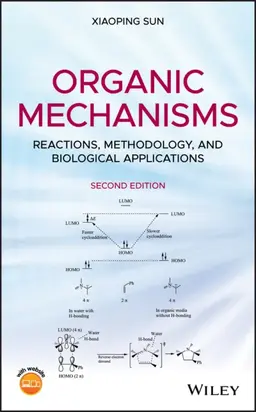
This book helps readers move from fundamental organic chemistry principles to a deeper understanding of reaction mechanisms. It directly relates sophisticated mechanistic theories to synthetic and biological applications and is a practical, student-friendly textbook.<br /><br /> <div id="_mcePaste" style="position: absolute; left: -10000px; top: 0px; width: 1px; height: 1px; overflow: hidden;">Presents material in a student-friendly way by beginning each chapter with a brief review of basic organic chemistry, followed by in-depth discussion of certain mechanisms</div> <div id="_mcePaste" style="position: absolute; left: -10000px; top: 0px; width: 1px; height: 1px; overflow: hidden;"> </div> <div id="_mcePaste" style="position: absolute; left: -10000px; top: 0px; width: 1px; height: 1px; overflow: hidden;">Includes end-of-chapter questions in the book and offers an online solutions manual along with PowerPoint lecture slides for adopting instructors</div> <div id="_mcePaste" style="position: absolute; left: -10000px; top: 0px; width: 1px; height: 1px; overflow: hidden;"> </div> <div id="_mcePaste" style="position: absolute; left: -10000px; top: 0px; width: 1px; height: 1px; overflow: hidden;">Adds more examples of biological applications appealing to the fundamental organic mechanisms</div> <div> <ul> <li>Presents material in a student-friendly way by beginning each chapter with a brief review of basic organic chemistry, followed by in-depth discussion of certain mechanisms</li> <li>Includes end-of-chapter questions in the book and offers an online solutions manual along with PowerPoint lecture slides for adopting instructors</li> <li>Adds more examples of biological applications appealing to the fundamental organic mechanisms</li> </ul> </div>
Жанр в блоке книги Зарубежная Образовательная Литература
Instills a deeper understanding of how and why organic reactions happen Integrating reaction mechanisms, synthetic methodology, and biological applications, Organic Mechanisms gives organic chemists the tools needed to perform seamless organic reactions. By explaining the underlying mechanisms of organic reactions, author Xiaoping Sun makes it possible for readers to gain a deeper understanding of not only chemical phenomena, but also the ability to develop new synthetic methods. Moreover, by emphasizing biological applications, this book enables readers to master both advanced organic chemistry theory and practice. Organic Mechanisms consists of ten chapters, beginning with a review of fundamental physicochemical principles that are essential for understanding the nature of organic mechanisms. Each one of the remaining chapters is devoted to a major class of organic reactions, including: Aliphatic C–H bond functionalization Functionalization of the alkene C=C bond by cycloaddition reactions Nucleophilic substitutions on sp3-hybridized carbons Nucleophilic additions and substitutions on carbonyl groups Reactivity of the α-hydrogen to carbonyl groups Rearrangements A brief review of basic organic chemistry begins each chapter, helping readers move from fundamental concepts to an advanced understanding of reaction mechanisms. Key mechanisms are illustrated by expertly drawn figures highlighting microscopic details. End-of-chapter problems enable readers to put their newfound knowledge into practice by solving key problems in organic reactions with the use of mechanistic studies, and a Solutions Manual is available online for course instructors. Thoroughly referenced and current with recent findings in organic reaction mechanisms, Organic Mechanisms is recommended for upper-level undergraduates and graduate students in advanced organic chemistry, as well as for practicing chemists who want to further explore the mechanistic aspects of organic reactions.

10 Количество книг
2 Количество книг
1 Количество книг
