

B. William Joiner Скачать все книги 7 Количество книг



Жанр в блоке книги Техническая Литература
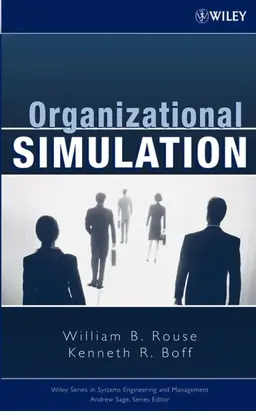
From modeling and simulation to games and entertainment With contributions from leaders in systems and organizational modeling, behavioral and social sciences, computing and visualization, and gaming and entertainment, Organizational Simulation both articulates the grand vision of immersive environments and shows, in detail, how to realize it. This book offers unparalleled insight into the cutting edge of the field, since it was written by those who actually researched, designed, developed, deployed, marketed, sold, and critiqued today's best organizational simulations. The coverage is divided into four sections: * Introduction outlines the need for organizational simulation to support strategic thinking, design of unprecedented systems, and organizational learning, including the functionality and technology required to enable this support * Behaviors covers the state of knowledge of individual, group, and team behaviors and performance, how performance can best be supported, how performance is affected by national differences, and how organizational performance can best be measured * Modeling describes the latest approaches to modeling and simulating people, groups, teams, and organizations, as well as narrative contexts and organizational environments within which these entities act, drawing from a rich set of modeling methods and tools * Simulations and Games illustrates a wide range of fielded simulations, games, and entertainment, including the methods and tools employed for designing, developing, deploying, and evaluating these systems, as well as the social implications for the associated communities that have emerged Addressing all levels of organizational simulation architecture with theories and applications, and enabling technologies for each, Organizational Simulation offers students and professionals the premier reference and practical toolbox for this dynamic field.
Жанр в блоке книги Техническая Литература
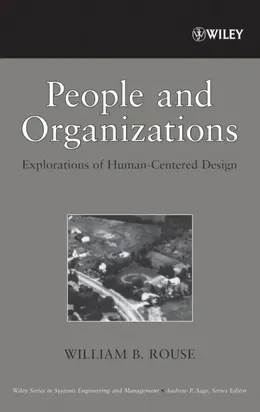
This book is about people who operate, maintain, design, research, and manage complex systems, ranging from air traffic control systems, process control plants and manufacturing facilities to industrial enterprises, government agencies and universities. The focus is on the nature of the work these types of people perform, as well as the human abilities and limitations that usually enable and sometimes hinder their work. In particular, this book addresses how to best enhance abilities and overcome limitations, as well as foster acceptance of the means to these ends.
Жанр в блоке книги Техническая Литература
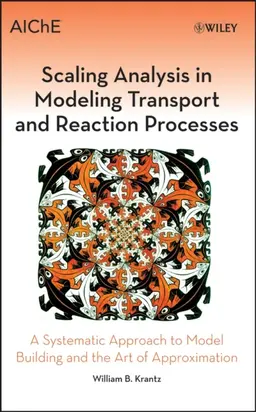
This book is unique as the first effort to expound on the subject of systematic scaling analysis. Not written for a specific discipline, the book targets any reader interested in transport phenomena and reaction processes. The book is logically divided into chapters on the use of systematic scaling analysis in fluid dynamics, heat transfer, mass transfer, and reaction processes. An integrating chapter is included that considers more complex problems involving combined transport phenomena. Each chapter includes several problems that are explained in considerable detail. These are followed by several worked examples for which the general outline for the scaling is given. Each chapter also includes many practice problems. This book is based on recognizing the value of systematic scaling analysis as a pedagogical method for teaching transport and reaction processes and as a research tool for developing and solving models and in designing experiments. Thus, the book can serve as both a textbook and a reference book.

Жанр в блоке книги Зарубежная Образовательная Литература
This textbook is a modern, concise and focused treatment of the mathematical techniques, physical theories and applications of rigid body mechanics, bridging the gap between the geometric and more classical approaches to the topic. It emphasizes the fundamentals of the subject, stresses the importance of notation, integrates the modern geometric view of mechanics and offers a wide variety of examples – ranging from molecular dynamics to mechanics of robots and planetary rotational dynamics. The author has unified his presentation such that applied mathematicians, mechanical and astro-aerodynamical engineers, physicists, computer scientists and astronomers can all meet the subject on common ground, despite their diverse applications. * Free solutions manual available for lecturers at www.wiley-vch.de/supplements/

Жанр в блоке книги Зарубежная Образовательная Литература
With a balance of theory and practical applications, Tectonic Geomorphology of Mountains is essential reading for research geologists and upper-level undergraduate and graduate students in the earth sciences. This book describes how tectonic events influence geomorphic processes and explores how landscapes respond to tectonic deformation in the ways in which they are weathered, washed, and abraded Uses new approaches to enhance theoretical models of landscape evolution and to solve practical problems such as the assessment of earthquake hazards Includes previously unpublished research and theory Examines how to use key landforms as reference levels in changing landscapes, estimate rates of mountain-range uplift, and map seismic shaking caused by prehistorical earthquakes Presents a diverse range of examples from around the world
Жанр в блоке книги Техническая Литература
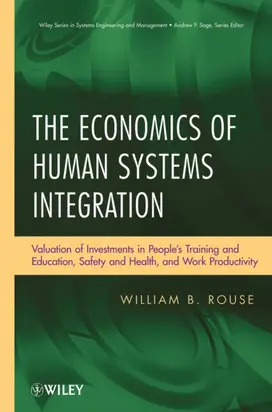
Fundamental Economic Principles, Methods, and Tools for Addressing Human Systems Integration Issues and Tradeoffs Human Systems Integration (HSI) is a new and fundamental integrating discipline designed to help move business and engineering cultures toward more human-centered systems. Integrating consideration of human abilities, limitations, and preferences into engineering systems yields important cost and performance benefits that otherwise would not have been accomplished. In order for this new discipline to be effective, however, a cultural change—starting with organizational leadership—is often necessary. The Economics of Human Systems Integration explains the difficulties underlying valuation of investments in people's training and education, safety and health, and work productivity. It provides an overview of how the field of economics addresses these difficulties, focusing on human issues associated with design, development, production, operations, maintenance, and sustainment of complex systems. The set of thought leaders recruited as contributors to this volume collectively provides a compelling set of data and principles for assessing the economic value of investing in people, not just in general but in specific investment situations. The early chapters provide the contexts for HSI and investment analysis, illustrating the enormous difference context makes in how issues are best framed and analyzed. A host of practical methods and tools for investment valuation are then presented. Provided are: A variety of real-world applications of economic analysis ranging from military acquisition and automotive investment to healthcare and high-tech investments in general, in both the U.S. and abroad A range of economics-based methods and tools for cost analysis, cost-benefit analysis, and investment analysis, as well as sources of data for performing such analyses Differing perspectives on economic decision-making, including a range of private sector points of view, as well as government and regulatory perspectives In addition, five real-world case studies illustrate how such valuations have been done and their major impacts on investment decisions. HSI professionals, systems engineers, and finance professionals who address investment analysis will appreciate the wide range of methods and real-life applications; senior undergraduates and masters-level graduate students will find this to be an excellent textbook that provides theory and supports practice.
Жанр в блоке книги Зарубежная Деловая Литература
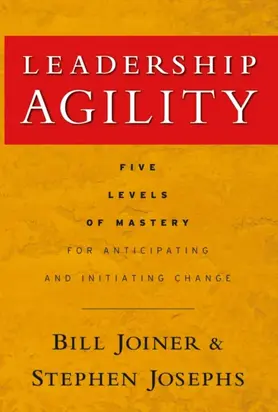
Leadership Agility is the master competency needed for sustained success in today’s complex, fast-paced business environment. Richly illustrated with stories based on original research and decades of work with clients, this groundbreaking book identifies five levels that leaders move through in developing their agility. Significantly, only 10% have mastered the level of agility needed for consistent effectiveness in our turbulent era of global competition. Written in an engaging, down-to-earth style, this book not only provides a map that guides readers in identifying their current level of agility. It also provides practical advice and concrete examples that show managers and leadership development professionals how they can bring greater agility to the initiatives they take every day.

6 Количество книг
2 Количество книг
2 Количество книг
