

Meyer Thomas Скачать все книги 3 Количество книг



Жанр в блоке книги Зарубежная Деловая Литература
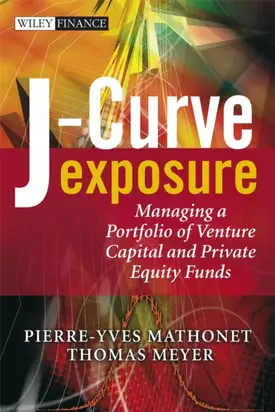
Building on the success of the author’s previous book Beyond the J Curve:Managing a Portfolio of Venture Capital and Private Equity Funds, this work covers new and additional material and offers advanced guidance on the practical questions faced by institutions when setting up and managing a successful private equity investment programme. Written from the practitioner’s viewpoint, the book offers private equity and venture capital professionals an advanced guide that will make high return targets more realistic and sustainable. Factors that can sometimes cause institutions to shy away from venture capital are the industry’s opaque track record, unclear valuations and risks, perceived lack of transparency as well as the significant entry barriers to overcome before tangible results show. These issues are all addressed in details with practical solutions to the problems. Among other topics J-Curve Exposure includes discussions of: Experiences with the adoption of the International Private Equity and Venture Capital Valuation Guidelines to address fair value under IFRS. Approaches for splitting and prioritizing distributions from private equity funds. Techniques for track record analysis and other tools to help limited partners in their due diligence. Approaches to dealing with uncertainty, the relevance of real options, and co-investments and side funds as advanced portfolio management techniques. Questions related to limited partner decision making fallacies and how to manage portfolios of VC funds. Securitization backed by portfolios of investments in private equity funds. Real life case studies illustrate the issues relevant for the practitioner.
Жанр в блоке книги Зарубежная Деловая Литература
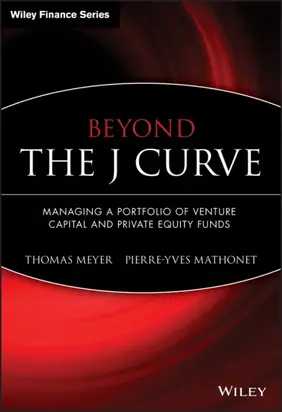
In recent times, venture capital and private equity funds have become household names, but so far little has been written for the investors in such funds, the so-called limited partners. There is far more to the management of a portfolio of venture capital and private equity funds than usually perceived. Beyond the J Curve describes an innovative toolset for such limited partners to design and manage portfolios tailored to the dynamics of this market place, going far beyond the typical and often-simplistic recipe to 'go for top quartile funds'. Beyond the J Curve provides the answers to key questions, including: Why 'top-quartile' promises should be taken with a huge pinch of salt and what it takes to select superior fund managers? What do limited partners need to consider when designing and managing portfolios? How one can determine the funds' economic value to help addressing the questions of 'fair value' under IAS 39 and 'risk' under Basel II or Solvency II? Why is monitoring important, and how does a limited partner manage his portfolio? How the portfolio's returns can be improved through proper liquidity management and what to consider when over-committing? And, why uncertainty rather than risk is an issue and how a limited partner can address and benefit from the fast changing private equity environment? Beyond the J Curve takes the practitioner's view and offers private equity and venture capital professionals a comprehensive guide making high return targets more realistic and sustainable. This book is a must have for all parties involved in this market, as well as academic and students.
Жанр в блоке книги Зарубежная Деловая Литература
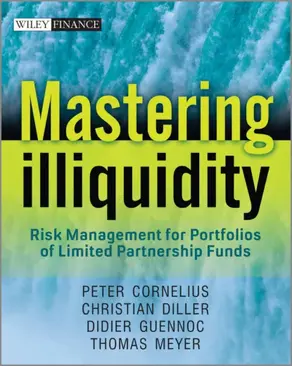
Arms investors with powerful new tools for measuring and managing the risks associated with the various illiquid asset classes With risk-free interest rates and risk premiums at record lows, many investors are turning to illiquid assets, such as real estate, private equity, infrastructure and timber, in search of superior returns and greater portfolio diversity. But as many analysts, investors and wealth managers are discovering, such investments bring with them a unique set of risks that cannot be measured by standard asset allocation models. Written by a dream team of globally renowned experts in the field, this book provides a clear, accessible overview of illiquid fund investments, focusing on what the main risks of these asset classes are and how to measure those risks in today's regulatory environment. Provides solutions for institutional investors in need of guidance in today's regulatory environment Offers detailed descriptions of risk measurement in illiquid asset classes, illustrated with real life case studies Helps you to develop reliable risk management tools while complying with the regulations designed to contain the individual and systemic risks arising from illiquid investments Features real-life case studies that capture an array of risk management scenarios you are likely to encounter

10 Количество книг
2 Количество книг
1 Количество книг
