

W. Thomas Grisham Скачать все книги 3 Количество книг


Жанр в блоке книги Математика
Provides the tools needed to successfully perform adaptive tests across a broad range of datasets Adaptive Tests of Significance Using Permutations of Residuals with R and SAS illustrates the power of adaptive tests and showcases their ability to adjust the testing method to suit a particular set of data. The book utilizes state-of-the-art software to demonstrate the practicality and benefits for data analysis in various fields of study. Beginning with an introduction, the book moves on to explore the underlying concepts of adaptive tests, including: Smoothing methods and normalizing transformations Permutation tests with linear methods Applications of adaptive tests Multicenter and cross-over trials Analysis of repeated measures data Adaptive confidence intervals and estimates Throughout the book, numerous figures illustrate the key differences among traditional tests, nonparametric tests, and adaptive tests. R and SAS software packages are used to perform the discussed techniques, and the accompanying datasets are available on the book's related website. In addition, exercises at the end of most chapters enable readers to analyze the presented datasets by putting new concepts into practice. Adaptive Tests of Significance Using Permutations of Residuals with R and SAS is an insightful reference for professionals and researchers working with statistical methods across a variety of fields including the biosciences, pharmacology, and business. The book also serves as a valuable supplement for courses on regression analysis and adaptive analysis at the upper-undergraduate and graduate levels.

Жанр в блоке книги Книги По Философии
Worldwide, human lives are rapidly improving. Education, health-care, technology, and political participation are becoming ever more universal, empowering human beings everywhere to enjoy security, economic sufficiency, equal citizenship, and a life in dignity. To be sure, there are some specially difficult areas disfavoured by climate, geography, local diseases, unenlightened cultures or political tyranny. Here progress is slow, and there may be set-backs. But the affluent states and many international organizations are working steadily to extend the blessings of modernity through trade and generous development assistance, and it won't be long until the last pockets of severe oppression and poverty are gone. Heavily promoted by Western governments and media, this comforting view of the world is widely shared, at least among the affluent. Pogge's new book presents an alternative view: Poverty and oppression persist on a massive scale; political and economic inequalities are rising dramatically both intra-nationally and globally. The affluent states and the international organizations they control knowingly contribute greatly to these evils – selfishly promoting rules and policies harmful to the poor while hypocritically pretending to set and promote ambitious development goals. Pogge's case studies include the $1/day poverty measurement exercise, the cosmetic statistics behind the first Millennium Development Goal, the War on Terror, and the proposed relaxation of the constraints on humanitarian intervention. A powerful moral analysis that shows what Western states would do if they really cared about the values they profess.
Жанр в блоке книги Техническая Литература
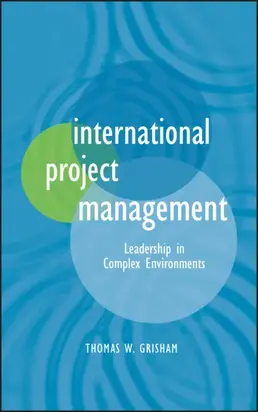
The theory, practice, and example projects of international project management A Singaporean corporation builds a manufacturing facility in Cambodia, with a Chinese partner, a Cambodian government agency, and value chain organizations in Germany, Morocco, Vietnam, and Brazil. A Russian charity operates in the Balkans and the Persian Gulf. Pharmaceuticals and food come from ten different countries, physicians are from the EU and Russia, and donations are from Central Asia and the subcontinent. A transnational organization markets through divisions in eighty-two countries. The products are designed in Italy, Sweden, and France, with customization done in each respective country. International projects involve a complex network of cultures, politics, laws, languages, and resources that goes beyond the traditional training and experience of most project managers. International Project Management examines the different dimensions and responsibilities of international projects, and outlines what a project manager must know to lead global projects successfully. It also provides guidelines and examples for the international project management processes. This book explores the professional best practices of international projects, emphasizing the importance of leadership skills and virtual teamwork to successfully navigate an international project. Along with discussions on the process groups, such as initiating, planning, execution, monitoring and controlling, and closing out, this reference is organized according to these knowledge areas: Introduction to international project management Integration management HR management (Diversity & Communications) Scope management Cost and progress management Risk management Time management Customer satisfaction (Quality) Procurement management CPE in the future Integrating the PMBOK® Guide—Fourth Edition, and the ICB, International Project Management provides international project managers, whether experienced or beginners, with the high cross-cultural intelligence, creative communication skills, ability to establish and maintain dependable project management processes, and compelling curiosity to manage international projects successfully. (PMBOK is a registered mark of the Project Management Institute, Inc.)

6 Количество книг
2 Количество книг
2 Количество книг
