

Emmitt Stephen Скачать все книги 5 Количество книг



Жанр в блоке книги Архитектура
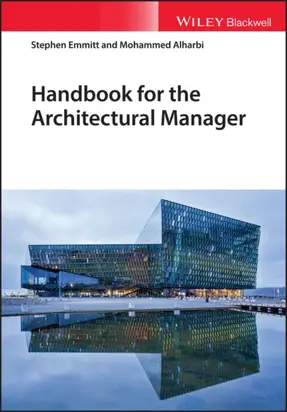
The essential resource for becoming more effective in the highly competitive architectural marketplace Handbook for the Architectural Manager offers architects a comprehensive resource that brings together critical information on four interlinked areas: managing the architectural office, projects, stakeholders, and learning. Unlike other books on the topic that only stress management of the business or the management of projects, this book offers a guiding framework that encompasses the architectural manager's role in developing the practice’s competitive strategies and overseeing the project portfolio. Written by noted experts in the field, Handbook for the Architectural Manager is grounded in current research in which, for the first time, the components of architectural management have been analyzed systematically, tested, and developed for practical application. Designed to explore typical architectural management issues, the book provides clear and concise direction with practical step-by-step guidance as well as helpful checklists, templates and scenarios, and case studies to illustrate best practice. This essential resource: Offers a groundbreaking handbook that contains a comprehensive management framework for architectural practice Contains new insights and guidance based on solid research on managing the architectural practice Brings together in one book the best management techniques of the office, projects, stakeholders, and learning Includes a well-grounded critical review of the existing literature on the topic Designed for professionals in the field but written in accessible language suitable for students Handbook for the Architectural Manager offers a practical guide for overseeing the development of architectural designs and associated activities and ensuring all work is consistent (i.e. adheres to current standards, legislation, client specifications, and office protocols) and completed on time as well as information on staff development and learning.
Жанр в блоке книги Архитектура
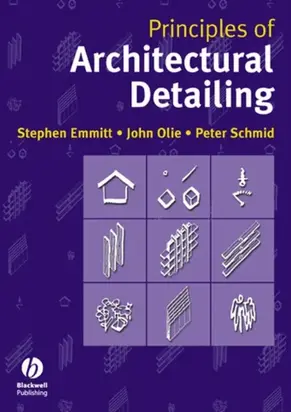
Why are buildings detailed the way they are? Why do architects and engineers seem to come to the same kind of solutions to their detailing problems? Are we satisfied with such a situation? With environmental concerns so high on designers' agendas, the answer to this third question has to be 'no'. Collectively architects, engineers and specifiers need to revisit how they detail the built environment, and address the most important and potentially difficult area of the joint between materials and components. In Principles of Architectural Detailing the authors question the way in which buildings are detailed and in particular challenge familiar joint solutions. They offer practical guidance and a number of tools to help the student of architectural detailing in the decision-making process. The emphasis throughout is on using knowledge of construction in a creative and productive way to contribute towards a built environment that enhances our well-being and which is also sustainable.
Жанр в блоке книги Архитектурные Конструкции
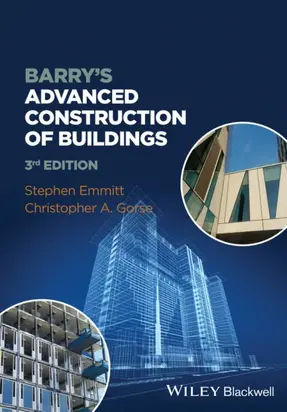
Robin Barry's Construction of Buildings was first published in 1958 in 5 volumes, rapidly becoming a standard text on construction. In its current 2 volume format Barry remains hugely popular with both students and lecturers of construction and related disciplines. The third edition of Barry's Advanced Construction of Buildings expands and deepens your understanding of construction technology. It covers the construction of larger-scale buildings (primarily residential, commercial and industrial) constructed with load bearing frames, supported by chapters on fit-out and second fix, lifts and escalators, off-site construction and a new chapter on building obsolescence and revitalisation. Functional and performance requirements of the main building elements are emphasised throughout, as is building efficiency and meeting the challenges of limiting the environmental impact of buildings. You will find the text fully up to date with the latest building regulations and construction technologies. The new edition, with supporting material at www.wiley.com/go/barrysintroduction, is an ideal information source for developing a wider and deeper understanding of construction technology.
Жанр в блоке книги Архитектурные Конструкции
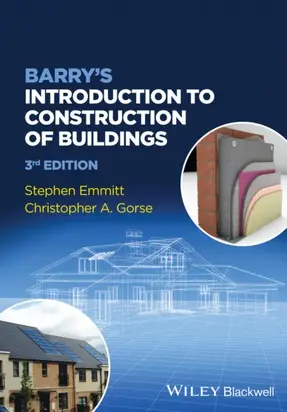
Robin Barry's Construction of Buildings was first published in 1958 in 5 volumes, rapidly becoming a standard text on construction. In its current 2 volume format Barry remains hugely popular with both students and lecturers of construction and related disciplines. The third edition of Barry’s Introduction to Construction of Buildings provides the basic material you will need to understand the construction process for the majority of low rise buildings. Construction technology is explained and illustrated through the key functional and performance requirements for the main elements common to all buildings. With a stronger focus on building efficiency and meeting the challenges posed by limiting the environmental impact of buildings, you will find the text fully up to date with the latest building regulations and construction technologies. Particular attention has been paid to the careful integration of all topics, helping you to link concepts and follow related material. The new edition, with supporting website at www.wiley.com/go/barrysintroduction, provides the ideal introduction to construction technology
Жанр в блоке книги Архитектура
Since the publication of the first edition of Architectural Technology, in 2002, there have been significant developments in the number of courses, the profile of the discipline as well as significant changes in the Construction sector. The Second edition of Architectural Technology addresses these challenges directly. Much greater emphasis is given to the three core themes of the book – Environmental Sustainability; Innovation; and Design. An increase in the visual material included reinforces the critical role of Design, aiding students to better translate conceptual designs into built artefacts. Building upon solid teaching practice from the previous edition, Architectural Technology is now more concisely structured to take the reader through the whole life cycle of a building, emphasising sustainability and building performance. Material on digital information, building information modelling (BIM) and information communication technologies has been updated. Most chapters have been re-titled to emphasise the importance of design and make the book more accessible to a wider range of students. Chapters conclude with updated/more extensive links to further reading. Architectural Technology, 2nd Edition: Bridges the knowledge gap between design and construction Tackles the core subjects of management, technologies and design from a sustainable building angle Addresses the buildability and performance of a design from a whole life perspective Thoroughly revised and updated this undergraduate level textbook is essential for Architectural Technology courses. Students studying Architectural Engineering, Architecture, Building Surveying; and more general Construction courses, will find the material invaluable.

6 Количество книг
2 Количество книг
2 Количество книг
