Назад

Aurobindo Sri Скачать все книги 59 Количество книг

Life upon earth is an adventure and has its own share of charm and dangers. The seeking for safety and security in this ‘delightful and dangerous world’ is therefore quite a legitimate need. As always, Nature has already provided for us certain safety measures. However we are often unaware of these inbuilt means of our defence. In addition there are inner means that can be developed methodically which can further augment our protection. Finally, to someone who has turned towards the Divine making his whole life an offering at the sacred altar, there is a further and special protection that helps his journey. Nevertheless, all these means act usually within limits and except for rare instances need certain inner conditions for their full working. In this issue we share the Light that the Mother and Sri Aurobindo have shed on this complex subject of Protection.
769 einzeilige Epigramme in deutscher und englischer Sprache aus Sri Aurobindos Epos Savitri. Es gibt verschiedene Arten von Epigrammen, von denen jedes seinen eigenen Zauber besitzt. Es gibt einige, die die Vergangenheit in einer eindrucksvollen Zeile zusammenfassen, andere, die hoffnungsvoll die Zukunft vorhersagen. Es gibt viele, die die Gegenwart in ihrer verwirrenden Fülle einfangen. Eine ganze Reihe davon sind Wahrnehmungen, die ganze Philosophien umreißen. Nicht wenige überwältigen den Verstand und treiben einen in die Arme der Seele. Die Epigramme können einfach nur dem literarischen Genießen dienen, oder aber der mentalen Erleuchtung oder spirituellen Erfahrung oder yogischen Verwirklichung.

Жанр в блоке книги Практическая Эзотерика
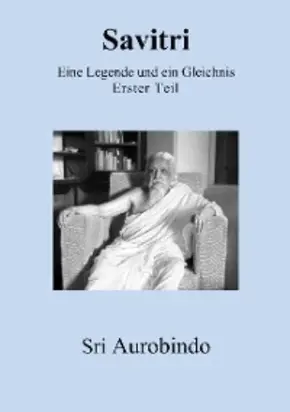
Savitri ist Sri Aurobindos poetisches Hauptwerk in knapp 24 000 mantrischen Versen. Im vorliegenden Buch erscheint der Erste Teil einer neuen Übersetzung von Wilfried Huchzermeyer mit der Zielsetzung, den teils sehr schwierigen Text inhaltlich korrekt und in ansprechender, zeitgemäßer Sprache wiederzugeben. Sri Aurobindos spirituelle Mitarbeiterin, die Mutter, nannte Savitri „dieses wundervolle prophetische Gedicht, das die Menschheit zu ihrer künftigen Verwirklichung führen wird.“ Als Grundlage diente die Legende von Savitri und Satyavan im indischen Epos Mahabharata. Mittels einer symbolischen Deutung und Ausarbeitung dieser alten Sage schildert Sri Aurobindo die tiefe spirituelle Suche und Transformation der aufstrebenden Seele des Menschen.
In response to a request from All India Radio, Sri Aurobindo gave a message to mark 15 August 1947, the day of India’s independence. This message to his countrymen spoke of five dreams that he had worked for, and which he now saw on the way to fulfilment. The realisation of these dreams would mark the beginning of a new age, not only for India but for the entire world, “for the political, social, cultural and spiritual future of humanity”.
This compilation highlights the unique role of work in the Integral Yoga. The book is organised into four sections that cover topics such as how to prepare yourself, have the right attitude, and then offer your work; how to face the difficulties in your daily work environment; and how to move away from the illusions of ego-centred work toward becoming a true instrument for the Divine’s work.
I had a clear vision of the two kinds of opposites in nature (not only in nature but in life) which almost everyone carries within himself: one is the possibility of realization, the other is the path chosen to attain it. There is always (it’s probably inevitable) the stormy path of struggle, and then there is the sunlit path. After much study and observation, I have had a sort of “spiritual ambition” (if it can be called that) to bring to the world a sunlit path, to eliminate the necessity for struggle and suffering: something that aspires to replace this present phase of universal evolution with a less painful phase. (The Mother) The 1st part contains text excerpts from the works of Sri Aurobindo and the Mother. The 2nd part is the complete edition of the Mother’s work “The Sunlit Path”. The 3rd part contains excerpts from Sri Aurobindo’s main work “Savitri”.
Sri Aurobindo and the Mother Sri Aurobindo on truth, falsehood, error and the reason for evil on earth. We have come not for Peace but for Victory, because in a world governed by the hostile forces Victory must come before Peace. (The Mother)
Yoga must be revealed to mankind because without it mankind cannot take the next step in the human evolution. (Sri Aurobindo)
Creation is not a making of something out of nothing or of one thing out of another, but a self-projection of Brahman into the conditions of Space and Time. (Sri Aurobindo) The Lord and the world, even when they seem to be distinct, are not really different from each other; they are one Brahman. (Sri Aurobindo)
Sri Aurobindo drückt mit den Aphorismen in einer sehr prägnanten Weise einige Schlüsselideen seiner Philosophie und seines Yoga aus. Zudem sprengt er mit diesen Gedanken unsere gewohnte Auffassung, um uns eine tiefere Wahrheit berühren zu lassen. "Erhaschte die Menschheit auch nur einen Schimmer von den unendlichen Freuden, vollkommenen Kräften, leuchtenden Bereichen spontanen Wissens und ruhigen Weiten unseres Wesens, die auf uns warten in den Gegenden, die unsere tierhafte Entwicklung noch nicht erobert hat, so würde sie alles lassen und nicht eher ruhen, als bis sie diese Schätze gewonnen hat. Doch der Pfad ist eng, die Tore schwer zu öffnen, und Angst, Misstrauen und Skepsis sind da als Schildwachen der Natur, unseren Fuß daran zu hindern, sich von den gewohnten Weideländern abzukehren." – Sri Aurobindo
Sri Aurobindos grundlegendes und gewaltiges Lehrgebäude der Briefe erklärt in fundamentaler Weise die Lehre und Methode seines Yoga und greift Fragen der spirituellen Praxis auf. Nachdem sich Sri Aurobindo 1926 fast völlig von der Außenwelt und vom persönlichen Kontakt mit seinen Schülern zurückgezogen hatte, forderte er diese auf, sich mit ihren Problemen und Fragen schriftlich an ihn zu wenden. So entstanden zwischen 1927-38 die «Letters on Yoga» – Briefe, die in die Tausende gingen und jeden erdenklichen Aspekt des Integralen Yoga behandeln. Das vorliegende E-Book enthält 156 Auszüge aus dem vierbändigen Lehrgebäude der Briefe. Sie wurden zusammengestellt und geordnet, um dem Suchenden beim Verständnis und der Ausübung des Yoga zu helfen. Sri Aurobindo erläutert die zentralen Prinzipien und Methoden seines Integralen Yoga.
This book is an attempt to develop a deeper insight and love for nature through her infinite moods and expressions; the rocks, the trees, the animals, the sun, the wind, the rain and the storm and to perceive in them the vibrant energy, the secret consciousness, the Divine presence.
"To find highest beauty is to find God; to reveal, to embody, to create, as we say, highest beauty is to bring out of our souls the living image and power of God." (Sri Aurobindo) "Sri Aurobindo came to tell the world of the beauty of the future that must be realised. He came to give not a hope but a certitude of the splendour towards which the world moves. The world is not an unfortunate accident, it is a marvel which moves towards its expression. The world needs the certitude of the beauty of the future. And Sri Aurobindo has given that assurance." (The Mother)
The word “Consciousness” is among the most used word in both spiritual and scientific literature. At the same time it is also among the most misunderstood term. Yet Consciousness is central to everything in life. An understanding of what Consciousness is, both intellectu­ally and spiritually, is important to understand life and creation, the spiritual journey and the evolution of life itself. Given its immense importance in Sri Aurobindo’s yoga and the metaphysics of creation, this issue of ALL LIFE IS YOGA focus on this key word so that Light can be cast upon that which is actually the very source of Light!
Sri Aurobindo came upon earth to announce the manifestation of the supramental world and not merely did he announce this manifestation but embodied also in part the supramental force and showed by example what one must do to prepare oneself for manifesting it. The best thing we can do is to study all that he has told us and endeavour to follow his example and prepare ourselves for the new manifestation. This gives life its real sense and will help us to overcome all obstacles. Let us live for the new creation and we shall grow stronger and stronger by remaining young and progressive. – The Mother
"There are four very great events in history, the siege of Troy, the life and crucifixion of Christ, the exile of Krishna in Brindavan and the colloquy with Arjuna on the field of Kurukshetra. The siege of Troy created Hellas, the exile in Brindavan created devotional religion, (for before there was only meditation and worship,) Christ from his cross humanised Europe, the colloquy at Kurukshetra will yet liberate humanity. Yet it is said that none of these four events ever happened." (SRI AUROBINDO) "Sri Aurobindo considers the message of the Gita to be the basis of the great spiritual movement which has led and will lead humanity more and more to its liberation, that is to say, to its escape from falsehood and ignorance, towards the truth. From the time of its first appearance, the Gita has had an immense spiritual action; but with the new interpretation that Sri Aurobindo has given to it, its influence has increased considerably and has become decisive." (THE MOTHER) The translation of the Gita printed here was put together from different sources by Anilbaran Roy, one of Sri Aurobindo’s direct disciples, who lived in the Sri Aurobindo Ashram in Pondicherry from 1926 to 1964. He relied as much as he could on Sri Aurobindo’s translations and paraphrases, which were written as part of the running prose of the “Essays of the Gita”. Sri Aurobindo sometimes translated whole slokas, sometimes only isolated words or phrases; some slokas he left untranslated. These translations cover about one-third of the text of the Gita. It should be mentioned that Sri Aurobindo did not consider the passages he translated to be parts of a finished translation of the Gita. In 1934 he wrote to a disciple, “The translations in the Essays are more explanatory than textually precise or cast in a literary style.”
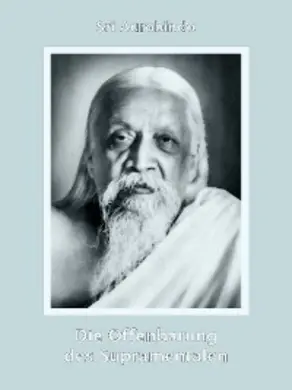
Sri Aurobindos letztes essentielles Werk (1948) zu den prinzipiellen Themen seiner yogischen Vision und Prophezeiung ? die weitere Evolution des Menschen, die Vervollkommnung des Körpers, der göttliche Körper, Supramental und Menschheit und über das Lichtmentale. Eine atemberaubende Spannweite ist hier abgesteckt und auf jeder Seite gegenwärtig ? von der unbewussten Materie, in der alle Geistpotenz bereits enthalten ist, bis zur gnostischen Ebene des schöpferischen Göttlichen, des Wahrheitsbewusstseins oder Supramentalen. Sri Aurobindo wurde durch die Einführung sportlicher Erziehung im Ashram zu diesen Texten veranlasst. Es charakterisiert ihn, aus diesem Alltag heraus den Schritt in die Ewigkeit zu tun: das zu entwickelnde physische Bewusstsein, bis in die Körperzelle hinein, ist für ihn nichts anderes als ein Schritt in der Eroberung des von Beginn an in der Materie involvierten göttlichen Bewusstseins.
Sri Aurobindos Buch «Die Mutter» wurde unter ganz besonderen Umständen geschrieben. Als sich Sri Aurobindo 1926 zurückzog und die Leitung des Ashrams der Mutter übertrug, bat er alle Sadhaka sich in Bezug auf Führung und Hilfe in der Sadhana an die Mutter zu wenden. Als er anordnete, dass fortan jeder Kontakt mit ihm nur über die Mutter stattfinden solle, wurde er von jenen, die lange vor ihr mit ihm zusammen waren, gefragt: «Ja, aber wer ist die Mutter?» Als diese Frage immer wieder gestellt wurde, schrieb er 1927 die Antwort auf diese Frage. Sri Aurobindo schrieb sie einfach auf Notizzettel, die heute noch erhalten sind und sein erster Entwurf war auch der endgültige. Dieser Entwurf macht den Hauptteil des Buches aus. Es ist das Kapitel über die vier Mächte der Mutter. Die anderen Kapitel sind bis auf das erste Auszüge aus seinen Briefen, die er während dieser Zeit geschrieben hatte. Sie wurden hinzugefügt, weil sie das Mental vorbereiten jene Wahrheit zu empfangen, die im Kapitel «Die vier Mächte der Mutter» ausgedrückt wird. Das Werk ´Die Mutter` behandelt den ganzen Bereich seines Integralen Yoga in aller Kürze. Es ist zwar kurz in seiner Ausführung aber dennoch lässt es keinen bedeutenden Aspekt des Yoga aus. Es enthält genaue Anweisungen, was zu tun ist und was nicht, wie man ein inneres Leben aufbaut, den Gefahren und Schwierigkeiten entgegentritt, die unweigerlich kommen werden und es zeigt die Mittel, wie das hohe Ziel erreicht werden kann. Es ist eine bemerkenswerte Gebrauchsanweisung für die Sadhana und ein Führer auf dem komplexen Pfad dieses Yoga. Eine außergewöhnliche mantrische Kraft liegt diesem Werk zugrunde. Es ist angefüllt mit einer Macht und einem Licht und das Lesen von wenigen Zeilen kann genug sein, Wolken der Depression und des Zweifels zu vertreiben, und vermag Schwingungen zu schaffen, die uns aus den kleinen Runden unserer Gedanken und gewohnten Bewegungen herausholen. So wurde dieses Werk auch die Matri Upanishad genannt.
Die Schriften Sri Aurobindos, die hier zusammengestellt wurden, sind ursprünglich Antworten auf Fragen seiner Schüler oder anderer am Yoga oder spirituellen Leben Interessierter; oder aber es sind – wie im „Tal des falschen Lichtes“ – Betrachtungen zu Briefen, die von außerhalb des Ashrams kamen und ihm mit der Bitte um Kommentar unterbreitet wurden. Da sie von allgemeinem Interesse sind und Fragen berühren, die häufig in Zusammenhang mit spiritueller Wahrheit und Erfahrung entstehen, wurden sie hier zusammengestellt und unter einem eigenen Titel veröffentlicht.
The first part of this book deals primarily with the fundamentals of physical education, with the disciplines and attitudes helpful to developing a strong, healthy, and conscious body capable of the spiritual endeavor required for the transformation. In the second part of this book the final stages of the Mother’s Yoga of physical transformation is taken up. Traditionally yoga implies union of the soul with the Divine. The ground of experiences are therefore in the inner being and the spiritual realms. These inner experiences, though enriching and liberating for the soul, leave the body unchanged and subject to all the age old habits of Nature. For the first time we see, in the Mother’s experiences, a supreme heroic effort to liberate and divinise the body itself. Though the Mother’s main Mission of Supramental Manifestation was completed an 29th February 1956, She continued further, in Her immense Love and Compassion for Earth and humanity to make the journey to the Future still shorter and easier. From April 1962, the yoga took a crucial and decisive turn, whence the Mother completely withdrew into Her room to dive deep into the body’s nether mysteries. Only the eye of faith or an inner revelation received as a gift of Grace can tell us how far she went blazing into the Inconscient Night. Success and failure have no meaning there since each inch forward is a great Victory.
Das Essay legt einige der Ziele und Anforderungen des Integralen Yoga fest: „…den Willen des Göttlichen in der Welt auszuarbeiten, eine spirituelle Transformation zu bewirken und eine göttliche Natur und ein göttliches Leben in die mentale, vitale und physische Natur und das Leben der Menschheit herniederzubringen.“ Es werden auch die Prozesse des Yoga und die Bedingungen für die Sadhana behandelt. 1934 schrieb Sri Aurobindo, dass dieses Werk ein frühes Stadium seiner Sadhana darstellt und nur ein Teil davon auf den Yoga anwendbar ist, wie er sich nach mehr als zwanzig Jahren entwickelt hat.
Sri Aurobindo was very emphatic in stating that only he could write truly about himself; but he never wrote any comprehensive or systematic account of his life. Only in his correspondence with his disciples and others he sometimes explained points by incidentally referring to some event in his own life or some experience in his own Yogic development. Also on a few occasions he corrected misleading statements concerning him published in some journals and books and gave notes about some points in his life to three of his biographers who had submitted their manuscripts to him for verification. Some of this material has been compiled and presented in a systematic arrangement. In addition, statements by the Mother about Sri Aurobindo and his life and work were added.
Sri Aurobindo and the Mother on surrender and the divine grace. “Self-surrender to a supreme transmuting Power is the key-word of the Yoga.” – Sri Aurobindo

Популярные серии