

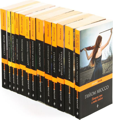
Fortey Richard Скачать все книги 4 Количество книг



Жанр в блоке книги Биографии И Мемуары
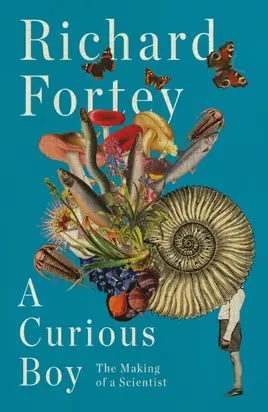
What makes a scientist? In a charming memoir, beloved and brilliant scientist Richard Fortey offers a tour of the natural world in all its joys, puzzles and curiosities.In this memoir, Richard Fortey – a palaeontologist and natural historian – tells the story of how as a young boy he became fascinated with the natural world, leading to a long life exploring its secrets. He leads a journey through botany and birds, fossils and fungi, using a different object to lead each chapter.A great brown trout caught by his father opens up the world of fish, streams and rivers. A blue thrush’s egg takes us out tramping through water meadows and into the social world of birds and trees. Richard takes us back to his past as a small boy who was allowed a little shed at the bottom of the garden in which to play chemist, and where, with the guidance of the encyclopaedia, he made the likes of potassium cyanide from horse hoof clippings, and then the ‘smelliest substance’ – a chemical that when taken outside the shed’s confines brought mayhem to his school, and the Central Line.Educational and inspiring, this is a charming memoir of a life in the thrall of science and the wonders of the natural world.
Жанр в блоке книги Зарубежная Образовательная Литература
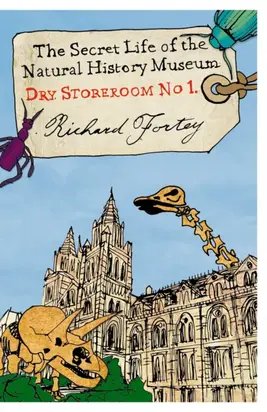
This edition does not include illustrations.‘Dry Store Room No. 1’ is an intimate biography of the Natural History Museum, celebrating the eccentric personalities who have peopled it and capturing the wonders of scientific endeavour, academic rigour and imagination.Behind the public façade of any great museum there lies a secret domain: one of unseen galleries, locked doors, priceless specimens and hidden lives.Through the stories of the numerous eccentric individuals whose long careers have left their mark on the study of evolutionary science, Richard Fortey, former senior paleaontologist at London's Natural History Museum, celebrates the pioneering work of the Museum from its inception to the present day. He delves into the feuds, affairs, scandals and skulduggery that have punctuated its long history, and formed a backdrop to extraordinary scientific endeavour from Darwin to the present day. He explores the staying power and adaptability of the Museum as it responds to changes wrought by advances in technology and molecular biology – 'spare' bones from an extinct giant bird suddenly become cutting-edge science with the new knowledge that DNA can be extracted from them, and ancient fish are tested with the latest equipment that is able to measure rises in pollution.'Dry Store Room No.1’ is a fascinating and affectionate account of a hidden world of untold treasures, where every fragment tells a story about time past, by a scientist who combines rigorous professional learning with a gift for prose that sparkles with wit and literary sensibility.Note that it has not been possible to include the same picture content that appeared in the original print version.
Жанр в блоке книги Зарубежная Образовательная Литература
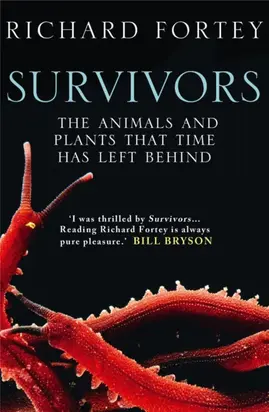
This ebook edition does not include illustrations.An awe-inspiring journey through the eons and across the globe, in search of visible traces of evolution in the living creatures which have survived from earlier times and whose stories speak to us of seminal events in the history of life.The history of life on Earth is far older – and far odder – than many of us realise. In ‘Survivors’, acclaimed author Richard Fortey traces this history not through fossil records, but in the living stories of organisms that have survived nearly unchanged for hundreds of millions of years and whose existence today affords us tantalising glimpses of landscapes long vanished.For evolution has not obliterated its tracks. Scattered across the globe, strange and marvellous plants and animals have survived virtually unchanged since life first began. They range from humble algal mats dating back almost two billion years to hardy musk oxen, which linger as the last vestiges of Ice Age fauna.Following in Fortey’s questing footsteps, ‘Survivors’ takes us on a fascinating journey to these ancient worlds. On a moonlit beach in Delaware where the horseshoe crab shuffles its way through a violent romance, we catch a glimpse of life 450 million years ago, shortly after it diversified on the ocean floor. Along a stretch of Australian coastline, we bear witness to the sights and sounds that would have greeted a Precambrian dawn. Finally, in the dense rainforests of New Zealand where the secretive velvet worm burrows into the rotting timber of the jungle floor, we marvel at a living fossil which has survived unchanged since before the dissolution of the Gondwana supercontinent.Written with Fortey’s customary sparkle and gusto, this wonderfully engrossing exploration of the world’s oldest flora and fauna brilliantly combines the best science writing about the origins of life with an explorer’s sense of adventure and a poet’s wonder at the natural world. Utterly compelling, eye-opening and awe-inspiring, this is a book for anyone with an interest in evolution, in nature, in the remarkable scope of geological time and our own modest interaction with it – in short, in life itself.
Жанр в блоке книги Зарубежная Образовательная Литература
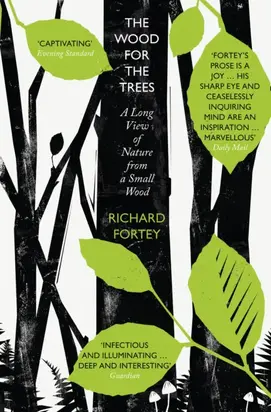
From one of our greatest science writers, this biography of a beech-and-bluebell wood through diverse moods and changing seasons combines stunning natural history with the ancient history of the countryside to tell the full story of the British landscape.‘The woods are the great beauty of this country… A fine forest-like beech wood far more beautiful than anything else which we have seen in its vicinity’ is how John Stuart Mill described a small patch of beech-and bluebell woodland, buried deeply in the Chiltern Hills and now owned by Richard Fortey. Drawing upon a lifetime of scientific expertise and abiding love of nature, Fortey uses his small wood to tell a wider story of the ever-changing British landscape, human influence on the countryside over many centuries and the vital interactions between flora, fauna and fungi.The trees provide a majestic stage for woodland animals and plants to reveal their own stories. Fortey presents his wood as an interwoven collection of different habitats rich in species. His attention ranges from the beech and cherry trees that dominate the wood to the flints underfoot; the red kites and woodpeckers that soar overhead; the lichens, mosses and liverworts decorating the branches as well as the myriad species of spiders, moths, beetles and crane-flies. The 300 species of fungi identified in the wood capture his attention as much as familiar deer, shrews and dormice.Fortey is a naturalist who believes that all organisms are as interesting as human beings – and certainly more important than the observer. So this book is a close examination of nature and human history. He proves that poetic writing is compatible with scientific precision. The book is filled with details of living animals and plants, charting the passage of the seasons, visits by fellow enthusiasts; the play of light between branches; the influence of geology; and how woodland influences history, architecture and industry. On every page he shows how an intimate study of one small wood can reveal so much about the natural world and demonstrates his relish for the incomparable pleasures of discovery.
6 Количество книг
2 Количество книг
2 Количество книг
