Назад

Бёрк Питер Скачать все книги 4 Количество книг

Жанр в блоке книги Историческая Литература
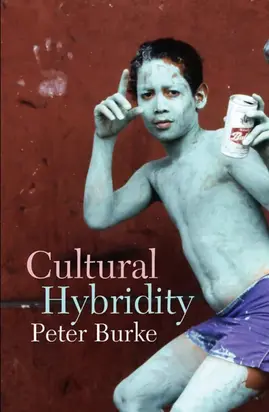
The period in which we live is marked by increasingly frequent and intense cultural encounters of all kinds. However we react to it, the global trend towards mixing or hybridization is impossible to miss, from curry and chips – recently voted the favourite dish in Britain – to Thai saunas, Zen Judaism, Nigerian Kung Fu, ‘Bollywood’ films or salsa or reggae music. Some people celebrate these phenomena, whilst others fear or condemn them. No wonder, then, that theorists such as Homi Bhabha, Stuart Hall, Paul Gilroy, and Ien Ang, have engaged with hybridity in their work and sought to untangle these complex events and reactions; or that a variety of disciplines now devote increasing attention to the works of these theorists and to the processes of cultural encounter, contact, interaction, exchange and hybridization. In this concise book, leading historian Peter Burke considers these fascinating and contested phenomena, ranging over theories, practices, processes and events in a manner that is as wide-ranging and vibrant as the topic at hand.
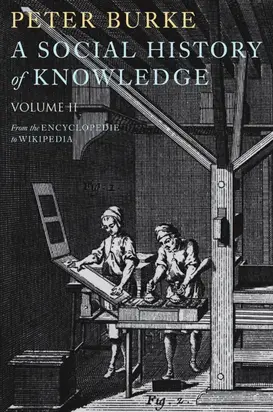
Peter Burke follows up his magisterial Social History of Knowledge, picking up where the first volume left off around 1750 at the publication of the French Encyclopédie and following the story through to Wikipedia. Like the previous volume, it offers a social history (or a retrospective sociology of knowledge) in the sense that it focuses not on individuals but on groups, institutions, collective practices and general trends. The book is divided into 3 parts. The first argues that activities which appear to be timeless – gathering knowledge, analysing, disseminating and employing it – are in fact time-bound and take different forms in different periods and places. The second part tries to counter the tendency to write a triumphalist history of the 'growth' of knowledge by discussing losses of knowledge and the price of specialization. The third part offers geographical, sociological and chronological overviews, contrasting the experience of centres and peripheries and arguing that each of the main trends of the period – professionalization, secularization, nationalization, democratization, etc, coexisted and interacted with its opposite. As ever, Peter Burke presents a breath-taking range of scholarship in prose of exemplary clarity and accessibility. This highly anticipated second volume will be essential reading across the humanities and social sciences.

Жанр в блоке книги Историческая Литература
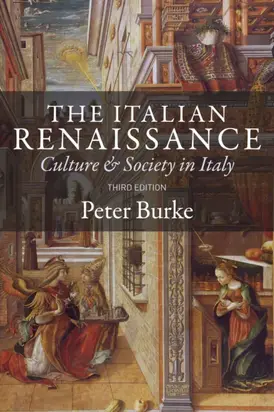
In this brilliant and widely acclaimed work, Peter Burke presents a social and cultural history of the Italian Renaissance. He discusses the social and political institutions which existed in Italy during the fifteenth and sixteenth centuries and analyses the ways of thinking and seeing which characterized this period of extraordinary artistic creativity. Developing a distinctive sociological approach, Peter Burke is concerned with not only the finished works of Michelangelo, Raphael, Leonardo da Vinci and others, but also with the social background, patterns of recruitment and means of subsistence of this ‘cultural elite’. New to this edition is a fully revised introduction focusing on what Burke terms ‘the domestic turn’ in Renaissance studies and discussing the relation of the Renaissance to global trends. He thus makes a major contribution to our understanding of the Italian Renaissance, and to our comprehension of the complex relations between culture and society. This thoroughly revised and updated third edition is richly illustrated throughout. It will have a wide appeal among historians, sociologists and anyone interested in one of the most creative periods of European history.

Жанр в блоке книги История

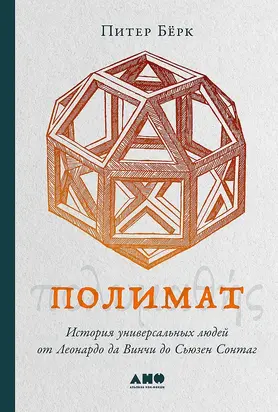
Обычно под полиматами понимают универсальных людей, одаренных в разных областях. Как ни странно, эти удивительные личности, наделенные почти сверхъестественными способностями, почти не изучены как явление. Книга известного историка Питера Бёрка — удачная попытка восполнить этот пробел. Согласно его определению, полиматы — не просто эрудиты с широкими интересами, а ученые, обладающие энциклопедическими знаниями о предмете или его существенном сегменте. В чем состоит их уникальность и можно ли их классифицировать? Какие черты — врожденные или приобретенные — способствуют полиматии? Насколько важны для этих людей социокультурные и экономические условия, в которых они живут и работают? Как на них влияют технический прогресс и информационный взрыв? Выживут ли полиматы как «вид» в условиях углубляющейся специализации? Питер Бёрк ищет ответы на эти и другие вопросы, исследуя историю и «среду обитания» полиматов — от Пифагора до Джареда Даймонда, от Леонардо да Винчи до Сьюзен Сонтаг.

«В последние годы термин „полимат“, раньше применявшийся только в отношении ученых, распространился на людей, чьи достижения простираются от спорта до политики… Однако в этой книге мы сосредоточимся все-таки на академическом знании, которое ранее именовалось „ученостью“».«На персональном уровне важен вопрос о том, что двигало этими людьми. Была ли это простая, но всепоглощающая любознательность, то самое августианское „только чтобы узнать“, или что-то еще лежало в основе того, что политолог Гарольд Лассуэлл в своих мемуарах назвал „страстью к всезнанию“? Что заставляло их переходить от одной науки к другой? Быстрая потеря интереса или невероятная степень открытости ума? Где полиматы находили время и силы для своих разносторонних занятий? На что они жили?»«В книге пойдет речь о Европе и обеих Америках с XV столетия и до наших дней. Она начинается с uomo universale эпохи Возрождения, но основное внимание в ней уделено долгосрочным последствиям того, что можно назвать двумя кризисами учености, первый из которых пришелся на середину XVII, а второй — на середину XIX века. Оба были связаны с широким распространением книг (пока еще рано говорить о долгосрочных последствиях третьего кризиса, вызванного цифровой революцией). Все три кризиса привели к тому, что можно назвать информационным взрывом — как в смысле стремительного распространения знаний, так и в смысле их фрагментации».


Для кого
Популярные серии