Назад

Ziegler Philip Скачать все книги 3 Количество книг

Жанр в блоке книги Биографии И Мемуары

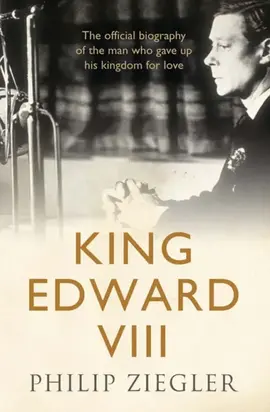
The authorised life story of the king who gave up his throne for love, by one of our most distinguished biographers.In this masterly authorized biography, Philip Ziegler reveals the complex personality of Edward VIII, the only British monarch to have voluntarily renounced the throne.With unique access to the Royal Archives, Ziegler overturns many myths about Edward and tells his side of the story – from his glamorous existence as Prince of Wales to his long decline in semi-exile in France. At the heart of the book is an unflinchingly honest examination of Edward’s all-consuming passion for Wallis Simpson, which led to his dramatic abdication.Elegant and devastating, this is the most convincing portrait of Edward ever published.

Жанр в блоке книги Биографии И Мемуары

The magisterial official life of Britain's complex and misunderstood former prime minister, which offers a fundamental reassessment of his reputation.Edward Heath was at the centre of British political life for much of the second half of the twentieth century. Entering the House of Commons in 1950, he served as a whip and a minister before becoming Leader of the Conservative Party and Prime Minister from 1970 to 1974. But today he is largely a forgotten figure, eclipsed by his more celebrated successor, Margaret Thatcher.In this masterly official biography, distinguished historian Philip Ziegler offers a timely reassessment of Heath's remarkable political career. With exclusive access to personal papers unavailable to previous biographers he presents the first fully rounded portrait of our most enigmatic former prime minister.Beginning with Heath's early years – his childhood in Kent, student days in pre-war Oxford, wartime military service and short business career before he immersed himself in politics – Ziegler goes on to chart Heath's effortless rise through the ranks of the Conservative Party. He brilliantly captures Heath's rivalry with Harold Wilson and the supreme drama of 1974 – the year of two elections and a hung parliament – with its uncanny parallels for our own times.Politics consumed Heath's life but he nonetheless found time for other pursuits, becoming an accomplished conductor and an internationally successful yachtsman. The book explores Heath's endlessly fascinating personality and casts fresh light on the financial affairs and private life of this most complex of political leaders.Heath's later years were blighted by the 'long sulk', as he failed to come to terms with losing the leadership to Margaret Thatcher. But this should not disguise his considerable achievements. He helped to transform the Conservative Party, and by securing Britain's historic entry into Europe, the high point of his career, he arguably changed the lives of the British people more fundamentally than any prime minister since Winston Churchill

Жанр в блоке книги История

Philip Ziegler follows the course of the black plague as it swept from Asia into Italy and then into the rest of Europe.

When first published in 1969, this study was described by the as “.’ This new edition of the major study on the subject is illustrated by over seventy contemporary black and white illustrations and eight pages of color.

A series of natural disasters in the furthest reaches of the Orient during the third of the fourteenth century heralded what was, for the population of Europe, the most devastating period of death and destruction in its history. By the autumn of 1347 the Black Death had reached the shores of the eastern Mediterranean, and the years that followed were to witness a horrifying and apparently relentless epidemic.

One third of England’s population died between the years 1347 and 1350, and over one thousand villages were deserted, never to be repopulated. In towns and cities the cemeteries were unable to provide space for all the dead, and violence and crime spiraled. Travel became dangerous and interruption of food and other supplies across the country added hunger and deprivation to the problems of people already overwhelmed by the threat of the vilest of deaths.

In the countryside the population was halved in places, and as land became plentiful, landowners’ profits fell and the government tried in vain to fix labourers’ wages and prices, peasant unrest accelerated and the manorial system disintegrated, culminating eventually in the Peasants’ Revolt of 1381.

Throughout Europe whole societies were disrupted; racial tensions built as a direct result of the plague, and persecution of Jews began in earnest throughout the continent. The social and economic consequences of the period were to reach far into the following century.

Популярные серии