Назад

Hoare Philip Скачать все книги 6 Количество книг

Жанр в блоке книги Языкознание
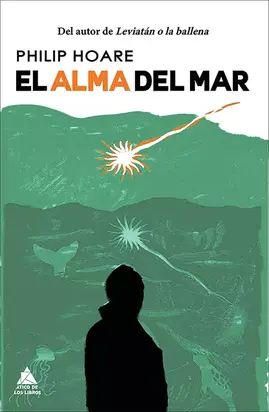
Una exploración del hechizo del mar y del arte.Del autor de Leviatán o la ballena y El mar interior, llega un maravilloso retrato compuesto por las sutiles, hermosas, inspiradas y enloquecedoras maneras en que el ser humano se ha relacionado con el planeta del agua.En el deslumbrante cierre de su trilogía sobre el mar, Hoare parte de nuevo en un viaje en busca de las historias humanas y animales del mar, desde las personas empujadas a la desesperación, a ballenas, gaviotas y espíritus de las aguas: esta es una odisea personal y literaria que nos llevará desde los suburbios de Londres hasta las costas europeas y del Atlántico. Desfilan por sus páginas William Shakespeare, Henry David Thoreau, Wilfred Owen, Jack London, Herman Melville, Elizabeth Barrett Browning, Virginia Woolf, Percy Bysse Shelley, Mary Shelley, Lord Byron, el almirante Nelson, David Bowie, Stanley Kubrick y muchos otros poetas y artistas, escritores modernistas y héroes famosos o desconocidos, todos ellos relacionados con el mar, a veces de manera fatal y hermosa. «Mitad historia cultural y mitad vibrante narración de su relación con el mar […] Philip Hoare ha escrito un libro maravilloso que es una delicia leer.» The Sunday Times"Hoare escribe sobre Shelley, Byron y Elizabeth Barrett Browning […] Poetas del mar en manos de un poeta del mar." The Literary Review"Una historia idiosincrática de marineros, aventureros y artistas que evoca la majestuosidad del horizonte marino […] Es una obra maestra que se eleva al nivel de poesía sublime." The Times"Rara vez he leído un libro que me haya hablado tan directa e íntimamente a mí." The Guardian"Un libro extraño y maravilloso." Robert Macfarlane
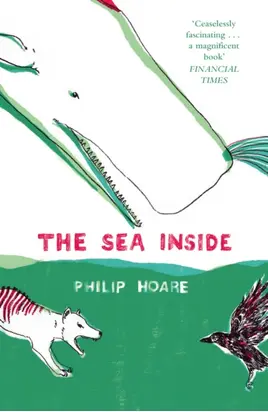
The sea surrounds us. It gives us life, provides us with the air we breathe and the food we eat. It is where we came from, and it carries our commerce. It represents home and migration, ceaseless change and constant presence. It covers two-thirds of our planet. Yet caught up in our everyday lives, we seem to ignore it, and what it means.In The Sea Inside, Philip Hoare sets out to rediscover the sea, its islands, birds and beasts. He begins on the south coast where he grew up, a place of family memory and an abiding sense of aloneness and almost monastic escape offered by the sea. From there he travels to the other side of the world, from the Isle of Wight to the Azores, from Sri Lanka to Tasmania and New Zealand, in search of encounters with animals and people – the wild and the tamed, the living and the extinct. Navigating between human and natural history, between science and myth, he asks what their stories mean for us now, in the twenty-first century, when the sea has never been so important to our present, as well as to our past and future.Along the way we meet an amazing cast of recluses, outcasts, and travellers; from eccentric artists and scientists to miracle-working saints and tattooed warriors; from gothic ravens to the greatest whales and bizarre creatures that may, or may not, be extinct. The Sea Inside is part bestiary, part memoir, part fantastical travelogue. It takes us on a magical journey of discovery, filled with astounding tales of faith and fear, wilderness and destruction, mortality and beauty. But more than anything, it is the story of the natural world, and the sea inside us all.
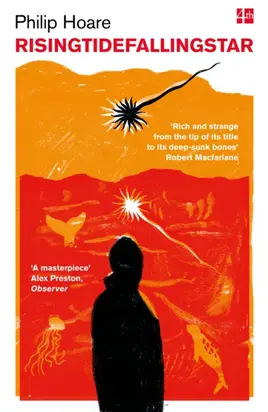
Rich and strange from the tip of its title to its deep-sunk bones’ Robert MacfarlaneFrom the author of Leviathan, or, The Whale, comes a composite portrait of the subtle, beautiful, inspired and demented ways in which we have come to terms with our watery planet.In the third of his watery books, the author goes in pursuit of human and animal stories of the sea. Of people enchanted or driven to despair by the water, accompanied by whales and birds and seals – familiar spirits swimming and flying with the author on his meandering odyssey from suburbia into the unknown.Along the way, he encounters drowned poets and eccentric artists, modernist writers and era-defining performers, wild utopians and national heroes – famous or infamous, they are all surprisingly, and sometimes fatally, linked to the sea.Out of the storm-clouds of the twenty-first century and our restive time, these stories reach back into the past and forward into the future. This is a shape-shifting world that has never been certain, caught between the natural and unnatural, where the state between human and animal is blurred. Time, space, gender and species become as fluid as the sea.Here humans challenge their landbound lives through art or words or performance or myth, through the animal and the elemental. And here they are forever drawn back to the water, forever lost and found on the infinite sea.

Жанр в блоке книги Историческая Литература
This ebook contains a limited number of illustrations.The story of Netley in Southampton – its hospital, its people and the secret history of the 20th-century. Now with a new afterword uncovering astonishing evidence of Netley's links with Porton Down & experiments with LSD in the 1950s.It was the biggest hospital ever built. Stretching for a quarter of a mile along the banks of Southampton Water, the Royal Victoria Military Hospital at Netley was an expression of Victorian imperialism in a million red bricks, a sprawling behemoth so vast that when the Americans took it over in World War II, GIs drove their jeeps down its corridors. Born out of the bloody mess of the Crimean War, it would see the first women serving in the military, trained by Florence Nightingale; the first vaccine for typhoid; and the first purpos- built military asylum. Here Wilfred Owen would be brought along with countless other shell-shocked victims of World War I – captured on film, their tremulous ghosts still haunted the asylum a generation later. In Spike Island, Philip Hoare has written a biography of a building. In the process he deals with his own past, and his own relationship to its history.

Жанр в блоке книги Историческая Литература

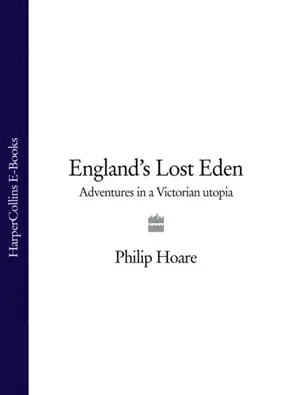
A kaleidoscopic story of myth, Spiritualism, and the Victorian search for Utopia from one of the brightest and most original non-fiction writers at work today.In 1872 there was a bizarre eruption of religious mania in Hampshire’s New Forest. Its leader was Mary Ann Girling, a Suffolk farmer's daughter who claimed to be the female Christ and whose sect, the Children of God, lived in imminent anticipation of the millennium. It was rumoured that Mrs Girling mesmerised her supporters, literally hypnotising them to keep them in her power. Other reports claimed that the sect murdered their illegitimate offspring in their Utopian home at 'New Forest Lodge'.Through Mary Ann's story and the spiritual vortex around her, Philip Hoare takes us deeper into the pagan heart of the New Forest. In the neighbouring village of Sway, an eccentric barrister, Andrew Peterson, conducted séances in which the spirit of Christopher Wren instructed Peterson to build a 300-foot concrete tower to alleviate local unemployment. Wren, although dead for two centuries, even issued Peterson with the exact plans for the foundations and the formula for the concrete. It rose like some spiritualist lighthouse towering over the trees, and looming over the Shaker encampment and Mrs Girling's Children of God.At the same time, on the other side of the forest, in the grand country house of the Cowper-Temples, further experiments into the realms of the Victorian uncanny were under way. William Cowper-Temple, a supporter of Mary Ann Girling, vegetarian, anti-blood sport activist and member of Parliament, had joined his wife Georgiana in her Spiritualist quest. A third pair of hands came to the table, those of John Ruskin – the great Victorian artist, scientist, poet and philosopher – who sought the dead spirit of his beloved Rose La Touche. His explorations into the afterlife would eventually send him insane.Through this unique biography of the New Forest Philip Hoare paints a strange, and little known, portrait of Victorian England – a fascinating story of disorder in an avowed age of reason.

Жанр в блоке книги Контркультура

Thomas Hobbes argues for a social contract and rule by an absolute sovereign. Influenced by the English Civil War, Hobbes wrote that chaos or civil war-situations identified with a state of nature and the famous motto Bellum omnium contra omnes (“the war of all against all”)-could only be averted by strong central government. He thus denied any right of rebellion toward the social contract, which would be later added by John Locke and conserved by Jean-Jacques Rousseau. (However, Hobbes did discuss the possible dissolution of the State. Since the social contract was made to institute a state that would provide for the “peace and defense” of the people, the contract would become void as soon as the government no longer protected its citizens. By virtue of this fact, man would automatically return to the state of nature until a new contract is made).
Популярные серии