

A. Peter High Скачать все книги 4 Количество книг



Жанр в блоке книги Техническая Литература
The main focus of this book is a review of how the Common Fisheries Policy is enforced throughout the Community, with a discussion of its successes and failures. Topics include the various rules and policies to be enforced; the enforcement authorities in the Member States and their activities and strategies; the role of the Commission and its approach to enforcement; new developments in fisheries control; the costs of enforcement; and problem fisheries and non compliance generally.
Жанр в блоке книги Техническая Литература
Natural and synthetic water soluble polymers are used in a wide range of familiar industrial and consumer products, including coatings and inks, papers, adhesives, cosmetics and personal care products. They perform a variety of functions without which these products would be significantly more expensive, less effective or both. Written for research, development and formulation chemists, technologists and engineers at graduate level and beyond in the fine and specialty chemicals, polymers, food and pharmaceutical industries, the Handbook of Industrial Water Soluble Polymers deals specifically with the functional properties of both natural and synthetic water soluble polymers. By taking a function based approach, rather than a “polymer specific” approach the book illustrates how polymer structure leads to effect, and shows how different polymer types can be employed to achieve appropriate product properties.
Жанр в блоке книги Зарубежная Образовательная Литература
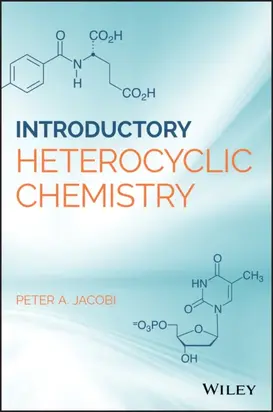
A unique approach to a core topic in organic chemistry presented by an experienced teacher to students and professionals Heterocyclic rings are present in the majority of known natural products, contributing to enormous structural diversity. In addition, they often possess significant biological activity. Medicinal chemists have embraced this last property in designing most of the small molecule drugs in use today. This book offers readers a fundamental understanding of the basics of heterocyclic chemistry and their occurrence in natural products such as amino acids, DNA, vitamins, and antibiotics. Based on class lectures that the author has developed over more than 40 years of teaching, it focuses on the chemistry of such heterocyclic substances and how they differ from carbocyclic systems. Introductory Heterocyclic Chemistry offers in-depth chapters covering naturally occurring heterocycles; properties of aromatic heterocycles; π-deficient heterocycles; π-excessive heterocycles; and ring transformations of heterocycles. It then offers an overview of 1,3-dipolar cycloadditions before finishing up with a back-to-basics section on nitriles and amidines. Presents a conversational approach to a fundamental topic in organic chemistry teaching Offers a unique look at this core organic chemistry topic via important naturally occurring and/or biologically active heterocycles Based on the author's many years of class lectures for teaching at the undergraduate and graduate level as well as pharmaceutical-industry courses Clear, concise, and accessible for advanced students of chemistry to gain a fundamental understanding of the basics of heterocyclic chemistry Introductory Heterocyclic Chemistry is an excellent text for undergraduate and graduate students as well as chemists in industrial environments in chemistry, pharmacy, medicinal chemistry, and biology.
Жанр в блоке книги Зарубежная Деловая Литература
World Class IT Technology is all around us. It is so pervasive in our daily lives that we may not even recognize when we interact with it. Despite this fact, many companies have yet to leverage information technology as a strategic weapon. What then is an information technology executive to do in order to raise the prominence of his or her department? In World Class IT, recognized expert in IT strategy Peter High reveals the essential principles IT executives must follow and the order in which they should follow them whether they are at the helm of a high-performing department or one in need of great improvement. Principle 1: Recruit, train, and retain World Class IT people Principle 2: Build and maintain a robust IT infrastructure Principle 3: Manage projects and portfolios effectively Principle 4: Ensure partnerships within the IT department and with the business Principle 5: Develop a collaborative relationship with external partners The principles and associated subprinciples and metrics introduced in World Class IT have been used by IT and business executives alike at many Global 1000 companies to monitor and improve IT's performance. Those principles pertain as much to the leaders of IT as they do to those striving to emulate them.

6 Количество книг
2 Количество книг
2 Количество книг
