

H. Paul Scudder Скачать все книги 3 Количество книг



Жанр в блоке книги Зарубежная Образовательная Литература
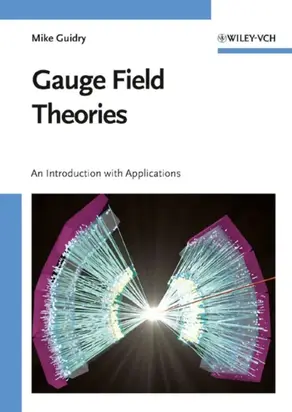
Acquaints readers with the main concepts and literature of elementary particle physics and quantum field theory. In particular, the book is concerned with the elaboration of gauge field theories in nuclear physics; the possibility of creating fundamental new states of matter such as an extended quark-gluon plasma in ultra-relativistic heavy ion collisions; and the relation of gauge theories to the creation and evolution of the universe. Divided into three parts, it opens with an introduction to the general principles of relativistic quantum field theory followed by the essential ingredients of gauge fields for weak and electromagnetic interactions, quantum chromodynamics and strong interactions. The third part is concerned with the interface between modern elementary particle physics and «applied disciplines» such as nuclear physics, astrophysics and cosmology. Includes references and numerous exercises.
Жанр в блоке книги Зарубежная Деловая Литература
Roberta Snow and Paul Phillips present a clear and structured way to manage the challenges of limited resources, competing demands, and the need for accountability while remaining true to a nonprofit’s mission. Making Critical Decisions offers nonprofit leaders a proven model for making hard choices that minimize risks while maintaining progress toward the organization’s goals as well as a practical framework for understanding and implementing the decision-making process. The book includes qualitative and quantitative tools and offers illustrative case examples throughout that clearly show how this method can be applied to different types of nonprofit organizations.
Жанр в блоке книги Зарубежная Образовательная Литература
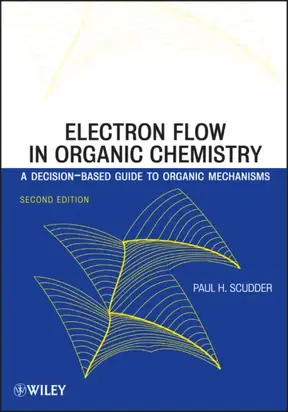
Sets forth the analytical tools needed to solve key problems in organic chemistry With its acclaimed decision-based approach, Electron Flow in Organic Chemistry enables readers to develop the essential critical thinking skills needed to analyze and solve problems in organic chemistry, from the simple to complex. The author breaks down common mechanistic organic processes into their basic units to explain the core electron flow pathways that underlie these processes. Moreover, the text stresses the use of analytical tools such as flow charts, correlation matrices, and energy surfaces to enable readers new to organic chemistry to grasp the fundamentals at a much deeper level. This Second Edition of Electron Flow in Organic Chemistry has been thoroughly revised, reorganized, and streamlined in response to feedback from both students and instructors. Readers will find more flowcharts, correlation matrices, and algorithms that illustrate key decision-making processes step by step. There are new examples from the field of biochemistry, making the text more relevant to a broader range of readers in chemistry, biology, and medicine. This edition also offers three new chapters: Proton transfer and the principles of stability Important reaction archetypes Qualitative molecular orbital theory and pericyclic reactions The text's appendix features a variety of helpful tools, including a general bibliography, quick-reference charts and tables, pathway summaries, and a major decisions guide. With its emphasis on logical processes rather than memorization to solve mechanistic problems, this text gives readers a solid foundation to approach and solve any problem in organic chemistry.

6 Количество книг
2 Количество книг
2 Количество книг
