

J. P. Davies Скачать все книги 3 Количество книг



Жанр в блоке книги Техническая Литература
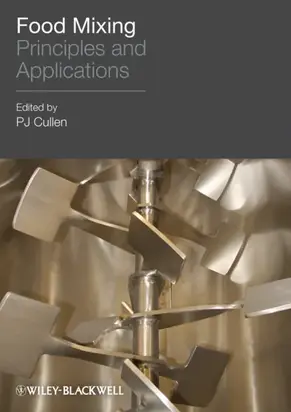
The mixing of liquids, solids and gases is one of the most common unit operations in the food industry. Mixing increases the homogeneity of a system by reducing non-uniformity or gradients in composition, properties or temperature. Secondary objectives of mixing include control of rates of heat and mass transfer, reactions and structural changes. In food processing applications, additional mixing challenges include sanitary design, complex rheology, desire for continuous processing and the effects of mixing on final product texture and sensory profiles. Mixing ensures delivery of a product with constant properties. For example, consumers expect all containers of soups, breakfast cereals, fruit mixes, etc to contain the same amount of each ingredient. If mixing fails to achieve the required product yield, quality, organoleptic or functional attributes, production costs may increase significantly. This volume brings together essential information on the principles and applications of mixing within food processing. While there are a number of creditable references covering general mixing, such publications tend to be aimed at the chemical industry and so topics specific to food applications are often neglected. Chapters address the underlying principles of mixing, equipment design, novel monitoring techniques and the numerical techniques available to advance the scientific understanding of food mixing. Food mixing applications are described in detail. The book will be useful for engineers and scientists who need to specify and select mixing equipment for specific processing applications and will assist with the identification and solving of the wide range of mixing problems that occur in the food, pharmaceutical and bioprocessing industries. It will also be of interest to those who teach, study and research food science and food engineering.
Жанр в блоке книги Зарубежная Образовательная Литература
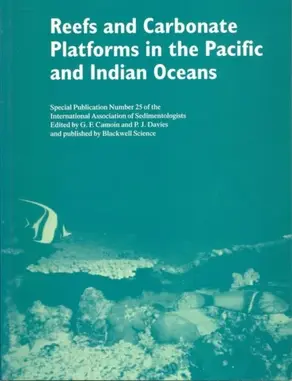
This IAS Special Publication #27 contains 17 of the papers presented at the IAS International Workshop on Reefs and Carbonate platforms in the Pacific and Indian oceans held in Sydney (July 1995). This is the first book to summarize the current state of knowledge about reefs and carbonate platforms in these oceans, where there is a great diversity of carbonate systems in various tectonic settings. Papers concern both processes operating in reefs and carbonate platforms and case histories (platform and oceanic reef case histories). Case histories range from the Lower Cretaceous to modern reefs and most fossil carbonate platforms concern outcomes from recent ODP legs in the Pacific. The book covers a broad spectrum of disciplines related to carbonate geology: sedimentology, geochemistry, geophysics, reef ecology and modeling. If you are a member of the International Association of Sedimentologists, for purchasing details, please see: http://www.iasnet.org/publications/details.asp?code=SP25
Жанр в блоке книги Зоология
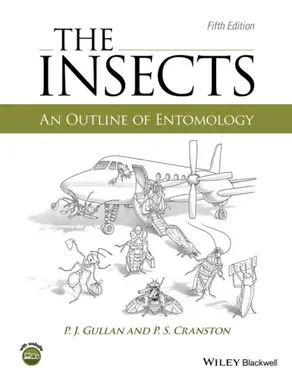
Insects represent over half of the planet’s biological diversity. This popular textbook provides a comprehensive introduction to this extraordinary diversity, and places entomology central to the theory and practice of evolutionary and ecological studies. Fully revised, this fifth edition opens with a chapter concerning the popular side of insect studies, including insects in citizen science, zoos and butterfly houses, and insects as food for humans and animals. Key features of insect structure, function, behaviour, ecology and classification are integrated with appropriate molecular studies. Much of the book is organized around major biological themes: living on the ground, in water, on plants, in colonies, and as predators, parasites/parasitoids and prey insects. A strong evolutionary theme is maintained throughout. There is major revision to the chapter on systematics and a new chapter, Insects in a Changing World, includes insect responses to, and the consequences of, both climate change and human-assisted global alterations to distributions. Updated ‘Taxoboxes’ demonstrate topical issues and provide concise information on all aspects of each of the 28 major groupings (orders) of insects, plus the three orders of non-insect hexapods. New boxes describe a worrying increase in insect threats to landscape and commercial trees (including eucalypts, palms and coffee) and explain the value of genetic data, including evolutionary developmental biology and DNA barcoding, in insect biodiversity studies. The authors maintain the clarity and conciseness of earlier editions, and extend the profuse illustrations with new hand-drawn figures. Over 50 colour photographs, together with the informative text and an accompanying website with links to video clips, appendices, textboxes and further reading lists, encourage a deeper scientific study of insects. The book is intended as the principal text for students studying entomology, as well as a reference text for undergraduate and graduate courses in the fields of ecology, agriculture, fisheries and forestry, palaeontology, zoology, and medical and veterinary science.

10 Количество книг
2 Количество книг
1 Количество книг
