

Cheremisinoff Nicholas P. Скачать все книги 5 Количество книг



Жанр в блоке книги Физика
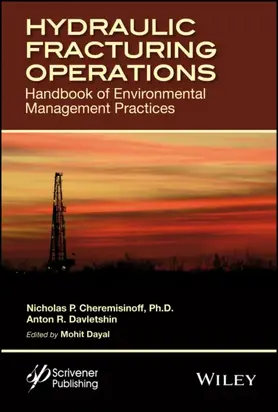
Hydraulic fracturing, commonly referred to as “fracking,” is a technique used by the oil and gas industry to mine hydrocarbons trapped deep beneath the Earth’s surface. The principles underlying the technology are not new. Fracking was first applied at the commercial level in the United States as early as 1947, and over the decades it has been applied in various countries including Canada, the UK, and Russia. The author worked with engineering teams as early as the mid-1970s in evaluating ways to improve oil recovery from this practice. By and large fracking was not an economically competitive process and had limited applications until the early 2000s. Several factors altered the importance of this technology, among them being significant technological innovations in drilling practices with impressive high tech tools for exploration, well construction and integrity, and recovery along with discoveries of massive natural gas reserves in the United States and other parts of the world. These factors have catapulted the application of the technology to what is best described as the gold rush of the 21st century, with exploration and natural gas plays proceeding at a pace that seemingly is unrivaled by any historical industrial endeavor. But this level of activity has invoked widespread criticism from concerned citizens and environmental groups in almost every nation across the Globe. This outstanding new volume offers the industry a handbook of environmental management practices that can mitigate risks to the environment and, through best practices and current technologies, to conform to the current standards and regulations that are in place to provide the world with the energy it needs while avoiding environmental damage. For the new hire, veteran engineer, and student alike, this is a one-of-a-kind volume, a must-have for anyone working in hydraulic fracturing.
Жанр в блоке книги Отраслевые Издания
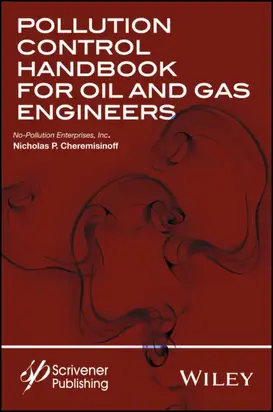
This is a major new handbook that covers hundreds of subjects that cross numerous industry sectors; however, the handbook is heavily slanted to oil and gas environmental management, control and pollution prevention and energy efficient practices. Multi-media pollution technologies are covered : air, water, solid waste, energy. Students, technicians, practicing engineers, environmental engineers, environmental managers, chemical engineers, petroleum engineers, and environmental attorneys are all professionals who will benefit from this major new reference source. The handbook is organized in three parts. Part A provides an extensive compilation of abbreviations and concise glossary of pollution control and engineering terminology. More than 400 terms are defined. The section is intended to provide a simple look-up guide to confusing terminology used in the regulatory field, as well as industry jargon. Cross referencing between related definitions and acronyms are provided to assist the user. Part B provides physical properties and chemical safety information. This part is not intended to be exhaustive; however it does provide supplemental information that is useful to a number of the subject entries covered in the main body of the handbook. Part C is the Macropedia of Subjects. The part is organized as alphabetical subject entries for a wide range of pollution controls, technologies, pollution prevention practices and tools, computational methods for preparing emission estimates and emission inventories and much more. More than 100 articles have been prepared by the author, providing a concise overview of each subject, supplemented by sample calculation methods and examples where appropriate, and references. Subjects included are organized and presented in a macropedia format to assist a user in gaining an overview of the subject, guidance on performing certain calculations or estimates as in cases pertinent to preliminary sizing and selection of pollution controls or in preparing emissions inventories for reporting purposes, and recommended references materials and web sites for more in-depth information, data or computational tools. Each subject entry provides a working overview of the technology, practice, piece of equipment, regulation, or other relevant issue as it pertains to pollution control and management. Cross referencing between related subjects is included to assist the reader to gain as much of a practical level of knowledge.
Жанр в блоке книги Теплоэнергетика
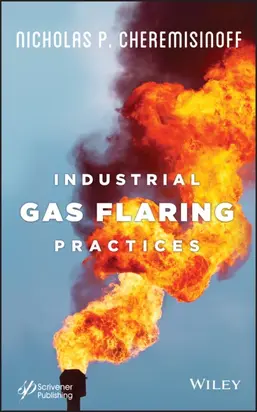
This volume tackles for the first time in decades the world's gas flaring practices, a difficult, hot-button issue of our time, whose consequences are only just beginning to be understood. The book examines both the technical and environmental aspects of gas flaring, highlights different flare designs, and presents real-world case studies illustrating the proper use of gas flaring and how to avoid polluting flaring events. The only guide of its kind, this remarkable book can help professionals in the oil and gas industry take an important step toward reducing worldwide CO2 emissions.
Жанр в блоке книги Химия Полимеров
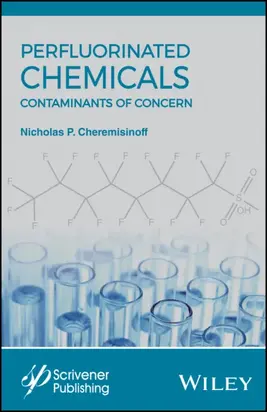
This new volume provides a timely study on the environmental challenges from a specific class of perfluorinated chemical compounds (PFCs) that are now being recognized as a worldwide health threat. Recent studies report that levels of classes of PFCs known as polyfluoroalkyl and perfluoroalkyl (PFASs) exceed federally recommended safety levels in public drinking-water supplies for 6 million people in the United States and that as many as 100 million people could be at risk from exposure to these chemicals. These chemicals occur globally in wildlife and humans. Both PFCAs and PFSAs have been produced for more than 50 years, but have only become of interest to regulators and environmentalists since the late 1990s. Recent advances in analytical methodology has enabled widespread detection in the environment and humans at trace levels. These toxic chemicals have been found in outdoor and indoor air, surface and drinking water, house dust, animal tissue, human blood serum, and human breast milk. Of great concern to communities is the presence of these compounds in a number of drinking water supplies in the U.S. and other countries. This new volume provides a timely explanation of the chemicals, provides a detailed review of the regulations both in the US and European Community, explains the health risk literature, and then explores in great detail available treatment technologies. The volume is a must for public water supply facilities, industrial operations that have historically used these chemicals and face legacy pollution issues, policy makers and the general public.
Жанр в блоке книги Органическая Химия
Groundwater is one of the Earth’s most precious resources. We use it for drinking, bathing, and many other purposes. Without clean water, humans would cease to exist. Unfortunately, because of ignorance or lack of caring, groundwater is often contaminated through industrialization, industry, construction or any number of other ways. It is the job of the environmental engineer to remediate the contaminated groundwater and make what has been tainted safe again.Selecting the proper remediation strategy and process is the key to moving forward, and, once this process has been selected, it must be executed properly, taking into consideration the costs, the type of contaminants that are involved, time frames, and many other factors. This volume provides a broad overview of the current and most widely applied remedial strategies. Instead of discussing these strategies in a generic way, the volume is organized by focusing on major contaminants that are of prime focus to industry and municipal water suppliers. The specific technologies that are applicable to the chemical contaminants discussed in different chapters are presented, but then cross-referenced to other chemical classes or contaminants that are also candidates for the technologies. The reader will also find extensive cost guidance in this volume to assist in developing preliminary cost estimates for capital equipment and operations & maintenance costs, which should be useful in screening strategies. The eight chapters cover all of the major various types of contaminants and their industrial applications, providing a valuable context to each scenario of contamination. This is the most thorough and up-to-date volume available on this important subject, and it is a must-have for any environmental engineer or scientist working in groundwater remediation.

10 Количество книг
0 Количество книг
2 Количество книг
