

Wilson Michael P. Скачать все книги 3 Количество книг



Жанр в блоке книги Сельское Хозяйство
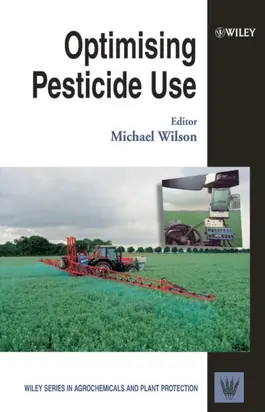
Optimising Pesticide Use brings together the wide range of scientific disciplines necessary to ensure best practice through monitoring what is used and improving how it is formulated and applied. The book provides: An in-depth exploration of pesticide optimisation from the view point of industry and research scientist A case study on the development of a new range of active chemistries from bacteria A discussion of complementary pest control methods This text will provide essential information to workers in the pesticide industry and regulatory community who need to be aware of current thinking and advancements in the optimal use of pesticidal compounds and systems, as well as environmental organisations and aid development organisations.
Жанр в блоке книги Научно-Популярная Литература
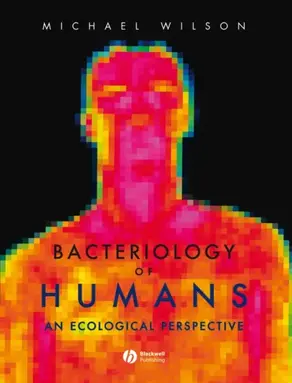
1st Prize, 'New Authored Books' category, Royal Society of Medicine and Society of Authors Medical Book Awards 2008 “Overall, I am impressed by the up-to date information content and structure provided in Bacteriology of Humans. It is truly an ecological perspective helpful for undergraduate/graduate majors in microbiology and immunology.” –American Society for Microbiology, June 2009 «Wilson provides the reader with an up-to-date, comprehensive census of the indigenous microorganisms that inhabit the human body and in so doing contributes significantly to this rapidly advancing area of study. The narrative is clearly written; the index is excellent; there are numerous bibliographic citations. Each chapter is rich with tables, diagrams, color micrographs, and charts … Highly recommended.» –Choice Reviews «This comprehensive, yet accessible text… is an excellent and informative reference book… it should be on the shelf of every major science and medical library. The content, organization, and presentation make this book a unique resource.» –Doody's Book Reviews Until recently, the indigenous microbiota of humans has been a relatively neglected area of microbiology with most attention being focused on those microbes that cause disease in humans, rather than on those that co-exist with us in the disease-free state. However, in the past decade research has shown that not only is the indigenous microbiota involved in protecting humans from exogenous pathogens but it is also involved in our development and nutrition. Consequently, interest has grown substantially among health professionals and scientists in analyzing and understanding these microbial (largely bacterial) communities. This comprehensive, yet accessible text provides an up-to-date guide to the development, composition and distribution of indigenous microbial communities of humans. With the aid of abundant colour figures, diagrams, tables and maps, it establishes links between the physicochemical factors prevailing at an anatomical site and the types of microbes to be found there. The book includes an introduction to the human-microbe symbiosis as well as an in-depth look at the main systems and organs of the human body that have an indigenous microbiota. Each chapter includes a list of references for further study. This is an excellent and informative reference book that is useful to anyone with an interest in microbiology, medical microbiology, microbial ecology, infectious diseases, immunology, human biology, medicine, dentistry, nursing, health sciences, biomedical sciences or pharmacy – it should be on the shelf of every major science and medical library. Hallmark Features: Provides a comprehensive, yet accessible, reference book on the human microbiota Lavishly illustrated with colour figures, diagrams, tables and maps Each chapter provides a list of references to promote further study Each chapter contains links to key websites Offers an ecological approach that explains why certain organisms are associated with a particular anatomical site
Жанр в блоке книги Прикладные Отрасли Медицины
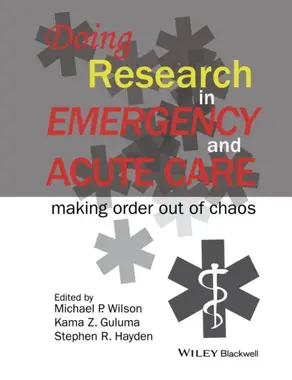
A practical guide to understanding and navigating the unique challenges faced by physicians and other professionals who wish to undertake research in the ED or other acute care setting. Focusing on the hyper-acute and acute care environment and fulfilling two closely-related needs: 1) the need for even seasoned researchers to understand the specific logistics and issues of doing research in the ED; and 2) the need to educate clinically active physicians in research methodology. This new text is not designed to be a complex, encyclopedic resource, but instead a concise, easy-to-read resource designed to convey key “need-to-know” information within a comprehensive framework. Aimed at the busy brain, either as a sit-down read or as a selectively-read reference guide to fill in knowledge gaps, chapters are short, compartmentalized, and are used strategically throughout the text in order to introduce and frame concepts. This format makes it easy – and even entertaining – for the research novice to integrate and absorb completely new (and typically dry) material. The textbook addresses aspects of feasibility, efficiency, ethics, statistics, safety, logistics, and collaboration in acute research. Overall, it grants access for the seasoned researcher seeking to learn about acute research to empathically integrate learning points into his or her knowledge base. As the ED is the primary setting for hyper-acute and acute care, and therefore a prime site for related clinical trial recruitment and interventions, the book presents specific logistical research challenges that researchers from any discipline, including physicians, research nurse coordinators, study monitors, or industry partners, need to understand in order to succeed.

10 Количество книг
0 Количество книг
2 Количество книг
