

Kolasinski Kurt W. Скачать все книги 3 Количество книг



Жанр в блоке книги Материаловедение
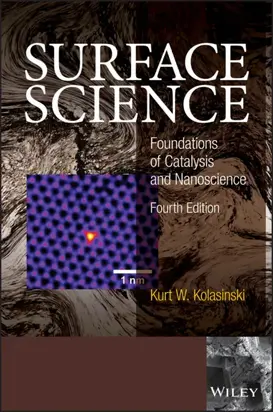
An updated fourth edition of the text that provides an understanding of chemical transformations and the formation of structures at surfaces The revised and enhanced fourth edition of Surface Science covers all the essential techniques and phenomena that are relevant to the field. The text elucidates the structural, dynamical, thermodynamic and kinetic principles concentrating on gas/solid and liquid/solid interfaces. These principles allow for an understanding of how and why chemical transformations occur at surfaces. The author (a noted expert on in the field) combines the required chemistry, physics and mathematics to create a text that is accessible and comprehensive. The fourth edition incorporates new end-of-chapter exercises, the solutions to which are available on-line to demonstrate how problem solving that is relevant to surface science should be performed. Each chapter begins with simple principles and builds to more advanced ones. The advanced topics provide material beyond the introductory level and highlight some frontier areas of study. This updated new edition: Contains an expanded treatment of STM and AFM as well as super-resolution microscopy Reviews advances in the theoretical basis of catalysis and the use of activity descriptors for rational catalyst design Extends the discussion of two-dimensional solids to reflect remarkable advances in their growth and characterization Delves deeper into the surface science of electrochemistry and charge transfer reactions Updates the “Frontiers and Challenges” sections at the end of each chapter as well as the list of references Written for students, researchers and professionals, the fourth edition of Surface Science offers a revitalized text that contains the tools and a set of principles for understanding the field.
Жанр в блоке книги Зарубежная Образовательная Литература
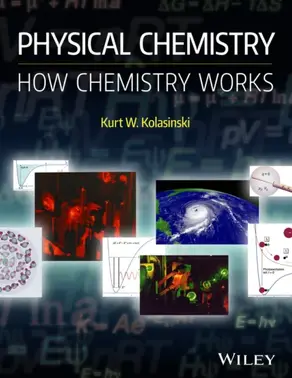
Much of chemistry is motivated by asking 'How'? How do I make a primary alcohol? React a Grignard reagent with formaldehyde. Physical chemistry is motivated by asking 'Why'? The Grignard reagent and formaldehyde follow a molecular dance known as a reaction mechanism in which stronger bonds are made at the expense of weaker bonds. If you are interested in asking 'why' and not just 'how', then you need to understand physical chemistry. Physical Chemistry: How Chemistry Works takes a fresh approach to teaching in physical chemistry. This modern textbook is designed to excite and engage undergraduate chemistry students and prepare them for how they will employ physical chemistry in real life. The student-friendly approach and practical, contemporary examples facilitate an understanding of the physical chemical aspects of any system, allowing students of inorganic chemistry, organic chemistry, analytical chemistry and biochemistry to be fluent in the essentials of physical chemistry in order to understand synthesis, intermolecular interactions and materials properties. For students who are deeply interested in the subject of physical chemistry, the textbook facilitates further study by connecting them to the frontiers of research. Provides students with the physical and mathematical machinery to understand the physical chemical aspects of any system. Integrates regular examples drawn from the literature, from contemporary issues and research, to engage students with relevant and illustrative details. Important topics are introduced and returned to in later chapters: key concepts are reinforced and discussed in more depth as students acquire more tools. Chapters begin with a preview of important concepts and conclude with a summary of important equations. Each chapter includes worked examples and exercises: discussion questions, simple equation manipulation questions, and problem-solving exercises. Accompanied by supplementary online material: worked examples for students and a solutions manual for instructors. Written by an experienced instructor, researcher and author in physical chemistry, with a voice and perspective that is pedagogical and engaging.
Жанр в блоке книги Техническая Литература
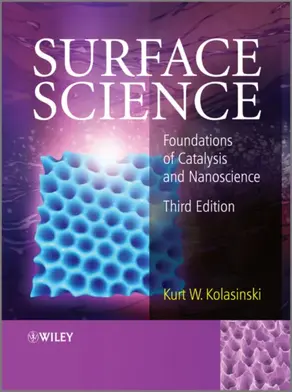
Surface science has evolved from being a sub-field of chemistry or physics, and has now established itself as an interdisciplinary topic. Knowledge has developed sufficiently that we can now understand catalysis from a surface science perspective. No-where is the underpinning nature of surface science better illustrated than with nanoscience. Now in its third edition, this successful textbook aims to provide students with an understanding of chemical transformations and the formation of structures at surfaces. The chapters build from simple to more advanced principles with each featuring exercises, which act not only to demonstrate concepts arising in the text but also to form an integral part of the book, with the last eight chapters featuring worked solutions. This completely revised and expanded edition features: More than 100 new pages of extensive worked solutions New topics, including: Second harmonic generation (SHG), Sum Frequency Generation (SFG) at interfaces and capillary waves An expanded treatment of charge transfer and carbon-based materials including graphene Extended ‘Frontiers and Challenges’ sections at the end of each chapter. This text is suitable for all students taking courses in surface science in Departments of Chemistry, Physics, Chemical Engineering and Materials Science, as well as for researchers and professionals requiring an up-to-date review of the subject.

10 Количество книг
2 Количество книг
1 Количество книг
