

Flock Jörg Скачать все книги 2 Количество книг



Жанр в блоке книги Общая Химия
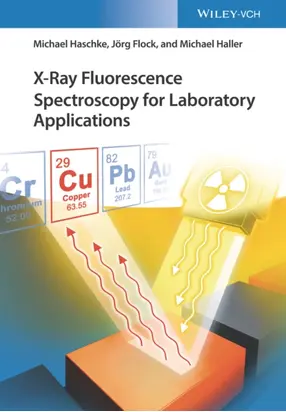
Provides comprehensive coverage on using X-ray fluorescence for laboratory applications This book focuses on the practical aspects of X-ray fluorescence (XRF) spectroscopy and discusses the requirements for a successful sample analysis, such as sample preparation, measurement techniques and calibration, as well as the quality of the analysis results. X-Ray Fluorescence Spectroscopy for Laboratory Applications begins with a short overview of the physical fundamentals of the generation of X -rays and their interaction with the sample material, followed by a presentation of the different methods of sample preparation in dependence on the quality of the source material and the objective of the measurement. After a short description of the different available equipment types and their respective performance, the book provides in-depth information on the choice of the optimal measurement conditions and the processing of the measurement results. It covers instrument types for XRF; acquisition and evaluation of X-Ray spectra; analytical errors; analysis of homogeneous materials, powders, and liquids; special applications of XRF; process control and automation. An important resource for the analytical chemist, providing concrete guidelines and support for everyday analyses Focuses on daily laboratory work with commercially available devices Offers a unique compilation of knowledge and best practices from equipment manufacturers and users Covers the entire work process: sample preparation, the actual measurement, data processing, assessment of uncertainty, and accuracy of the obtained results X-Ray Fluorescence Spectroscopy for Laboratory Applications appeals to analytical chemists, analytical laboratories, materials scientists, environmental chemists, chemical engineers, biotechnologists, and pharma engineers.
Жанр в блоке книги Общая Химия
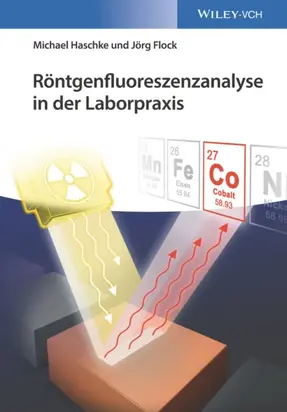
Bereits seit vielen Jahren wird die Rontgenfluoreszenzenzanalyse eingesetzt fur die Untersuchung kompakter, homogener Proben wie Metallen oder Glasern, aber auch fur die Analyse pulverformiger Proben wie etwa geologische Proben, Zement und Eisenlegierungen. In den letzten Jahren haben sich viele neue Applikationsgebiete fur diese Methode eroffnet. Im vorliegenden Buch erfolgt zunachst eine kurze Darstellung der physikalischen Zusammenhange bei der Erzeugung und Wechselwirkung von Rontgenstrahlung in der zu untersuchenden Probe. Dann werden die verschiedenen Methoden der Probenpraparation in Abhangigkeit von der Qualitat des Ausgangsmaterials sowie von der analytischen Zielstellung vorgestellt. Nach einer kurzen Beschreibung der verschiedenen Geratetypen, die in der Rontgenanalytik existieren, und deren Leistungsfahigkeit wird auf die Auswahl optimaler Messbedingungen eingegangen sowie die Aufbereitung der Messdaten erlautert, angefangen von deren Korrektur uber die Bestimmung der Intensitaten bis hin zum endgultigen Analysenergebnis, auch unter Berucksichtigung, Vermeidung und Korrektur moglicher auftretender Fehler. Nach einer kurzen Beschreibung der Gefahren einer Schadigung durch Rontgenstrahlung und der Anforderungen zu denen Verhinderung werden die verschiedenen Applikationen der Rontgenfluoreszenz beschrieben.

10 Количество книг
2 Количество книг
1 Количество книг
