

W. John Foreman Скачать все книги 5 Количество книг



Жанр в блоке книги Техническая Литература
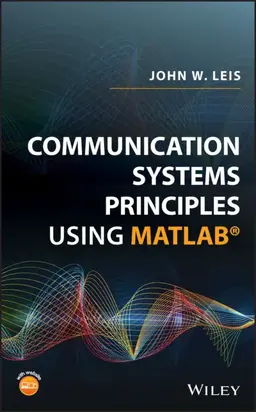
Discover the basic telecommunications systems principles in an accessible learn-by-doing format Communication Systems Principles Using MATLAB covers a variety of systems principles in telecommunications in an accessible format without the need to master a large body of theory. The text puts the focus on topics such as radio and wireless modulation, reception and transmission, wired networks and fiber optic communications. The book also explores packet networks and TCP/IP as well as digital source and channel coding, and the fundamentals of data encryption. Since MATLAB® is widely used by telecommunications engineers, it was chosen as the vehicle to demonstrate many of the basic ideas, with code examples presented in every chapter. The text addresses digital communications with coverage of packet-switched networks. Many fundamental concepts such as routing via shortest-path are introduced with simple and concrete examples. The treatment of advanced telecommunications topics extends to OFDM for wireless modulation, and public-key exchange algorithms for data encryption. Throughout the book, the author puts the emphasis on understanding rather than memorization. The text also: Includes many useful take-home skills that can be honed while studying each aspect of telecommunications Offers a coding and experimentation approach with many real-world examples provided Gives information on the underlying theory in order to better understand conceptual developments Suggests a valuable learn-by-doing approach to the topic Written for students of telecommunications engineering, Communication Systems Principles Using MATLAB® is the hands-on resource for mastering the basic concepts of telecommunications in a learn-by-doing format.

Жанр в блоке книги Техническая Литература
Over the last several years, manufacturers have expressed increasing interest in reducing their energy consumption and have begun to search for opportunities to reduce their energy usage. In this book, the authors explore a variety of opportunities to reduce the energy footprint of manufacturing. These opportunities cover the entire spatial scale of the manufacturing enterprise: from unit process-oriented approaches to enterprise-level strategies. Each chapter examines some aspect of this spatial scale, and discusses and describes the opportunities that exist at that level. Case studies demonstrate how the opportunity may be acted on with practical guidance on how to respond to these opportunities.
Жанр в блоке книги Зарубежная Образовательная Литература
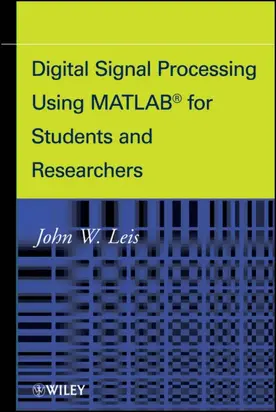
Quickly Engages in Applying Algorithmic Techniques to Solve Practical Signal Processing Problems With its active, hands-on learning approach, this text enables readers to master the underlying principles of digital signal processing and its many applications in industries such as digital television, mobile and broadband communications, and medical/scientific devices. Carefully developed MATLAB® examples throughout the text illustrate the mathematical concepts and use of digital signal processing algorithms. Readers will develop a deeper understanding of how to apply the algorithms by manipulating the codes in the examples to see their effect. Moreover, plenty of exercises help to put knowledge into practice solving real-world signal processing challenges. Following an introductory chapter, the text explores: Sampled signals and digital processing Random signals Representing signals and systems Temporal and spatial signal processing Frequency analysis of signals Discrete-time filters and recursive filters Each chapter begins with chapter objectives and an introduction. A summary at the end of each chapter ensures that one has mastered all the key concepts and techniques before progressing in the text. Lastly, appendices listing selected web resources, research papers, and related textbooks enable the investigation of individual topics in greater depth. Upon completion of this text, readers will understand how to apply key algorithmic techniques to address practical signal processing problems as well as develop their own signal processing algorithms. Moreover, the text provides a solid foundation for evaluating and applying new digital processing signal techniques as they are developed.
Жанр в блоке книги Зарубежная Образовательная Литература
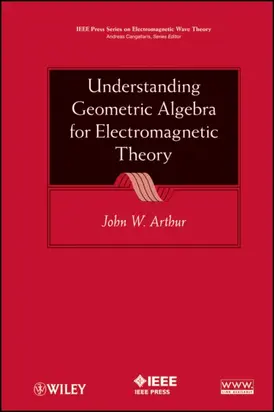
This book aims to disseminate geometric algebra as a straightforward mathematical tool set for working with and understanding classical electromagnetic theory. It's target readership is anyone who has some knowledge of electromagnetic theory, predominantly ordinary scientists and engineers who use it in the course of their work, or postgraduate students and senior undergraduates who are seeking to broaden their knowledge and increase their understanding of the subject. It is assumed that the reader is not a mathematical specialist and is neither familiar with geometric algebra or its application to electromagnetic theory. The modern approach, geometric algebra, is the mathematical tool set we should all have started out with and once the reader has a grasp of the subject, he or she cannot fail to realize that traditional vector analysis is really awkward and even misleading by comparison. Professors can request a solutions manual by email: pressbooks@ieee.org

Жанр в блоке книги Зарубежная Деловая Литература
Data Science gets thrown around in the press like it's magic. Major retailers are predicting everything from when their customers are pregnant to when they want a new pair of Chuck Taylors. It's a brave new world where seemingly meaningless data can be transformed into valuable insight to drive smart business decisions. But how does one exactly do data science? Do you have to hire one of these priests of the dark arts, the «data scientist,» to extract this gold from your data? Nope. Data science is little more than using straight-forward steps to process raw data into actionable insight. And in Data Smart, author and data scientist John Foreman will show you how that's done within the familiar environment of a spreadsheet. Why a spreadsheet? It's comfortable! You get to look at the data every step of the way, building confidence as you learn the tricks of the trade. Plus, spreadsheets are a vendor-neutral place to learn data science without the hype. But don't let the Excel sheets fool you. This is a book for those serious about learning the analytic techniques, the math and the magic, behind big data. Each chapter will cover a different technique in a spreadsheet so you can follow along: Mathematical optimization, including non-linear programming and genetic algorithms Clustering via k-means, spherical k-means, and graph modularity Data mining in graphs, such as outlier detection Supervised AI through logistic regression, ensemble models, and bag-of-words models Forecasting, seasonal adjustments, and prediction intervals through monte carlo simulation Moving from spreadsheets into the R programming language You get your hands dirty as you work alongside John through each technique. But never fear, the topics are readily applicable and the author laces humor throughout. You'll even learn what a dead squirrel has to do with optimization modeling, which you no doubt are dying to know.

6 Количество книг
2 Количество книг
2 Количество книг
