

Li Jie Jack Скачать все книги 8 Количество книг




Жанр в блоке книги Зарубежная Образовательная Литература
An integrated and insightful look at successful drug synthesis in today's drug discovery market The pharmaceutical industry is unquestionably vibrant today, with drug synthesis making a vital contribution. Whether in the early developmental stages of identifying and optimizing a lead, or the latter stages of process development and cost-effective scale-up, the ability to design elegant and economical synthetic routes is often a major factor in the eventual viability and commercial success of a drug. Contemporary Drug Synthesis examines how leading researchers and manufacturers have integrated chemistry, biology, pharmacokinetics, and a host of other disciplines in the creation and development of leading drugs. Authored by four of the pharmaceutical industry's most respected scientists, this timely volume: Focuses on the processes that resulted in high-profile drugs including Lipitor, Celebrex, Viagra, Gleevec, Nexium, Claritin, and over a dozen others Provides an in-depth introduction to each drug, followed by a detailed account of its synthesis Organizes the drugs into fourteen therapeutic areas for clarity and ease of use Process chemists provide an essential bridge between chemistry and the marketplace, creating scientifically practical drug processes while never losing sight of the commercial viability of those processes. Contemporary Drug Synthesis meets the needs of a growing community of researchers in pharmaceutical research and development, and is both a useful guide for practicing pharmaceutical scientists and an excellent text for medicinal and organic chemistry students.
Жанр в блоке книги Зарубежная Образовательная Литература
Covers important name reactions relevant to heterocyclic chemistry The field of heterocyclic chemistry has long presented a special challenge for chemists. Because of the enormous amount and variety of information, it is often a difficult topic to cover for undergraduate and graduate chemistry students, even in simplified form. Yet the chemistry of heterocyclic compounds and methods for their synthesis form the bedrock of modern medicinal chemical and pharmaceutical research. Thus there is a great need for high quality, up-to-date, and authoritative books on heterocyclic synthesis helpful to both the professional research chemist as well as the advanced student. Name Reactions in Heterocyclic Chemistry provides a one-stop repository for this important field of organic chemistry. The primary topics include three- and four-membered heterocycles, five-membered heterocycles including indoles, furans, thiophenes, and oxazoles, six-membered heterocycles including quinolines, isoquinolines, and pyrimidines, and other heterocycles. Each name reaction is summarized in seven sections: Description Historical perspective Mechanism Variations and improvements Synthetic utility Experimental References Authored by a team of world-renowned contributors – some of whom have discovered the very reactions they describe – Name Reactions in Heterocyclic Chemistry represents a state-of-the-art resource for students and researchers alike.
Жанр в блоке книги Зарубежная Образовательная Литература
A valuable addition to the literature by any measure and surely will prove its merit in years to come. The new knowledge that arises with its help will be impressive and of great benefit to humankind. —From the Foreword by E. J. Corey, Nobel Prize Laureate An invaluable guide to name reactions and reagents for homologations Name Reactions for Homologations, Part I of Wiley's Comprehensive Name Reactions series comprises a comprehensive treatise on name reactions for homologations. With contributions from world-recognized authorities in the field, this reference offers an up-to-date, concise compilation of the most commonly used and widely known name reactions and reagents. Part I discusses Organometallics, Carbon-chain Homologation, and Radical Chemistry. Arranged alphabetically by name reactions, the listing provides: Description of the reaction Historical perspective A mechanism for the reaction Variations and improvements on the reaction Synthetic utilities of the reaction Experimental details References to the current primary literature Armed with this invaluable resource, both students and professionals will have at their fingertips a comprehensive guide to important mechanisms and phenomena in homologation.
Жанр в блоке книги Зарубежная Образовательная Литература
This practical, well-organized reference delves deeply into functional group transformations, to provide all the detailed information that researchers need. Topics are organized into the following sections: oxidation, reduction, asymmetric synthesis, and functional group manipulations Each section includes a description of the functional group transformation, the historical perspective, mechanisms, variations and improvements on the reaction, synthetic utilities and applications for the reaction, experimental details, and references to the primary literature Contributors are well-known and respected for their work on the specific name reactions.
Жанр в блоке книги Зарубежная Образовательная Литература
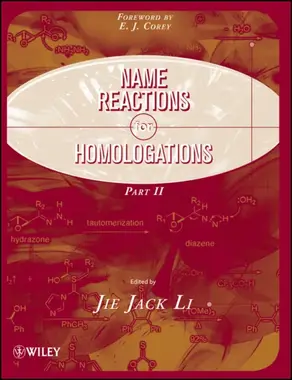
A valuable addition to the literature by any measure and surely will prove its merit in years to come. The new knowledge that arises with its help will be impressive and of great benefit to humankind. —From the Foreword by E. J. Corey, Nobel Prize Laureate An invaluable guide to name reactions and reagents for homologations Name Reactions for Homologations, Part II of Wiley's Comprehensive Name Reactions series comprises a comprehensive treatise on name reactions for homologations. With contributions from world-recognized authorities in the field, this reference offers an up-to-date, concise compilation of the most commonly used and widely known name reactions and reagents. Part II discusses Rearrangements, Asymmetric C-C Bond Formation, and Miscellaneous Homologation Reactions. Arranged alphabetically by name reactions, the listing provides: Description of the reaction Historical perspective A mechanism for the reaction Variations and improvements on the reaction Synthetic utilities of the reaction Experimental details References to the current primary literature Armed with this invaluable resource, both students and professionals will have at their fingertips a comprehensive guide to important mechanisms and phenomena in homologation.
Жанр в блоке книги Зарубежная Образовательная Литература
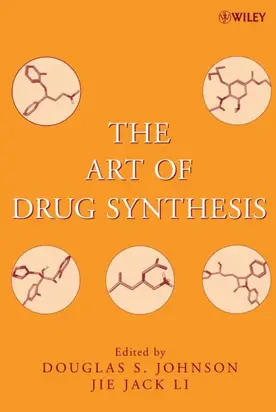
The Art of Drug Synthesis illustrates how chemistry, biology, pharmacokinetics, and a host of other disciplines come together to produce successful medicines. The authors have compiled a collection of 21 representative categories of drugs, from which they have selected as examples many of the best-selling drugs on the market today. An introduction to each drug is provided, as well as background to the biology, pharmacology, pharmacokinetics, and drug metabolism, followed by a detailed account of the drug synthesis. Edited by prominent scientists working in drug discovery for Pfizer Meets the needs of a growing community of researchers in pharmaceutical R&D Provides a useful guide for practicing pharmaceutical scientists as well as a text for medicinal chemistry students An excellent follow-up to the very successful first book by these editors, Contemporary Drug Synthesis, but with all new therapeutic categories and drugs discussed.
Жанр в блоке книги Техническая Литература
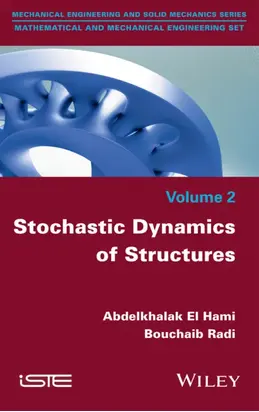
This book is dedicated to the general study of the dynamics of mechanical structures with consideration of uncertainties. The goal is to get the appropriate forms of a part in minimizing a given criterion. In all fields of structural mechanics, the impact of good design of a room is very important to its strength, its life and its use in service. The development of the engineer's art requires considerable effort to constantly improve structural design techniques.

6 Количество книг
2 Количество книг
2 Количество книг
