

J. James Nutaro Скачать все книги 7 Количество книг







Жанр в блоке книги Зарубежная Образовательная Литература
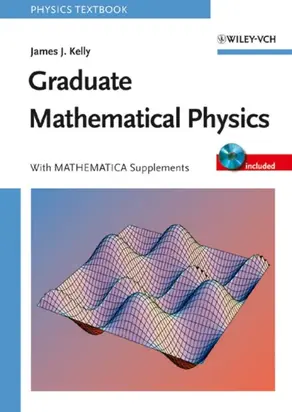
This up-to-date textbook on mathematical methods of physics is designed for a one-semester graduate or two-semester advanced undergraduate course. The formal methods are supplemented by applications that use MATHEMATICA to perform both symbolic and numerical calculations. The book is written by a physicist lecturer who knows the difficulties involved in applying mathematics to real problems. As many as 40 exercises are included at the end of each chapter. A student CD includes a basic introduction to MATHEMATICA, notebook files for each chapter, and solutions to selected exercises. * Free solutions manual available for lecturers at www.wiley-vch.de/supplements/
Жанр в блоке книги Математика
Standardizes the definition and framework of analytics ABOK stands for Analytics Body of Knowledge. Based on the authors’ definition of analytics—which is “a process by which a team of people helps an organization make better decisions (the objective) through the analysis of data (the activity)”– this book from Institute for Operations Research and the Management Sciences (INFORMS) represents the perspectives of some of the most respected experts on analytics. The INFORMS ABOK documents the core concepts and skills with which an analytics professional should be familiar; establishes a dynamic resource that will be used by practitioners to increase their understanding of analytics; and, presents instructors with a framework for developing academic courses and programs in analytics. The INFORMS ABOK offers in-depth insight from peer-reviewed chapters that provide readers with a better understanding of the dynamic field of analytics. Chapters cover: Introduction to Analytics; Getting Started with Analytics; The Analytics Team; The Data; Solution Methodology; Model Building; Machine Learning; Deployment and Life Cycle Management; and The Blossoming Analytics Talent Pool: An Overview of the Analytics Ecosystem. Across industries and academia, readers with various backgrounds in analytics – from novices who are interested in learning more about the basics of analytics to experienced professionals who want a different perspective on some aspect of analytics – will benefit from reading about and implementing the concepts and methods covered by the INFORMS ABOK.
Жанр в блоке книги Зарубежная Образовательная Литература
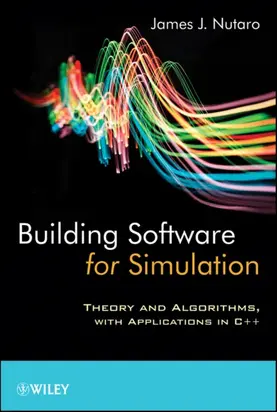
A unique guide to the design and implementation of simulation software This book offers a concise introduction to the art of building simulation software, collecting the most important concepts and algorithms in one place. Written for both individuals new to the field of modeling and simulation as well as experienced practitioners, this guide explains the design and implementation of simulation software used in the engineering of large systems while presenting the relevant mathematical elements, concept discussions, and code development. The book approaches the topic from the perspective of Zeigler's theory of modeling and simulation, introducing the theory's fundamental concepts and showing how to apply them to engineering problems. Readers will learn five necessary skills for building simulations of complicated systems: Working with fundamental abstractions for simulating dynamic systems Developing basic simulation algorithms for continuous and discrete event models Combining continuous and discrete event simulations into a coherent whole Applying strategies for testing a simulation Understanding the theoretical foundations of the modeling constructs and simulation algorithms The central chapters of the book introduce, explain, and demonstrate the elements of the theory that are most important for building simulation tools. They are bracketed by applications to robotics, control and communications, and electric power systems; these comprehensive examples clearly illustrate how the concepts and algorithms are put to use. Readers will explore the design of object-oriented simulation programs, simulation using multi-core processors, and the integration of simulators into larger software systems. The focus on software makes this book particularly useful for computer science and computer engineering courses in simulation that focus on building simulators. It is indispensable reading for undergraduate and graduate students studying modeling and simulation, as well as for practicing scientists and engineers involved in the development of simulation tools.

6 Количество книг
2 Количество книг
2 Количество книг
