

Ngurah Agung I. Gusti Скачать все книги 3 Количество книг



Жанр в блоке книги Математика
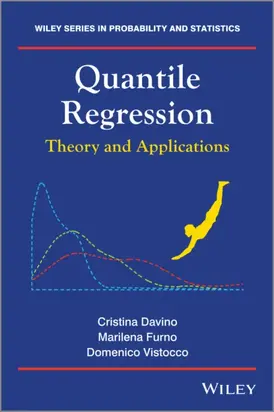
A guide to the implementation and interpretation of Quantile Regression models This book explores the theory and numerous applications of quantile regression, offering empirical data analysis as well as the software tools to implement the methods. The main focus of this book is to provide the reader with a comprehensive description of the main issues concerning quantile regression; these include basic modeling, geometrical interpretation, estimation and inference for quantile regression, as well as issues on validity of the model, diagnostic tools. Each methodological aspect is explored and followed by applications using real data. Quantile Regression: Presents a complete treatment of quantile regression methods, including, estimation, inference issues and application of methods. Delivers a balance between methodolgy and application Offers an overview of the recent developments in the quantile regression framework and why to use quantile regression in a variety of areas such as economics, finance and computing. Features a supporting website (www.wiley.com/go/quantile_regression) hosting datasets along with R, Stata and SAS software code. Researchers and PhD students in the field of statistics, economics, econometrics, social and environmental science and chemistry will benefit from this book.
Жанр в блоке книги Математика
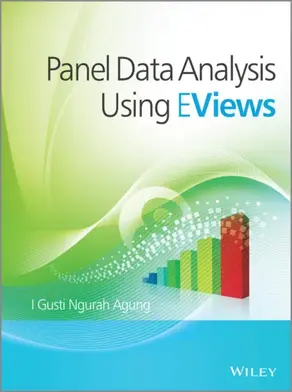
A comprehensive and accessible guide to panel data analysis using EViews software This book explores the use of EViews software in creating panel data analysis using appropriate empirical models and real datasets. Guidance is given on developing alternative descriptive statistical summaries for evaluation and providing policy analysis based on pool panel data. Various alternative models based on panel data are explored, including univariate general linear models, fixed effect models and causal models, and guidance on the advantages and disadvantages of each one is given. Panel Data Analysis using EViews: Provides step-by-step guidance on how to apply EViews software to panel data analysis using appropriate empirical models and real datasets. Examines a variety of panel data models along with the author’s own empirical findings, demonstrating the advantages and limitations of each model. Presents growth models, time-related effects models, and polynomial models, in addition to the models which are commonly applied for panel data. Includes more than 250 examples divided into three groups of models (stacked, unstacked, and structured panel data), together with notes and comments. Provides guidance on which models not to use in a given scenario, along with advice on viable alternatives. Explores recent new developments in panel data analysis An essential tool for advanced undergraduate or graduate students and applied researchers in finance, econometrics and population studies. Statisticians and data analysts involved with data collected over long time periods will also find this book a useful resource.
Жанр в блоке книги Математика
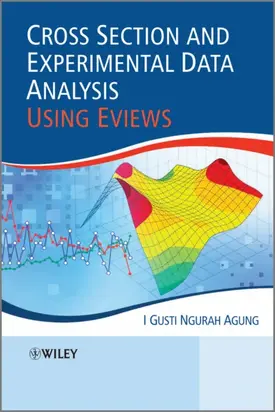
A practical guide to selecting and applying the most appropriate model for analysis of cross section data using EViews. «This book is a reflection of the vast experience and knowledge of the author. It is a useful reference for students and practitioners dealing with cross sectional data analysis … The strength of the book lies in its wealth of material and well structured guidelines …» Prof. Yohanes Eko Riyanto, Nanyang Technological University, Singapore «This is superb and brilliant. Prof. Agung has skilfully transformed his best experiences into new knowledge … creating a new way of understanding data analysis.» Dr. I Putu Gede Ary Suta, The Ary Suta Center, Jakarta Basic theoretical concepts of statistics as well as sampling methods are often misinterpreted by students and less experienced researchers. This book addresses this issue by providing a hands-on practical guide to conducting data analysis using EViews combined with a variety of illustrative models (and their extensions). Models having numerically dependent variables based on a cross-section data set (such as univariate, multivariate and nonlinear models as well as non-parametric regressions) are concentrated on. It is shown that a wide variety of hypotheses can easily be tested using EViews. Cross Section and Experimental Data Analysis Using EViews: Provides step-by-step directions on how to apply EViews to cross section data analysis – from multivariate analysis and nonlinear models to non-parametric regression Presents a method to test for all possible hypotheses based on each model Proposes a new method for data analysis based on a multifactorial design model Demonstrates that statistical summaries in the form of tabulations are invaluable inputs for strategic decision making Contains 200 examples with special notes and comments based on the author’s own empirical findings as well as over 400 illustrative outputs of regressions from EViews Techniques are illustrated through practical examples from real situations Comes with supplementary material, including work-files containing selected equation and system specifications that have been applied in the book This user-friendly introduction to EViews is ideal for Advanced undergraduate and graduate students taking finance, econometrics, population, or public policy courses, as well as applied policy researchers.

6 Количество книг
2 Количество книг
2 Количество книг
