

G. Donald Bailey Скачать все книги 3 Количество книг




Жанр в блоке книги Зарубежная Образовательная Литература
Interest and information in the field of medical toxicology has grown rapidly, but there has never been a concise, authoritative reference focused on the subjects of natural substances, chemical and physical toxins, drugs of abuse, and pharmaceutical overdoses. Medical Toxicology of Natural Substances finally gives you an easily accessible resource for vital toxicological information on foods, plants, and animals in key areas in the natural environment.

Жанр в блоке книги Зарубежная Образовательная Литература
This book provides a broad reference covering important drugs of abuse including amphetamines, opiates, and steroids. It also covers psychoactive plants such as caffeine, peyote, and psilocybin. It provides chemical structures, analytical methods, clinical features, and treatments of these drugs of abuse, serving as a highly useful, in-depth supplement to a general medical toxicology book. The style allows for the easy application of the contents to searchable databases and other electronic products, making this an essential resource for practitioners in medical toxicology, industrial hygiene, occupational medicine, pharmaceuticals, environmental organizations, pathology, and related fields.
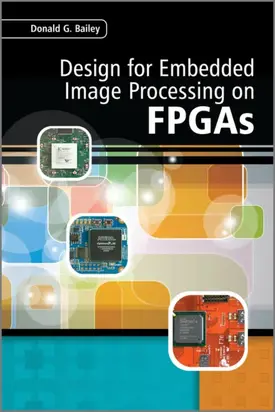
Жанр в блоке книги Отраслевые Издания
Dr Donald Bailey starts with introductory material considering the problem of embedded image processing, and how some of the issues may be solved using parallel hardware solutions. Field programmable gate arrays (FPGAs) are introduced as a technology that provides flexible, fine-grained hardware that can readily exploit parallelism within many image processing algorithms. A brief review of FPGA programming languages provides the link between a software mindset normally associated with image processing algorithms, and the hardware mindset required for efficient utilization of a parallel hardware design. The design process for implementing an image processing algorithm on an FPGA is compared with that for a conventional software implementation, with the key differences highlighted. Particular attention is given to the techniques for mapping an algorithm onto an FPGA implementation, considering timing, memory bandwidth and resource constraints, and efficient hardware computational techniques. Extensive coverage is given of a range of low and intermediate level image processing operations, discussing efficient implementations and how these may vary according to the application. The techniques are illustrated with several example applications or case studies from projects or applications he has been involved with. Issues such as interfacing between the FPGA and peripheral devices are covered briefly, as is designing the system in such a way that it can be more readily debugged and tuned. Provides a bridge between algorithms and hardware Demonstrates how to avoid many of the potential pitfalls Offers practical recommendations and solutions Illustrates several real-world applications and case studies Allows those with software backgrounds to understand efficient hardware implementation Design for Embedded Image Processing on FPGAs is ideal for researchers and engineers in the vision or image processing industry, who are looking at smart sensors, machine vision, and robotic vision, as well as FPGA developers and application engineers. The book can also be used by graduate students studying imaging systems, computer engineering, digital design, circuit design, or computer science. It can also be used as supplementary text for courses in advanced digital design, algorithm and hardware implementation, and digital signal processing and applications. Companion website for the book: www.wiley.com/go/bailey/fpga

6 Количество книг
2 Количество книг
2 Количество книг
