Назад

Barnes Djuna Скачать все книги 4 Количество книг

Жанр в блоке книги Литературоведение

Los cuentos de juventud de Djuna Barnes dibujan un mapa hacia la madurez de esta escritora que, con el paso del tiempo, ha sido reconocida como miembro de pleno derecho de la «generación perdida» y admirada por autores como James Joyce, Dylan Thomas o arson McCullers. Estos relatos, publicados en las principales revistas y periódicos neoyorquinos de principios del siglo xx, permiten conocer la bohemia, el origen de la obra de Barnes y entender la posición que decidió adoptar a lo largo de su vida, huyendo de las luces de neón y de las fiestas y salones literarios. Una joven que, sin apenas experiencia, «reinventó» de algún modo el género y cuestionó el periodismo de la época, masculino y sensacionalista. No puede interpretarse su gran obra, El bosque de la noche, sin entender cómo Barnes, desde un aparente costumbrismo, se adentró en lo simbólico; tampoco se puede explicar cómo, después de vivir un exilio intelectual dorado en París, regresó a Greenwich Village, el territorio literario de este libro y el barrio de sus primeras debilidades, vitales y creativas, donde pasó sus últimos cuarenta años encerrada en un diminuto apartamento.

Жанр в блоке книги Литературоведение

Djuna Barnes, a pesar de ser admirada por autores de la talla de James Joyce, T. S. Eliot, Carson McCullers o Anaïs Nin, cayó en el olvido al ser opacada por los hombres de su generación, «la generación perdida». Sin embargo, el paso del tiempo ha puesto de manifiesto no solo su imprescindible contribución a la literatura modernista, sino también al feminismo, la sexualidad y la moralidad de un país cambiante que Barnes tuvo que dejar atrás para lograr la libertad que tanto ansiaba en su vida y en su creación artística. Barnes desafió las convenciones literarias y sociales, como muestran los relatos de esta antología, muchos de los cuales tienen como protagonistas a distintas mujeres que encarnan un nuevo mundo femenino. Su estilo característico y el brillante ingenio para la metáfora que protagonizaron su obra a lo largo de su vida están ya presentes en estos relatos de juventud que retratan la bohemia de Greenwich Village de principios del siglo xx y que Barnes publicó por primera vez en distintas revistas y periódicos. En este libro pueden sentirse las ganas de vivir de una joven dispuesta a comerse al mundo, al mismo tiempo que lo observa con detenimiento desde una mentalidad de otro siglo, desde el futuro.

Жанр в блоке книги Классическая Проза

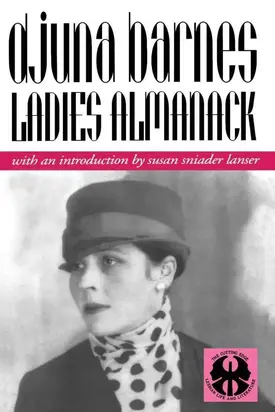
Blending fiction, myth, and revisionary parody and accompanied by the author's delightful illustrations, "Ladies Almanac" is also a brilliant modernist composition and arguably the most audacious lesbian text of its time. While the book pokes fun at the wealthy expatriates who were Barnes' literary contemporaries and remains controversial today, it seems to have delighted its cast of characters, which was also the first audience. Barney herself subsidized its private publication in 1928. Fifty of the 1050 copies of the first edition were hand colored by the author, who was identified only as a lady of Fashion: on the title page.
Жанр в блоке книги Классическая Проза

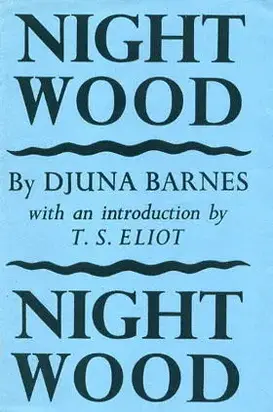
The fiery and enigmatic masterpiece—one of the greatest novels of the Modernist era.

NightwoodTimes Literary Supplement

The outsized characters who inhabit this world are some of the most memorable in all of fiction—there is Guido Volkbein, the Wandering Jew and son of a self-proclaimed baron; Robin Vote, the American expatriate who marries him and then engages in a series of affairs, first with Nora Flood and then with Jenny Petherbridge, driving all of her lovers to distraction with her passion for wandering alone in the night; and there is Dr. Matthew-Mighty-Grain-of-Salt-Dante-O’Connor, a transvestite and ostensible gynecologist, whose digressive speeches brim with fury, keen insights, and surprising allusions. Barnes’ depiction of these characters and their relationships (Nora says, “A man is another persona woman is yourself, caught as you turn in panic; on her mouth you kiss your own”) has made the novel a landmark of feminist and lesbian literature.

Most striking of all is Barnes’ unparalleled stylistic innovation, which led T. S. Eliot to proclaim the book “so good a novel that only sensibilities trained on poetry can wholly appreciate it.” Now with a new preface by Jeanette Winterson, still crackles with the same electric charge it had on its first publication in 1936.

Популярные серии