

S. David Pottruck Скачать все книги 8 Количество книг




Жанр в блоке книги Техническая Литература
Sensor technology is an increasingly important area of research This will be the only book entirely devoted to the topic
Жанр в блоке книги Зарубежная Деловая Литература
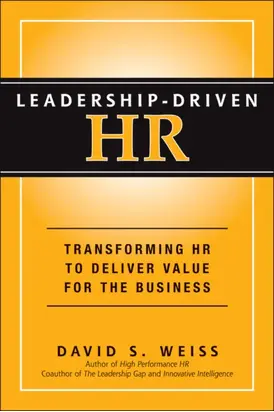
Presents a new vision for HR's role in business Focusing on strategic solutions for HR, Leadership-Driven HR challenges the traditional view of HR as a service function and replaces it with a new vision of HR as an internal business accountable for the return on investment of essential corporate assets—people and organizational processes. Leadership-Driven HR provides practical strategies for leveraging HR's role, priorities, accountabilities, and organizational design. Focuses on strategic solutions for HR, addressing current and ongoing concerns in the world of HR Dr. David Weiss is President & CEO of Weiss International Ltd., which leads innovative consulting and HR projects that generate effective strategy, leadership, innovation, and HR solutions for leaders and employees HR serves a critical role in managing your most valuable assets. Discover new ways this department can create significant ROI for your business.

Жанр в блоке книги Зарубежная Деловая Литература
David Nassar delivers a complete and proven system for aggressively and successfully trading in today's markets in Ordinary People, Extraordinary Profits. He explains the fundamentals of technical analysis and risk management, giving you a solid foundation to approach the market, and then describes a variety of trading strategies that will help you make consistently large profits without undue risk. Unlike other trading advisors who advocate a single approach to trading, Nassar provides a variety of strategies you can choose. In addition, he explains how to use new trading instruments such as E-Mini contracts, options, and exchange-traded funds. If you're looking for a complete, proven system for aggressively trading the stock market, this book is an ideal guide.
Жанр в блоке книги Зарубежная Деловая Литература
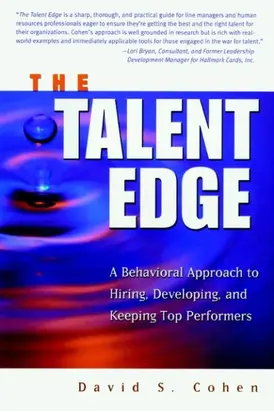
A practical step-by-step approach to hiring the right person. Every hiring manager knows that the traditional hiring and interviewing process is a poor tool for predicting organizational fit and future on-the-job success. Behavioral interviewing can improve your chances of picking the right candidate two to five times over traditional processes. It focuses on how the candidate works rather than on skills, qualifications, and impressions. The Talent Edge shows how you can develop a concrete understanding of what your own top performers do differently than the majority of their peers, and how to translate that knowledge into a better hiring system. While using case studies from organizations that have successfully transformed their hiring practices, the book articulates the business case for a Behavioral Interviewing system, and provides a roadmap for implementing it. Comprehensive coverage includes: how to write job profiles and translate them into questions and answers that can be used in the interview; how to prepare for the interview, ask questions, and probe for the right information. The book also offers advice on how behaviors that are defined and proven to be useful in the hiring process can be incorporated into performance management, career development, and succession planning.
Жанр в блоке книги Зарубежная Деловая Литература
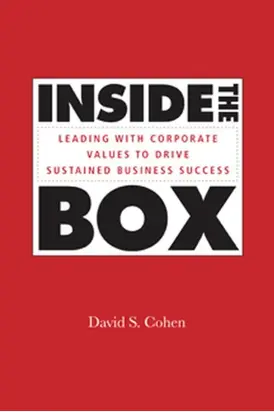
How to turn company values into competitive advantage We are inclined, for whatever reason, to treat values like works of art. We view them as nice to hang on the wall, and beautiful to look at, but we don’t act as though they truly mean much to us in the real world. In fact, the opposite is true. The best organizations understand their values, articulate them clearly, and hold them higher than any short-term concerns or short-cut methods. This does not put these companies at a competitive disadvantage. It is the source of their competitive advantage. If there's no clarity at the top about what values really mean, then there's no consistency at the management level or further down the organization. This means that there's no way to measure, coach, assess, promote or fire people in line with those values. Any organization that does not articulate its values concretely functions like a modern Tower of Babel. No one can be quite sure that they are speaking the same language at different levels or different locations within the organization. Decisions don't always make sense or feel right. Confusion reigns. No matter how compelling and inspirational the organization's vision may be, its aspirations fall far short in reality. Values are about achieving results in a way that is consistent with what an organization stands for. They provide a direct connection between the CEO, the factory worker and everyone in between; and form the basis of the organization's «brand» as understood by employees, customers, suppliers and even shareholders. When the work is done right, values provide an organizing principle, a directional compass that helps organizations succeed; they become a source of energy for an organization's vision, strategy and day-to-day efforts. Vision, strategy, market share, reputation and profits are all very important – but having a clear and consistent set of values is far more critical in predicting whether an organization will continue to succeed and grow as its people, markets, competitive landscape and technology change. People must make their contributions to an organization willingly and independently to bring passion, commitment, creativity and energy to a job. But they will do so only so long as they believe that what they are doing is authentic and meaningful, and is part of a code of commitment shared by the organization as a whole. Inside the Box focuses on values in a clear and practical way to understand what they are, where they come from and how they are transmitted from employee generation to generation. Inside the Box provides a roadmap for any leader or manager on how to identify the values that make an organization, department, team, or individual unique. It also shows how to measure whether an organization or individual is operating according to those values, and how managers can use values as the basis for all of their people decisions and drive superior performance as a result.
Жанр в блоке книги Зарубежная Деловая Литература
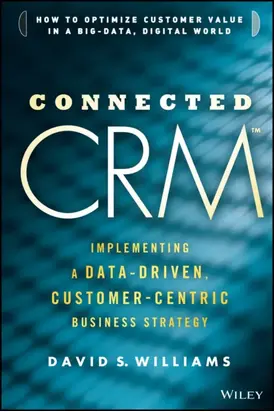
Praise for Connected CRM “Many books explore the subject of CRM. In this book the ‘m’ is for Marketing and David’s seasoned perspective indeed makes it a capital ‘M.’ Taking core direct response marketing techniques and moving beyond the simple use of data and analytics, he explores how today’s marketers can leverage advances in technology to create successful customer-centric business strategies.” —Ted Ward, VP of Marketing, GEICO “A must-read for CMOs, and more importantly CEOs, to simplify all the buzzwords around ‘big data’ and dimensionalize the organizational change necessary to become truly customer centric.” —Theresa McLaughlin, Chief Marketing and Communications Officer, Citizens Financial Group “Big Data, Social, and Cloud have become overused buzzwords with ambiguous meaning, but David brings to bear his years of industry leadership and experiences to break down today’s trends and opportunities in a practical, actionable fashion. A must-read for anyone who prefers profit over PowerPoint.” —Manish Bhatt, SVP and Chief Digital Officer, MetLife “In a data-rich world, consumers demand that marketers turn data into highly relevant and personal experiences—‘Don’t talk with me as a member of a segment, talk with me about how you will meet my unique expectations and solve my unique problems.’ For those of us who grew up in the marketing world of mass and broadcast, this is a tall order. Connected CRM helps marketers unpack customer centricity for their organizations, providing real insight into the development of a framework for enterprise customer centricity; a framework that promises true sustainable advantage.” —Tom Lamb, CMO, Lowe’s “Never before has customer data been more available, more necessary to build sales and loyalty, and more confusing to act on. David shows exactly what needs to be done. It’s about time. And we should all thank him. A lot!” —Steve Cone, EVP of Integrated Value and Strategy, AARP “The marketers who truly learn to harness the power of customer analytics and big data will take the spoils in an increasingly digital age. Those who don’t will quickly find themselves on a growing heap of failed marketing plans.” —Paul Guyardo, Chief Revenue and Marketing Officer, DIRECTV
Жанр в блоке книги Зарубежная Деловая Литература
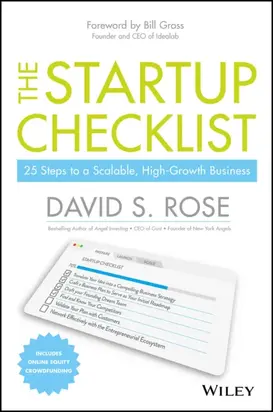
25 Steps to Found and Scale a High-Growth Business The Startup Checklist is the entrepreneur's essential companion. While most entrepreneurship books focus on strategy, this invaluable guide provides the concrete steps that will get your new business off to a strong start. You'll learn the ins and outs of startup execution, management, legal issues, and practical processes throughout the launch and growth phases, and how to avoid the critical missteps that threaten the foundation of your business. Instead of simply referring you to experts, this discussion shows you exactly which experts you need, what exactly you need them to do, and which tools you will use to support them—and you'll gain enough insight to ask smart questions that help you get your money's worth. If you're ready to do big things, this book has you covered from the first business card to the eventual exit. Over two thirds of startups are built on creaky foundations, and over two thirds of startup costs go directly toward cleaning up legal and practical problems caused by an incomplete or improper start. This book helps you sidestep the messy and expensive clean up process by giving you the specific actions you need to take right from the very beginning. Understand the critical intricacies of legally incorporating and running a startup Learn which experts you need, and what exactly you need from them Make more intelligent decisions independent of your advisors Avoid the challenges that threaten to derail great young companies The typical American startup costs over $30,000 and requires working with over two dozen professionals and service providers before it even opens for business—and the process is so complex that few founders do it correctly. Their startups errors often go unnoticed until the founder tries to seek outside capital, at which point they can cost thousands of dollars to fix. . . or even completely derail an investment. The Startup Checklist helps you avoid these problems and lay a strong foundation, so you can focus on building your business.
Жанр в блоке книги Зарубежная Деловая Литература
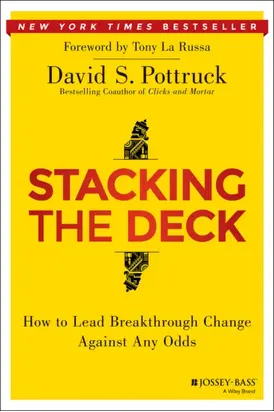
Change is a constant, and leaders must do more than keep up—they must innovate and accelerate to succeed. Yet people are often unnerved by change. As a leader during a time of transformation, you may stand up before teams that are indifferent, or even hostile, and need to convince them that change is necessary and urgent. More than money, time, or resources, the ability to lead these people determines your ultimate success or failure. What does it take to be an effective change leader and increase the odds of success? Stacking the Deck offers a proven, practical approach for inspiring meaningful, lasting change across an organization. Stacking the Deck presents a nine-step course of action leaders can follow from the first realization that change is needed through all the steps of implementation, including assembling the right team of close advisors and getting the word out to the wider group. Based on Dave Pottruck's experiences leading change as CEO of Charles Schwab and later as chairman of CorpU and HighTower Advisors, these steps provide a guide to ensure that your change initiative and your team have the best possible shot at success. In addition, established business leaders who have led extraordinary change initiatives demonstrate the steps in action. These executives include eBay CEO John Donahoe, Wells Fargo former CEO Dick Kovacevich, Starbucks chief executive officer Howard Schultz, San Francisco Giants CEO Larry Baer, JetBlue CEO Dave Barger, Asurion CEO Steve Ellis, Pinkberry CEO Ron Graves, and Intel's President Renee James, among others. Leading an organization through major change—whether it's the introduction of a new product, an expansion to a new territory, or a difficult downsizing—is not for the faint of heart. While success is never guaranteed, the right leadership, process, and team make all the difference. For all leaders facing major change in their organizations, Stacking the Deck is an indispensable resource for putting the odds in your favor.

6 Количество книг
2 Количество книг
2 Количество книг
