Назад

A. David Montague Скачать все книги 19 Количество книг

Жанр в блоке книги Техническая Литература
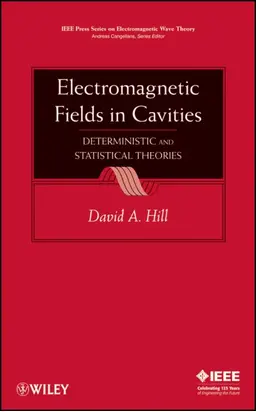
A thorough and rigorous analysis of electromagnetic fields in cavities This book offers a comprehensive analysis of electromagnetic fields in cavities of general shapes and properties. Part One covers classical deterministic methods to conclude resonant frequencies, modal fields, and cavity losses; quality factor; mode bandwidth; and the excitation of cavity fields from arbitrary current distributions for metal-wall cavities of simple shape. Part Two covers modern statistical methods to analyze electrically large cavities of complex shapes and properties. Electromagnetic Fields in Cavities combines rigorous solutions to Maxwell's equations with conservation of energy to solve for the statistics of many quantities of interest: penetration into cavities (and shielding effectiveness), field strengths far from and close to cavity walls, and power received by antennas within cavities. It includes all modes and shows you how to utilize fairly simple statistical formulae to apply to your particular problem, whether it's interference calculations, electromagnetic compatibility testing in reverberation chambers, measurement of shielding materials using multiple cavities, or efficiency of test antennas. Electromagnetic Fields in Cavities is a valuable resource for researchers, engineers, professors, and graduate students in electrical engineering.

Жанр в блоке книги Материаловедение

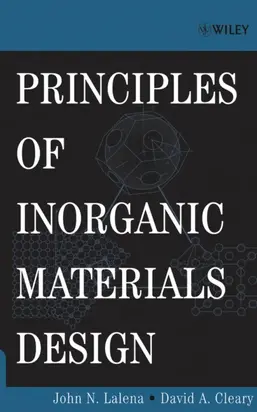
A unique interdisciplinary approach to inorganic materials design Textbooks intended for the training of chemists in the inorganic materials field often omit many relevant topics. With its interdisciplinary approach, this book fills that gap by presenting concepts from chemistry, physics, materials science, metallurgy, and ceramics in a unified treatment targeted towards the chemistry audience. Semiconductors, metal alloys and intermetallics, as well as ceramic substances are covered. Accordingly, the book should also be useful to students and working professionals in a variety of other disciplines. This book discusses a number of topics that are pertinent to the design of new inorganic materials but are typically not covered in standard solid-state chemistry books. The authors start with an introduction to structure at the mesoscopic level and progress to smaller-length scales. Next, detailed consideration is given to both phenomenological and atomistic-level descriptions of transport properties, the metal-nonmetal transition, magnetic and dielectric properties, optical properties, and mechanical properties. Finally, the authors present introductions to phase equilibria, synthesis, and nanomaterials. Other features include: * Worked examples demonstrating concepts unfamiliar to the chemist * Extensive references to related literature, leading readers to more in-depth coverage of particular topics * Biographies introducing the reader to great contributors to the field of inorganic materials science in the twentieth century With their interdisciplinary approach, the authors have set the groundwork for communication and understanding among professionals in varied disciplines who are involved with inorganic materials engineering. Armed with this publication, students and researchers in inorganic and physical chemistry, physics, materials science, and engineering will be better equipped to face today's complex design challenges. This textbook is appropriate for senior-level undergraduate and graduate course work.

Жанр в блоке книги Математика

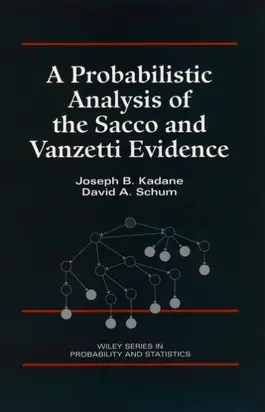
A Probabilistic Analysis of the Sacco and Vanzetti Evidence is a Bayesian analysis of the trial and post-trial evidence in the Sacco and Vanzetti case, based on subjectively determined probabilities and assumed relationships among evidential events. It applies the ideas of charting evidence and probabilistic assessment to this case, which is perhaps the ranking cause celebre in all of American legal history. Modern computation methods applied to inference networks are used to show how the inferential force of evidence in a complicated case can be graded. The authors employ probabilistic assessment to obtain opinions about how influential each group of evidential items is in reaching a conclusion about the defendants' innocence or guilt. A Probabilistic Analysis of the Sacco and Vanzetti Evidence holds particular interest for statisticians and probabilists in academia and legal consulting, as well as for the legal community, historians, and behavioral scientists. It combines structural and probabilistic ideas in the analysis of masses of evidence from every recognized logical species of evidence. Twenty-eight charts show the chains of reasoning in defense of the relevance of evidentiary matters and a listing of trial witnesses who provided the evidence. References include nearly 300 items drawn from the fields of probability theory, history, law, artificial intelligence, psychology, literature, and other areas.

Жанр в блоке книги Программирование

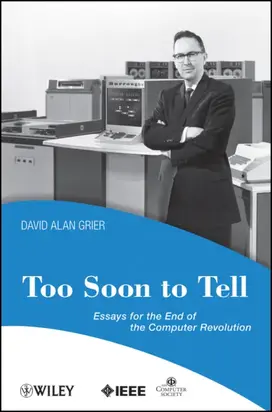
Based on author David A. Grier's column «In Our Time,» which runs monthly in Computer magazine, Too Soon To Tell presents a collection of essays skillfully written about the computer age, an era that began February 1946. Examining ideas that are both contemporary and timeless, these chronological essays examine the revolutionary nature of the computer, the relation between machines and human institutions, and the connections between fathers and sons to provide general readers with a picture of a specific technology that attempted to rebuild human institutions in its own image.

Жанр в блоке книги Социология

Introduces readers to the world of homeland security and provides them with up-to-date information on recent attacks, new terrorist threats, visible terrorist organizations, current dilemmas, updated research, and best practices This book provides comprehensive coverage of issues relating to terrorism, terrorist behavior, homeland security policies, and emergency management. It offers a foundation that spans the readily apparent chasm between the homeland security and disaster communities, and covers the stages of emergency management with a focus on terrorism prevention and response. Based on both the academic literature and practical understanding, the book includes research findings, covering theory and principles as well as their application. Introduction to Homeland Security: Understanding Terrorism Prevention and Emergency Management, Second Edition teaches how to define homeland security, understand how it changed after 9/11, and explore its relationship with emergency management; recognize the causes of terrorism and what prompts people to engage in terrorist attacks; assess the trade-offs between security and rights, and understand how terrorism exploits the tension between these two priorities; work to prevent terrorist attacks through intelligence gathering, by promoting laws that prohibit terrorism, and by protecting borders and various sectors of society; prepare for a terrorist attack by creating an advisory council, passing ordinances, acquiring monetary resources, and establishing an EOC; effectively respond to a terrorist attack through the many functions involved, including the protection of first responders and the decontamination of the victims; recover from a terrorist attack through both short-term and long-term measures; anticipate the current challenges faced in homeland security; and comprehend the various types of attacks that might take place in the future. The second edition: Covers the four traditional phases of emergency response, with a focus on terrorism prevention and infrastructure protection Includes new content such as recent domestic and international terrorist attacks including the attacks in Paris and Boston Has a strong «practitioner» approach and draws upon a solid foundation of academic literature in the field Discusses the roles and responsibilities of government agencies, non-government organizations, and individual citizens Introduction to Homeland Security is an excellent book for all scholars, students, and practitioners interested or involved in homeland security and emergency management.
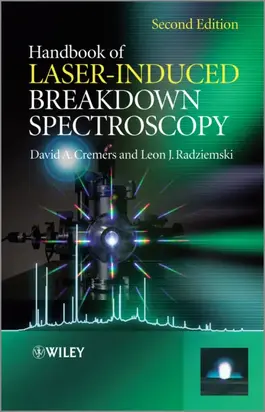
Starting from fundamentals and moving through a thorough discussion of equipment, methods, and techniques, the Handbook of Laser-Induced Breakdown Spectroscopy provides a unique reference source that will be of value for many years to come for this important new analysis method. The authors, with a total of over 60 years of experience in the LIBS method, use a combination of tutorial discussions ranging from basic principles up to more advanced descriptions along with extensive figures and photographs to clearly explain topics addressed in the text. In this second edition, chapters on the use of statistical analysis and advances in detection of weapons of mass destruction have been added. Tables of data related to analysis with LIBS have been updated. The Handbook of Laser-Induced Breakdown Spectroscopy, Second Edition: provides a thorough but understandable discussion of the basic principles of the method based on atomic emission spectroscopy, including recently available data leading to better characterization of the LIBS plasma; presents a discussion of the many advantages of the method along with limitations, to provide the reader a balanced overview of capabilities of the method; describes LIBS instrumentation ranging from basic set-ups to more advanced configurations; presents a comprehensive discussion of the different types of components (laser, spectrometers, detectors) that can be used for LIBS apparatuses along with suggestions for their use, as well as an up-to-date treatment of the newest advances and capabilities of LIBS instruments; presents the analytical capabilities of the method in terms of detection limits, accuracy, and precision of measurements for a variety of different sample types; discusses methods of sampling different media such as gases, liquids, and solids; presents an overview of some real-world applications of the method, with new emphasis on sampling of biologically and physically dangerous materials; provides an up-to-date list of references to LIBS literature along with the latest detection limits and a unique list of element detection limits using a uniform analysis method; provides annotated examples of LIBS spectra which can serve as references for the general reader and will be especially useful for those starting out in the field.

Жанр в блоке книги Математика

Praise for the First Edition «. . .will certainly fascinate anyone interested in abstract algebra: a remarkable book!» —Monatshefte fur Mathematik Galois theory is one of the most established topics in mathematics, with historical roots that led to the development of many central concepts in modern algebra, including groups and fields. Covering classic applications of the theory, such as solvability by radicals, geometric constructions, and finite fields, Galois Theory, Second Edition delves into novel topics like Abel’s theory of Abelian equations, casus irreducibili, and the Galois theory of origami. In addition, this book features detailed treatments of several topics not covered in standard texts on Galois theory, including: The contributions of Lagrange, Galois, and Kronecker How to compute Galois groups Galois's results about irreducible polynomials of prime or prime-squared degree Abel's theorem about geometric constructions on the lemniscates Galois groups of quartic polynomials in all characteristics Throughout the book, intriguing Mathematical Notes and Historical Notes sections clarify the discussed ideas and the historical context; numerous exercises and examples use Maple and Mathematica to showcase the computations related to Galois theory; and extensive references have been added to provide readers with additional resources for further study. Galois Theory, Second Edition is an excellent book for courses on abstract algebra at the upper-undergraduate and graduate levels. The book also serves as an interesting reference for anyone with a general interest in Galois theory and its contributions to the field of mathematics.
Nuclear energy is the one energy source that could meet the world's growing energy needs and provide a smooth transition from fossil fuels to renewable energy in the coming decades and centuries. It is becoming abundantly clear that an increase in nuclear energy capacity will, and probably must, take place. However, nuclear energy and the use of radionuclides for civilian and military purposes lead to extremely long-lived waste that is costly and highly problematic to deal with. Therefore, it is critically important ot understand the environmental implications of radionuclides for ecosystems and human health if nuclear energy is to be used to avoid the impending global energy crisis. The present volume of the EIC Books series addresses this critical need by providing fundamental information on environmentally significant radionuclides. The content of this book was developed in collaboration with many of the authors of the chapters. Given the enormity of the subject the Editor and the Authors had to be judicious in selecting the chapters that would appropriately encompass and describe the primary topics, particularly those that are of importance to the health of ecosystems and humans. The resulting chapters were chosen to provide this information in a book of useful and appropriate length. Each chapter provides fundamental information on the chemistry of the radionuclides, their occurrence and movement in the enivornment, separation and analyses, and the technologies needed for their remediation and mitigation. The chapters are structured with a common, systematic format in order to facilitate comparions between elements and groups of elements. About EIC Books The Encyclopedia of Inorganic Chemistry (EIC) has proved to be one of the defining standards in inorganic chemistry, and most chemistry libraries around the world have access either to the first of second print editon, or to the online version. Many readers, however, prefer to have more concise thematic volumes, targeted to their specific area of interest. This feedback from EIC readers has encouraged the Editors to plan a series of EIC Books, focusing on topics of current interest. They will appear on a regular basis, and will feature leading scholars in their fields. Like the Encyclopedia, EIC Books aims to provide both the starting research student and the confirmed research worker with a critical distillation of the leading concepts in inorganic and bioinorganic chemistry, and provide a structured entry into the fields covered. This volume is also available as part of Encyclopedia of Inorganic Chemistry, 5 Volume Set. This set combines all volumes published as EIC Books from 2007 to 2010, representing areas of key developments in the field of inorganic chemistry published in the Encyclopedia of Inorganic Chemistry. Find out more.
Threats to brand relevance are always lurking around the corner. Your brand is virtually never immune from the risk of fading instead of being energized or being damaged instead of strengthened.—David Aaker From branding guru David Aaker comes Three Threats to Brand Relevance, a provocative new offering in the Jossey-Bass Short Format series. In Three Threats Aaker reveals that the key to an organization's sustained growth is to learn what it takes to bring «big» innovation to market and create barriers to competitors. Aaker also shows how well-established companies can avoid becoming irrelevant in the face of the continuing parade of marketing dynamics led by others. Building on his full-length book Brand Relevance, Aaker offers a guide for confronting the three threats if they emerge and shows how to put in place the strategies that will keep the threats at bay. Threat #1: A decline in category or subcategory relevance. Customers simply no longer want to buy what you are making, despite the fact you are offering a quality product and some customers love it. Threat #2: The loss of energy relevance. Without energy the brand simply does not come to mind as other more visible brands and a decline in energy can create a perception that it is locked in the past, suitable for an older generation. Threat #3: The emergence of a «reason-not-to-buy.» The brand may have a perceived quality problem or be associated with a firm policy that is not acceptable. Whether your brand is just breaking into the marketplace or has a long held place in the hearts of its consumers, any forward-thinking company can implement Aaker's proven methods and strategies as part of their organization's ongoing review of brand strategy with the help of this succinct and to-the-point resource. About the Jossey-Bass Short Format Series Written by thought leaders and experts in their fields, pieces in the Jossey-Bass Short Format Series provide busy, on-the-go professionals, managers and leaders around the world with must-have, just-in-time information in a concise and actionable format.
Moral Struggle and Religious Ethics offers a comparative discussion of the challenges of living a moral religious life. This is illustrated with a study of two key thinkers, Bonaventure and Buddhaghosa, who influenced the development of moral thinking in Christianity and Buddhism respectively. Provides an important and original contribution to the comparative study and practice of religious ethics Moves away from a comparison of theories by discussing the shared human problem of moral weakness Offers an fresh approach with a comparison of the understanding of the problem of moral weakness between the two key thinkers, Bonaventure and Buddhaghosa Written by a highly respected academic in the dynamic and fast-growing field of comparative religious ethics

Жанр в блоке книги Медицина

American health care has made great strides in the past hundred years. Life expectancy has increased dramatically and advances in medicine and treatments have eradicated many life-threatening diseases. However, in today's health care arena there is divergence between our health needs, the structure of our health care system, and how health care is delivered and funded. In Forces of Change, David A. Shore has collected the leading thinking from experts in the field on how our health care system can benefit from important lessons from other industries and effect transformational change that truly serves all stakeholders well. Contributors include Max Caldwell of Towers Watson; Michael J. Dowling of North Shore–Long Island Jewish Medical Health System; John P. Glaser of Siemens Healthcare; Ashish K. Jha of the Harvard School of Public Health; Eric D. Kupferberg of Northeastern University; Lucian Leape of the Harvard School of Public Health; Jeff Margolis of the TriZetto Group, Inc.; and David Shoultz of Philips Electronics.
Lanthanides are of great importance for the electronic industries, this new book (from the EIBC Book Series) provides a comprehensive coverage of the basic chemistry, particularly inorganic chemistry, of the lanthanoid elements, those having a 4f shell of electrons. A chapter is describing the similarity of the Group 3 elements, Sc, Y, La, the group from which the lanthanoids originate and the group 13 elements, particularly aluminum, having similar properties. Inclusion of the group 3 and 13 elements demonstrates how the lanthanoid elements relate to other, more common, elements in the Periodic Table. Beginning chapters describe the occurrence and mineralogy of the elements, with a focus on structural features observed in compounds described in later chapters. The majority of the chapters is organized by the oxidation state of the elements, Ln(0), Ln(II), Ln(III), and Ln(IV). Within this organization the chapters are further distinguished by type of compound, inorganic (oxides and hydroxides, aqueous speciation, halides, alkoxides, amides and thiolates, and chelates) and organometallic. Concluding chapters deal with diverse and critically important applications of the lanthanoids in electronic and magnetic materials, and medical imaging.

Жанр в блоке книги Математика

An exciting approach to the history and mathematics of number theory “. . . the author’s style is totally lucid and very easy to read . . .the result is indeed a wonderful story.” —Mathematical Reviews Written in a unique and accessible style for readers of varied mathematical backgrounds, the Second Edition of Primes of the Form p = x2+ ny2 details the history behind how Pierre de Fermat’s work ultimately gave birth to quadratic reciprocity and the genus theory of quadratic forms. The book also illustrates how results of Euler and Gauss can be fully understood only in the context of class field theory, and in addition, explores a selection of the magnificent formulas of complex multiplication. Primes of the Form p = x2 + ny2, Second Edition focuses on addressing the question of when a prime p is of the form x2 + ny2, which serves as the basis for further discussion of various mathematical topics. This updated edition has several new notable features, including: • A well-motivated introduction to the classical formulation of class field theory • Illustrations of explicit numerical examples to demonstrate the power of basic theorems in various situations • An elementary treatment of quadratic forms and genus theory • Simultaneous treatment of elementary and advanced aspects of number theory • New coverage of the Shimura reciprocity law and a selection of recent work in an updated bibliography Primes of the Form p = x2 + ny2, Second Edition is both a useful reference for number theory theorists and an excellent text for undergraduate and graduate-level courses in number and Galois theory.

Жанр в блоке книги Книги По Философии
A thoroughly updated introduction to the concepts, methods, and standards of critical thinking, A Practical Guide to Critical Thinking: Deciding What to Do and Believe, Second Edition is a unique presentation of the formal strategies used when thinking through reasons and arguments in many areas of expertise. Pursuing an interdisciplinary approach to critical thinking, the book offers a broad conception of critical thinking and explores the practical relevance to conducting research across fields such as, business, education, and the biological sciences. Applying rigor when necessary, the Second Edition maintains an informal approach to the fundamental core concepts of critical thinking. With practical strategies for defining, analyzing, and evaluating reasons and arguments, the book illustrates how the concept of an argument extends beyond philosophical roots into experimentation, testing, measurement, and policy development and assessment. Featuring plenty of updated exercises for a wide range of subject areas, A Practical Guide to Critical Thinking Deciding What to Do and Believe, Second Edition also includes: Numerous real-world examples from many fields of research, which reflect the applicability of critical thinking in everyday life New topical coverage, including the nature of reasons, assertion and supposing, narrow and broad definitions, circumstantial reasons, and reasoning about causal claims Selected answers to various exercises to provide readers with instantaneous feedback to support and extend the lessons A Practical Guide to Critical Thinking Deciding What to Do and Believe, Second Edition is an excellent textbook for courses on critical thinking and logic at the undergraduate and graduate levels as well as an appropriate reference for anyone with a general interest in critical thinking skills.
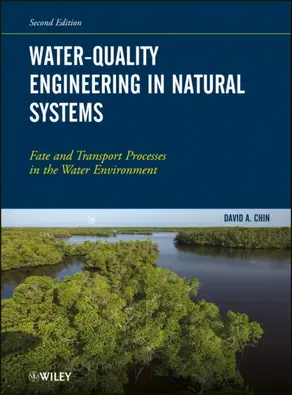
Provides the tools needed to control and remediate the quality of natural water systems Now in its Second Edition, this acclaimed text sets forth core concepts and principles that govern the fate and transport of contaminants in water, giving environmental and civil engineers and students a full set of tools to design systems that effectively control and remediate the quality of natural waters. Readers will find coverage of all major classes of water bodies. Moreover, the author discusses the terrestrial fate and transport of contaminants in watersheds, underscoring the link between terrestrial loadings and water pollution. Water-Quality Engineering in Natural Systems begins with an introduction exploring the sources of water pollution and the control of water pollution. It then presents the fundamentals of fate and transport, including the derivation and application of the advection–diffusion equation. Next, the text covers issues that are unique to: Rivers and streams Groundwater Watersheds Lakes and reservoirs Wetlands Oceans and estuaries The final two chapters are dedicated to analyzing water-quality measurements and modeling water quality. This Second Edition is thoroughly updated based on the latest findings, practices, and standards. In particular, readers will find new methods for calculating total maximum daily loads for river contaminants, with specific examples detailing the fate and transport of bacteria, a pressing problem throughout the world. With end-of-chapter problems and plenty of worked examples, Water-Quality Engineering in Natural Systems enables readers to not only understand what happens to contaminants in water, but also design systems to protect people from toxic pollutants.
This interesting guide covers all aspects of Google Earth, the freely downloadable application from Google that allows users to view satellite images from all points of the globe Aimed at a diverse audience, including casual users who enjoy air shots of locales as well as geographers, real estate professionals, and GPS developers Includes valuable tips on various customizations that users can add, advice on setting up scavenger hunts, and guidance on using Google Earth to benefit a business Explains modifying general options, managing the layer and placemark systems, and tackling some of the more technical aspects, such as interfacing with GPS There are more than 400,000 registered users of Google Earth and the number is still growing
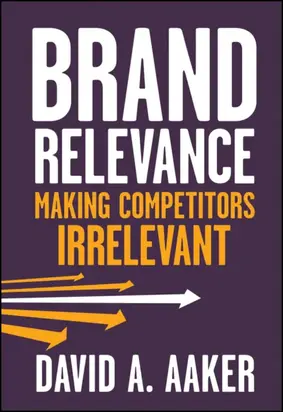
Branding guru Aaker shows how to eliminate the competition and become the lead brand in your market This ground-breaking book defines the concept of brand relevance using dozens of case studies-Prius, Whole Foods, Westin, iPad and more-and explains how brand relevance drives market dynamics, which generates opportunities for your brand and threats for the competition. Aaker reveals how these companies have made other brands in their categories irrelevant. Key points: When managing a new category of product, treat it as if it were a brand; By failing to produce what customers want or losing momentum and visibility, your brand becomes irrelevant; and create barriers to competitors by supporting innovation at every level of the organization. Using dozens of case studies, shows how to create or dominate new categories or subcategories, making competitors irrelevant Shows how to manage the new category or subcategory as if it were a brand and how to create barriers to competitors Describes the threat of becoming irrelevant by failing to make what customer are buying or losing energy David Aaker, the author of four brand books, has been called the father of branding This book offers insight for creating and/or owning a new business arena. Instead of being the best, the goal is to be the only brand around-making competitors irrelevant.
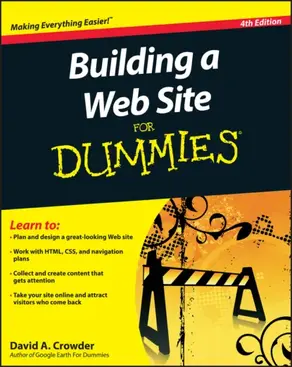
The bestselling guide to building a knockout Web site, newly updated An effective Web site is the key to success for every venture from class reunions to major corporations. And since Web technology changes rapidly, Building a Web Site For Dummies, 4th Edition is fully updated for the cutting-edge tools and trends. If you need to build and maintain a Web site, even if your experience is severely limited, this book makes it easy and fun. You'll learn to plan, design, create, launch, and maintain your site using the most up-to-date tools. A quality Web presence is essential in today's marketplace, and many individuals charged with creating one are unaware of the challenges This guide gives novice Web designers the tools and know-how to plan, design, and build effective Web sites Provides a nuts-and-bolts guide to site-building, including coverage of HTML, WYSIWYG construction software, CSS, and navigation plans Shows how to spruce up your site with topnotch graphics, video, and great content Guides you through getting your site online, promoting it, and even making money from it Building a Web Site For Dummies, 4th Edition is the tool every first-time Web designer needs to build a professional-looking site.
Essential guidance for preventing fraud in the card-not-present (CNP) space This book focuses on the prevention of fraud for the card-not-present transaction. The payment process, fraud schemes, and fraud techniques will all focus on these types of transactions ahead. Reveals the top 45 fraud prevention techniques Uniquely focuses on eCommerce fraud essentials Provides the basic concepts around CNP payments and the ways fraud is perpetrated If you do business online, you know fraud is a part of doing business. Essentials of On-line Payment Security and Fraud Prevention equips you to prevent fraud in the CNP space.

Популярные серии