Назад

J. David Abner Скачать все книги 20 Количество книг

Жанр в блоке книги Социология
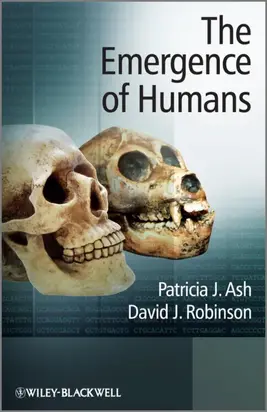
The Emergence of Humans is an accessible, informative introduction to the scientific study of human evolution. It takes the reader through time following the emergence of the modern human species Homo sapiens from primate roots. Acknowledging the controversy surrounding the interpretation of the fossil record, the authors present a balanced approach in an effort to do justice to different views. Each chapter covers a significant time period of evolutionary history and includes relevant techniques from other disciplines that have applications to the field of human evolution. Self-assessment questions linked to learning outcomes are provided for each chapter, together with further reading and reference to key sources in the primary literature. The book will thus be effective both as a conventional textbook and for independent study. Written by two authors with a wealth of teaching experience The Emergence of Humans will prove invaluable to students in the biological and natural sciences needing a clear, balanced introduction to the study of human evolution.

Жанр в блоке книги Техническая Литература

Encompassing theory and field experience, this book covers all the main subject areas in earthquake risk reduction, ranging from geology, seismology, structural and soil dynamics to hazard and risk assessment, risk management and planning, engineering and the architectural design of new structures and equipment. Earthquake Risk Reduction outlines individual national weaknesses that contribute to earthquake risk to people and property; calculates the seismic response of soils and structures, using the structural continuum 'Subsoil – Substructure – Superstructure – Non-structure'; evaluates the effectiveness of given designs and construction procedures for reducing casualties and financial losses; provides guidance on the key issue of choice of structural form; presents earthquake resistant designs methods for the four main structural materials – steel, concrete, reinforced masonry and timber – as well as for services equipment, plant and non-structural architectural components; contains a chapter devoted to problems involved in improving (retrofitting) the existing built environment. Compiled from the author's extensive professional experience in earthquake engineering, this key text provides an excellent treatment of the complex multidisciplinary process of earthquake risk reduction. This book will prove an invaluable reference and guiding tool to practicing civil and structural engineers and architects, researchers and postgraduate students in seismology, local governments and risk management officials.

Жанр в блоке книги Техническая Литература

Today’s networks of processors on and off chip, operating with independent clocks, need effective synchronization of the data passing between them for reliability. When two or more processors request access to a common resource, such as a memory, an arbiter has to decide which request to deal with first. Current developments in integrated circuit processing are leading to an increase in the numbers of independent digital processing elements in a single system. With this comes faster communications, more networks on chip, and the demand for more reliable, more complex, and higher performance synchronizers and arbiters. Written by one of the foremost researchers in this area of digital design, this authoritative text provides in-depth theory and practical design solutions for the reliable working of synchronization and arbitration hardware in digital systems. The book provides methods for making real reliability measurements both on and off chip, evaluating some of the common difficulties and detailing circuit solutions at both circuit and system levels. Synchronization and Arbitration in Digital Systems also presents: mathematical models used to estimate mean time between failures in digital systems; a summary of serial and parallel communication techniques for on-chip data transmission; explanations on how to design a wrapper for a locally synchronous cell, highlighting the issues associated with stoppable clocks; an examination of various types of priority arbiters, using signal transition graphs to show the specification of different designs (from the simplest to more complex multi-way arbiters) including ways of solving problems encountered in a wide range of applications; essential information on systems composed of independently timed regions, including a discussion on the problem of choice and the factors affecting the time taken to make choices in electronics. With its logical approach to design methodology, this will prove an invaluable guide for electronic and computer engineers and researchers working on the design of digital electronic hardware. Postgraduates and senior undergraduate students studying digital systems design as part of their electronic engineering course will struggle to find a resource that better details the information given inside this book

Жанр в блоке книги Техническая Литература

This book contributes to more reliable and realistic predictions by focusing on sampling times from a few seconds to a few hours. Its objectives include developing clear definitions of statistical terms, such as plume sampling time, concentration averaging time, receptor exposure time, and other terms often confused with each other or incorrectly specified in hazard assessments; identifying and quantifying situations for which there is no adequate knowledge to predict concentration fluctuations in the near-field, close to sources, and far downwind where dispersion is dominated by atmospheric turbulence; identifying areas where further information is required to define concentration variability statistics; and formulating an operation model for concentration fluctuations based on the current state of knowledge of dispersion processes.
An essential reference for optical sensor system design This is the first text to present an integrated view of the optical and mathematical analysis tools necessary to understand computational optical system design. It presents the foundations of computational optical sensor design with a focus entirely on digital imaging and spectroscopy. It systematically covers: Coded aperture and tomographic imaging Sampling and transformations in optical systems, including wavelets and generalized sampling techniques essential to digital system analysis Geometric, wave, and statistical models of optical fields The basic function of modern optical detectors and focal plane arrays Practical strategies for coherence measurement in imaging system design The sampling theory of digital imaging and spectroscopy for both conventional and emerging compressive and generalized measurement strategies Measurement code design Linear and nonlinear signal estimation The book concludes with a review of numerous design strategies in spectroscopy and imaging and clearly outlines the benefits and limits of each approach, including coded aperture and imaging spectroscopy, resonant and filter-based systems, and integrated design strategies to improve image resolution, depth of field, and field of view. Optical Imaging and Spectroscopy is an indispensable textbook for advanced undergraduate and graduate courses in optical sensor design. In addition to its direct applicability to optical system design, unique perspectives on computational sensor design presented in the text will be of interest for sensor designers in radio and millimeter wave, X-ray, and acoustic systems.

Жанр в блоке книги Медицина

Rapid developments in recent years in basic science and pharmacology has greatly increased understanding of the causes of anxiety disorders. This has led to a large number of new drug treatments from the pharmaceutical industry. This book makes sense of these advances and presents a coherent account of diagnosis and management from the clinical point of view. Chapters are in the form of surveys and digests of the recent literature and are interspersed with clinical guidelines, diagnostic and therapeutic points and are well illustrated.

Жанр в блоке книги Биографии И Мемуары

The definitive account of Barack Obama’s life before he became the 44th president of the United States – the formative years, confluence of forces, and influential figures who helped shaped an extraordinary leader and his rise – from the Pulitzer Prize-winning author of ‘Bearing the Cross’.Barack Obama's keynote speech at the 2004 Democratic National Convention instantly catapulted the little-known state senator from Illinois into the national spotlight. Three months later, Obama would win election to the U.S. Senate; four years later he would make history as America’s first black president. Now, at the end of his second presidential term, David J. Garrow delivers the most compelling and comprehensive Obama biography – as epic in vision and rigorous in detail as Robert Caro’s ‘The Power Broker’.Moving around the globe, from Hawaii to Indonesia to the American Northeast and Midwest, ‘Rising Star’ meticulously unpacks Obama’s life, from his tumultuous upbringing in Honolulu and Jakarta, to his formative time as a community organizer on Chicago’s South Side, working in some of the roughest neighborhoods, to Cambridge, where he excelled at Harvard Law School, and finally back to Chicago, where he pursued his political destiny. In voluminous detail, drawn from more than 1,000 interviews and encyclopedic documentary research, Garrow reveals as never before the ambition, the dreams, and the all-too-human struggles of an iconic president in a sure to be news-making biography that will stand as the most authoritative account of Obama’s pre-presidential life for decades to come.

Жанр в блоке книги Медицина

Mollison's Blood Transfusion in Clinical Medicine is an icon in the field of transfusion and the first edition was published in 1951. The book arose from the concept of the transfusionist, as both scientist and expert consultant. For many years, this text has provided the primary, and often the sole, reference for detailed information and practical experience in blood transfusion. The book is completely revised and updated throughout to include the latest advances and developments in the field.

Жанр в блоке книги Общая Психология

Save hours of time-consuming paperwork The Child Psychotherapy Progress Notes Planner, Fifth Edition contains complete prewritten session and patient presentation descriptions for each behavioral problem in the Child Psychotherapy Treatment Planner, Fifth Edition. The prewritten progress notes can be easily and quickly adapted to fit a particular client need or treatment situation. Saves you hours of time-consuming paperwork, yet offers the freedom to develop customized progress notes Organized around 35 main presenting problems, from academic underachievement and obesity to ADHD, anger control problems, and autism spectrum disorders Features over 1,000 prewritten progress notes (summarizing patient presentation, themes of session, and treatment delivered) Provides an array of treatment approaches that correspond with the behavioral problems and DSM-5 diagnostic categories in The Child Psychotherapy Treatment Planner, Fifth Edition Offers sample progress notes that conform to the requirements of most third-party payors and accrediting agencies, including CARF, TJC, and NCQA Presents new and updated information on the role of evidence-based practice in progress notes writing and the special status of progress notes under HIPAA

Жанр в блоке книги Медицина

Facial resurfacing rejuvenates the skin to reduce the effects of aging, and today’s cosmetic physician ideally uses a variety of methods to resurface and rejuvenate the skin without surgery. This book examines the full range of available modalities to help the cosmetic dermatologist recommend the best approach for each patient. Topics include clinical indications, advantages, and disadvantages.

Жанр в блоке книги Архитектура

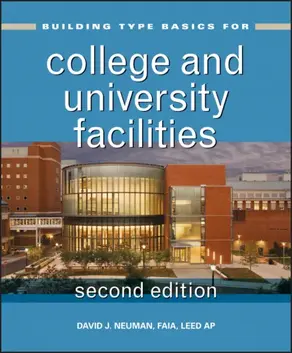
Essential information for the design of college and university facilities Building Type Basics for College and University Facilities, Second Edition is your one-stop reference for the essential information you need to confidently begin the planning process and successfully complete the design of college and university buildings, large or small, on time and within budget. Award-winning architect and planner David J. Neuman and a roster of industry-leading contributors share their firsthand knowledge to guide you through all aspects of planning higher education facilities, including learning centers, academic buildings and professional schools, scientific research facilities, housing, athletics and recreation facilities, social and support facilities, and cultural centers. The book combines up-to-date coverage of essential issues related to campus planning, programming, and building design guidelines with detailed project examples. This new edition offers: Numerous photographs, diagrams, plans, and sections Updated project examples, including several buildings completed in the last decade Up-to-date coverage of sustainability and technology issues A new chapter on historic preservation, rehabilitation, and adaptive use of existing buildings New material on the influence of interdepartmental collaboration and renewed communication on the built environment for campuses This conveniently organized quick reference is an invaluable guide for busy, dedicated professionals who want to get educated quickly as they embark on a new project. Like every Building Type Basics book, it provides authoritative, up-to-date information instantly and saves professionals countless hours of research.
The processes of modern clothing manufacture are explained here, alongside the equipment used. Latest developments are described as well as established methods. Manual, mechanised and automated processes are explained and their comparative advantages for certain purposes are considered as well as the applications of computer control and robotics. The Fourth Edition has been updated throughout to reflect advances in technology and a new chapter is now devoted to colour management and colour technology (including a colour section for the first time). There is a new chapter on trouble-shooting in the sewing room, giving practical solutions to common problems. Other significant additions are alternative methods of joining materials (ultrasonics, RF welding and moulding) and new developments in the traditional areas of garment and machinery technology. Students in clothing and fashion as well as garment technologists in the clothing industry will find this an invaluable resource in their increasingly complex role.

Жанр в блоке книги Техническая Литература
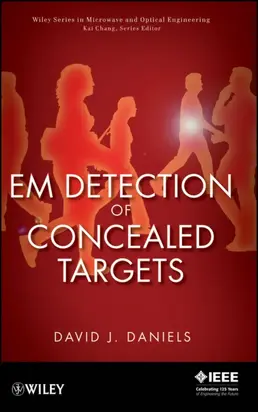
The latest EM techniques for detecting concealed targets, whether explosives, weapons, or people Extensively illustrated from basic principles to system design, the fundamental concepts of RF, microwave, millimeter wave, and terahertz detection systems and techniques to find concealed targets are explained in this publication. These concealed targets may be explosive devices or weapons, which can be buried in the ground, concealed in building structures, hidden under clothing, or inside luggage. Concealed targets may also be people who are stowaways or victims of an avalanche or earthquake. Although much information is available in conference proceedings and professional society publications, this book brings all the relevant information in a single, expertly written and organized volume. Readers gain an understanding of the physics underlying electromagnetic (EM) detection methods, as well as the factors that affect the performance of EM detection equipment, helping them choose the right type of equipment and techniques to meet the demands of particular tasks. Among the topics covered are: Ultra-wideband radar and ground-penetrating radar Millimeter, sub-millimeter, and terahertz systems Radar systems including Doppler, harmonic, impulse, FMCW, and holographic Radiometric systems Nuclear quadrupole resonance systems Author David Daniels has many years of experience designing and deploying EM systems to detect concealed targets. As a result, this publication is essential for scientists and engineers who are developing or using EM equipment and techniques for a diverse range of purposes, including homeland security, crime prevention, or the detection of persons.

Жанр в блоке книги Техническая Литература
Earthquake Resistant Design and Risk Reduction, 2nd edition is based upon global research and development work over the last 50 years or more, and follows the author’s series of three books Earthquake Resistant Design, 1st and 2nd editions (1977 and 1987), and Earthquake Risk Reduction (2003). Many advances have been made since the 2003 edition of Earthquake Risk Reduction, and there is every sign that this rate of progress will continue apace in the years to come. Compiled from the author’s wide design and research experience in earthquake engineering and engineering seismology, this key text provides an excellent treatment of the complex multidisciplinary process of earthquake resistant design and risk reduction. New topics include the creation of low-damage structures and the spatial distribution of ground shaking near large fault ruptures. Sections on guidance for developing countries, response of buildings to differential settlement in liquefaction, performance-based and displacement-based design and the architectural aspects of earthquake resistant design are heavily revised. This book: Outlines individual national weaknesses that contribute to earthquake risk to people and property Calculates the seismic response of soils and structures, using the structural continuum “Subsoil – Substructure – Superstructure – Non–structure” Evaluates the effectiveness of given design and construction procedures for reducing casualties and financial losses Provides guidance on the key issue of choice of structural form Presents earthquake resistant design methods for the main four structural materials – steel, concrete, reinforced masonry and timber – as well as for services equipment, plant and non-structural architectural components Contains a chapter devoted to problems involved in improving (retrofitting) the existing built environment This book is an invaluable reference and guiding tool to practising civil and structural engineers and architects, researchers and postgraduate students in earthquake engineering and engineering seismology, local governments and risk management officials.
An intriguing look at how technology is changing financial markets, from an innovator on the frontlines of this revolution Nerds on Wall Street tells the tale of the ongoing technological transformation of the world's financial markets. The impact of technology on investing is profound, and author David Leinweber provides readers with an overview of where we were just a few short years ago, and where we are going. Being a successful investor today and tomorrow–individual or institutional–involves more than stock picking, asset allocation, or market timing: it involves technology. And Leinweber helps readers go beyond the numbers to see exactly how this technology has become more responsible for managing modern markets. In essence, the financial game has changed and will continue to change due entirely to technology. The new «players,» human or otherwise, offer investors opportunities and dangers. With this intriguing and entertaining book, Leinweber shows where technology on Wall Street has been, what it has meant, and how it will impact the markets of tomorrow.
A visual guide to one of the fastest growing areas in trading and speculation An Exchange-Traded Fund (ETF)—a security that tracks an index, a commodity, or a basket of assets like an index fund, but trades like a stock on an exchange—offers diversification of an index fund, as well as the ability to sell short, buy on margin, and purchase as little as one share. Giving financial advisors, institutional asset managers, traders, and other investment professionals the information they need to get the most out of ETF opportunities, the Bloomberg Visual Guide to ETFs covers the subject in a highly visual manner. Starting with an introduction to ETFs, the book looks at where they fit within the world of investment products, how they are structurally differentiated from other products and among themselves, relevant tax considerations, global listings, growth on a global basis, evolution of the product set, and other topics. Also looking towards the future, the text provides information on finding ETFs—including fund searches, fund news, measuring and valuing ETFs, evaluating their correlation to the underlying sector or commodity being tracked, and more. As a result, the book is a resource not just for understanding ETFs today, but for taking advantage of what's to come. Presents critical information in an easy-to-absorb visual manner Serves as a reference, presenting information in easily digestible pieces for easy access Author David Abner is a well-known ETF developer expert Incorporates quizzes, charts, and other accessible features to bring the material to life ETFs are multivarious, complex instruments that offer unique rewards, and the Bloomberg Visual Guide to ETFs brings together everything that people working with them need to understand to cash in.
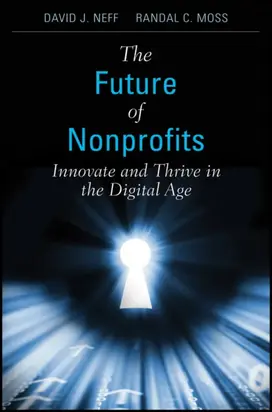
Ever heard of an internal entrepreneur? You might know the type. They’re kind of employee who pushes mercilessly towards the trends of the future. Often looked at as a little bit outside the mainstream, more often than not the decisions this internal entrepreneur makes on behalf of an organization pay off in spades. So what makes an internal entrepreneur? How can you, as a nonprofit, create a culture that rewards futuring, internal entrepreneurs and innovation and doesn’t shut it down? The book “The Future of Nonprofits: Thrive and Innovate in the Digital Age” helps organizations do those very things. Better predicting future trends helps to reshape culture, creating the kind of environment ripe for positive growth in this fast changing world we work in today. Designed for nonprofit employees on all levels, the book will become a go to handbook for those interested in adapting in the modern world, not looking to be left behind. The Future of Nonprofits helps organizations capitalize on internal innovation. Innovative nonprofits are able to better predict future trends to remake and reshape their culture, structure, and staff to be a more nimble and lean. By applying the strategies laid out in this book, nonprofit professionals of all levels can prepare their organizations to take advantage of future trends and develop innovative “internal entrepreneurs” that will grow revenue and drive their mission. Provides nonprofits with a comprehensive playbook on how to create a new, more flexible, innovative organization Provides nonprofits a look at the future of fundraising and communications trends into 2016 Case studies highlight successes and failures Highlights the power and strength of Social Media Hightlights how to hire, train, manage and inspire “internal entrepreneurial” employees Features actionable advice on creating an organization that is primed to grow and thrive in the immediate and long-term future This game-changing book reveals how every nonprofit can put technology, innovation and future trends to work to reach their mission and grow revenue.
The euro area remains in a state of flux and appears to be unsustainable in its present form. The outcome of the crisis may be unknown for years and a judgement on the project’s success or failure may be out of reach for decades. In the meantime, analysts, portfolio managers and traders will still have daily, weekly, quarterly and annual benchmarks. They will have to analyze economic developments in the euro area and their impacts on financial assets. The objective of this book is to provide a framework for that analysis that is comprehensible to most financial market participants. The book begins with a focus on coincident and leading economic indicators for the euro area. The following section looks at euro-area institutions. The next chapter focuses on the euro crisis. It attempts to provide an explanation of its origins and a glimpse of the potential outcomes. In addition, the tools needed to analyze the crisis as it evolves are presented. The last sections provide information unique to the economies of Germany, France, the U.K., Switzerland, Sweden and Norway.
Proven private equity real estate investing strategies The subprime fallout and credit crisis have triggered a major transition in U.S. real estate. With tightening lending and underwriting standards, speculative investments and construction projects are likely to limited, resulting in constrained supply and healthier fundamentals over the long term. Looking forward, market participants anticipate that the coming years will be fraught with challenges as well as opportunities. Active Private Equity Real Estate Strategy is a collection of abridged market analyses, forecasts, and strategy papers from the ING Clarion Partners' Research & Investment Strategy (RIS) group. Divided into two comprehensive parts, this practical guide provides you with an informative overview of real estate markets, forecasts, and recent trends in part one, and presents specific active strategies in private equity real estate investing in part two. Includes a simulation of the economy in recession and the expected effects on the commercial real estate industry Offers examples of portfolio analysis and recommendations using ING Clarion's forecasts and Modern Portfolio Theory Focuses on multifamily, hotel, land, and industrial investments Demonstrates the use of the various tools available to the private equity real estate investor Written with both the individual and institutional real estate investor in mind, this book offers specific private equity strategies for investing in real estate during volatile times.
Professional-level guidance on effectively trading ETFs in markets around the world The ETF Handbook is a comprehensive handbook for using Exchange Traded Funds, designed specifically for institutional investors and professional advisors seeking to improve ETF profitability. While ETFs trade like stocks, they are not stocks—and the differences impact every aspect of their use. This book provides full guidance toward effectively monitoring, analyzing, and executing ETFs, including the technical details you won't find anywhere else. You'll learn how they work, where they fit, and who is using them, as well as the resources that exist to provide access for investors. This new second edition includes updated coverage on how business has moved from niche to mainstream, ETF performance and issuers around the world, and changes to the users of ETFs in the US. The companion website features instructional video, as well as ready-to-use spreadsheets for calculating NAV and IIV. Most of the literature surrounding ETFs is geared toward individual investors or traders, but this book is written from the professional perspective—complete with the deeper mechanical information professionals require. Learn the analysis and execution methods specific to ETFs Discover why ETFs require a sophisticated level of skill Consider how ETFs perform in different market environments Examine the impact of managed ETF portfolio growth ETFs are incredibly flexible and valuable tools, but using them effectively demands a more sophisticated skillset, even among professional money managers and traders. Daily volumes and spreads do not tell the full story regarding availability and liquidity, and treating ETFs just like stocks can dramatically impact profits. The ETF Handbook is the professional's guide to the ETF markets worldwide with expert insight on the technical details that matter.

Популярные серии