

Crouch Colin Скачать все книги 3 Количество книг



Жанр в блоке книги Зарубежная Публицистика
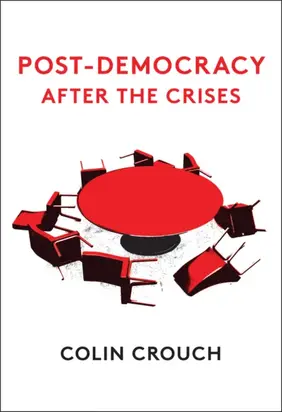
In <i>Post-Democracy</i> (Polity, 2004) Colin Crouch argued that behind the façade of strong institutions, democracy in many advanced societies was being hollowed out, its big events becoming empty rituals as power passed increasingly to circles of wealthy business elites and an ever-more isolated political class.<br /><br />Crouch’s provocative argument has in many ways been vindicated by recent events, but these have also highlighted some weaknesses of the original thesis and shown that the situation today is even worse. The global financial deregulation that was the jewel in the crown of wealthy elite lobbying brought us the financial crisis and helped stimulate xenophobic movements which no longer accept the priority of institutions that safeguard democracy, like the rule of law. The rise of social media has enabled a handful of very rich individuals and institutions to target vast numbers of messages at citizens, giving a false impression of debate that is really stage-managed from a small number of concealed sources. Crouch evaluates the implications of these and other developments for his original thesis, arguing that while much of his thesis remains sound, he had under-estimated the value of institutions which are vital to the support of a democratic order. He also confronts the challenge of populists who seem to echo the complaints of Post-Democracy but whose pessimistic nostalgia brings an anti-democratic brew of hatred, exclusion and violence.
Жанр в блоке книги Зарубежная Деловая Литература
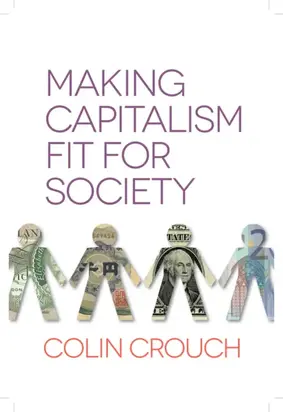
Capitalism is the only complex system known to us that can provide an efficient and innovative economy, but the financial crisis has brought out the pernicious side of capitalism and shown that it remains dependent on the state to rescue it from its own deficiencies. Can capitalism be reshaped so that it is fit for society, or must we acquiesce to the neoliberal view that society will be at its best when markets are given free rein in all areas of life? The aim of this book is to show that the acceptance of capitalism and the market does not require us to accept the full neoliberal agenda of unrestrained markets, insecurity in our working lives, and neglect of the environment and of public services. In particular, it should not mean supporting the growing dominance of public life by corporate wealth. The world’s most successful mature economies are those that fully embrace both the discipline of the market and the need for protection against its negative outcomes. Indeed, a continuing, unresolved clash between these two forces is itself a major source of vitality and innovation for economy and society. But maintenance of that tension depends on the enduring strength of trade unions and other critical groups in civil society – a strength that is threatened by neoliberalism’s increasingly intolerant onward march. Outlining the principles for a renewed and more assertive social democracy, this timely and important book shows that real possibilities exist to create a better world than that which is being offered by the wealthy elites who dominate our public and private lives.
Жанр в блоке книги Историческая Литература
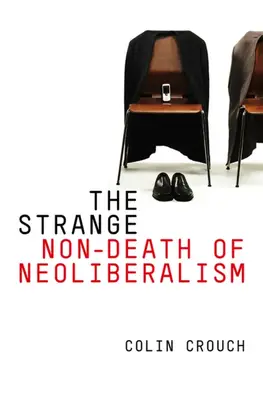
The financial crisis seemed to present a fundamental challenge to neo liberalism, the body of ideas that have constituted the political orthodoxy of most advanced economies in recent decades. Colin Crouch argues in this book that it will shrug off this challenge. The reason is that while neo liberalism seems to be about free markets, in practice it is concerned with the dominance over public life of the giant corporation. This has been intensified, not checked, by the recent financial crisis and acceptance that certain financial corporations are ‘too big to fail'. Although much political debate remains preoccupied with conflicts between the market and the state, the impact of the corporation on both these is today far more important. Several factors have brought us to this situation: The lobbying power of firms whose donations are of growing importance to cash-hungry politicians and parties The weakening of competitive forces by firms large enough to shape and dominate their markets The moral initiative that is grasped by enterprises that devise their own agendas of corporate social responsibility Both democratic politics and the free market are weakened by these processes, but they are largely inevitable and not always malign. Hope for the future, therefore, cannot lie in suppressing them in order to attain either an economy of pure markets or a socialist society. Rather it lies in dragging the giant corporation fully into political controversy.

6 Количество книг
2 Количество книг
2 Количество книг
