

Han Byung-Chul Скачать все книги 3 Количество книг



Жанр в блоке книги Афоризмы И Цитаты
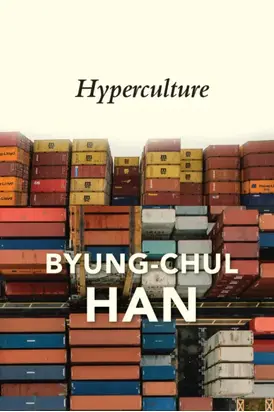
In the wake of globalization, cultural forms of expression have become increasingly detached from their places of origin, circulating in a hyper-domain of culture where there is no real difference anymore between indigenous and foreign, near and far, the familiar and the exotic. Heterogeneous cultural contents are brought together side by side, like the fusion food that makes free use of all that the hypercultural pool of spices, ingredients and ways of preparing food has to offer. Culture is becoming un-bound, un-restricted, un-ravelled: a hyperculture. It is a profoundly rhizomatic culture of intense hybridization, fusion and co-appropriation. Today we have all become hypercultural tourists, even in our ‘own’ culture, to which we do not even belong anymore. Hypercultural tourists travel in the hyperspace of events, a space of cultural sightseeing. They experience culture as cul-tour. Drawing on thinkers from Hegel and Heidegger to Bauman and Homi Bhabha to examine the characteristics of our contemporary hyperculture, Han poses the question: should we welcome the human of the future as the hypercultural tourist, smiling serenely, or should we aspire to a different way of being in the world?
Жанр в блоке книги Афоризмы И Цитаты
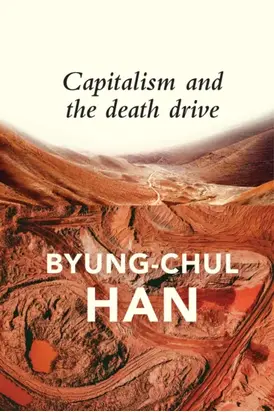
What we call growth today is in fact a tumorous growth, a cancerous proliferation which is disrupting the social organism. These tumours endlessly metastasize and grow with an inexplicable, deadly vitality. At a certain point this growth is no longer productive, but rather destructive. Capitalism passed this point long ago. Its destructive forces cause not only ecological and social catastrophes but also mental collapse. The destructive compulsion to perform combines self-affirmation and self-destruction in one. We optimize ourselves to death. Brutal competition ends in destruction. It produces an emotional coldness and indifference towards others as well as towards one’s own self. The devastating consequences of capitalism suggest that a death drive is at work. Freud initially introduced the death drive hesitantly, but later admitted that he ‘couldn’t think beyond it’ as the idea of the death drive became increasingly central to his thought. Today, it is impossible to think about capitalism without considering the death drive.
Жанр в блоке книги Социология
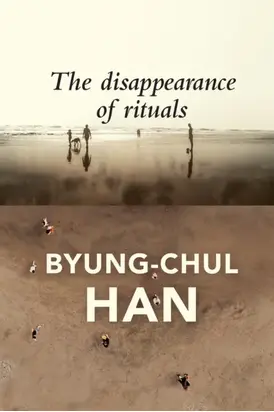
Untrammelled neoliberalism and the inexorable force of production have produced a 21st century crisis of community: a narcissistic cult of authenticity and mass turning-inward are among the pathologies engendered by it. We are individuals afloat in an atomised society, where the loss of the symbolic structures inherent in ritual behaviour has led to overdependence on the contingent to steer identity. <br /><br />Avoiding saccharine nostalgia for the rituals of the past, Han provides a genealogy of their disappearance as a means of diagnosing the pathologies of the present. He juxtaposes a community without communication – where the intensity of togetherness in silent recognition provides structure and meaning – to today’s communication without community, which does away with collective feelings and leaves individuals exposed to exploitation and manipulation by neoliberal psycho-politics. The community that is invoked everywhere today is an atrophied and commoditized community that lacks the symbolic power to bind people together. For Han, it is only the mutual praxis of recognition borne by the ritualistic sharing of the symbolic between members of a community which creates the footholds of objectivity allowing us to make sense of time. <br /><br />This new book by one of the most creative cultural theorists writing today will be of interest to a wide readership.

10 Количество книг
2 Количество книг
1 Количество книг
