

R. Brian Eggins Скачать все книги 4 Количество книг



Жанр в блоке книги Зарубежная Образовательная Литература
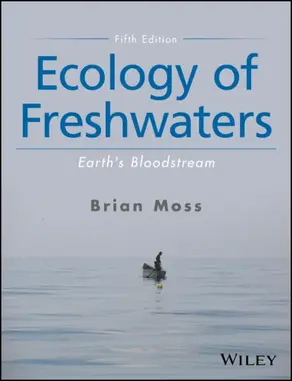
The new edition of this established textbook, now with full colour illustration, has been extensively revised and continues to provide a comprehensive, stimulating, readable and authoritative coverage of freshwater habitats, their communities and their functioning, the world over. The work will be of great value to undergraduate and graduate students, fellow researchers and water managers, and the plain language and lack of jargon should make it accessible to anyone interested in the functioning and current state of lakes and rivers. Having taught and researched over fifty years and six continents, Professor Brian Moss makes here extensive use of his personal experience as well as the huge literature now available on freshwaters. This is the fifth edition of his textbook, which, since the first edition in 1980, has steadily evolved to reflect a rapidly changing science and environment. It places increasing emphasis on the role of people in damaging and managing freshwaters as we move into the Anthropocene epoch and face unprecedented levels of climate and other changes, whilst rejoicing in the fascination of what are left of near pristine freshwater ecosystems. Professor Moss retired from the University of Liverpool following a career in Africa, the USA and the UK. He was awarded medals by the International Society for Limnology, of which he was President from 2007 to 2013, and The Institute of Ecology and Environmental Management. He was given The Ecology Institute's Excellence in Ecology Prize in 2009 and the book written for that prize, Liberation Ecology, was awarded the British Ecological Society's best ecology book prize in 2013.
Жанр в блоке книги Зоология
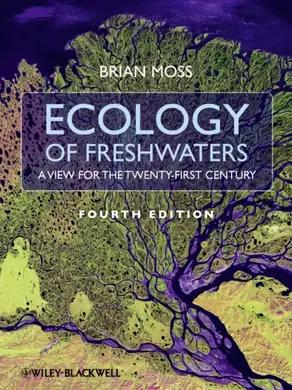
This new edition of an established textbook provides a comprehensive and stimulating introduction to rivers, lakes and wetlands, and was written as the basis for a complete course on freshwater ecology. Designed for undergraduate and early postgraduate students who wish to gain an overall view of this vast subject area, this accessible guide to freshwater ecosystems and man's activities will also be invaluable to anyone interested in the integrated management of freshwaters. The author maintains the tradition of clarity and conciseness set by previous editions, and the text is extensively illustrated with photographs and diagrams. Examples are drawn from the author's experience in many parts of the world, and the author continues to stress the human influence. The scientific content of the text has been fully revised and updated, making use of the wealth of data available since publication of the last edition. Professor Brian Moss is a lecturer in Applied Ecology at the University of Liverpool, and has written three previous editions of this well-established textbook.
Жанр в блоке книги Зарубежная Образовательная Литература
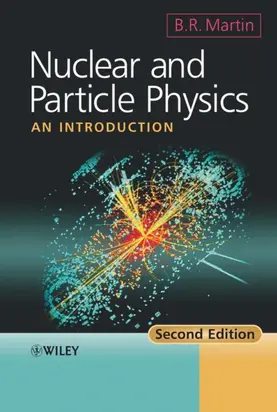
An accessible introduction to nuclear and particle physics with equal coverage of both topics, this text covers all the standard topics in particle and nuclear physics thoroughly and provides a few extras, including chapters on experimental methods; applications of nuclear physics including fission, fusion and biomedical applications; and unsolved problems for the future. It includes basic concepts and theory combined with current and future applications. An excellent resource for physics and astronomy undergraduates in higher-level courses, this text also serves well as a general reference for graduate studies.
Жанр в блоке книги Зарубежная Образовательная Литература
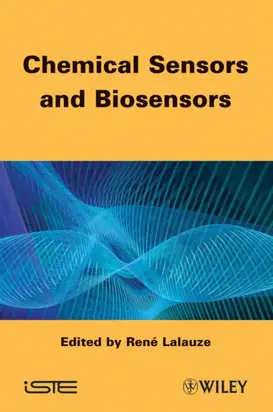
Technological needs for chemical, ionic and biological species detection are giving rise to continuous research and development in physico-chemistry and biology. The constant progress being made in the theoretical and technological aspects concerning studies and developments of chemical sensors, biosensors and biochips is presented in this book by different scientists and professors from different universities and constitutes an updating of the state of the art for chemical sensors, biosensors and biochips. This book places a large emphasis on interaction between chemical and biological species, in a gaseous or liquid state, and details mineral and biological materials acting as sensitive elements. The role of electrical, electrochemical, piezoelectric and optical transducers in detection mechanisms are presented through their developments and from a performance point-of-view. Micro-reactors, nanotechnologies and flexible substrates, are considered in relation to their role in neural networks. Contents 1. Chemical and Biological Recognition, Nicole Jaffrezic-Renault. 2. Adsorption Phenomena, René Lalauze. 3. Microcantilever Transduction, Isabelle Dufour. 4. Piezoelectric Transduction (QCM), Hubert Perrot. 5. Metal Oxide Gas Sensors, Christophe Pijolat. 6. Molecular Material-based Conductimetric Gas Sensors, Marcel Bouvet. 7. Responses and Electrical Properties of Gas Microsensors, Khalifa Aguir. 8. Gas Microsensor Technology, Philippe Menini. 9. Multisensors: Measurements and Behavior Models, Philippe Breuil. 10. Development of Microtechnologies for the Realization of Chemical, Biochemical and/or Biological Microsensors, Pierre Temple-Boyer. 11. Development of Micro-preconcentrators for the Detection of Gaseous Species at Trace Level, Jean-Paul Viricelle. 12. Microfluidics: Manipulation of Nanovolume Samples, Louis Renaud. 13. Electrochemical Biosensors, Chantal Gondran. 14. Fiber-optic Biosensors, Neso Sojic. 15. In Vivo Analyses with Electrochemical Microsensors, Stéphane Arbault. 16. Microbial Biosensors for Environmental Applications, Gérald Thouand and Marie José Durand. 17. Biofuel Cells, Serge Cosnier.
10 Количество книг
2 Количество книг
1 Количество книг
