

B. Andrew Hughes Скачать все книги 5 Количество книг



Жанр в блоке книги Математика
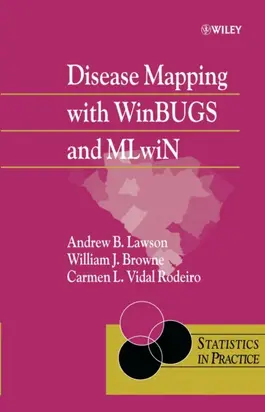
Disease mapping involves the analysis of geo-referenced disease incidence data and has many applications, for example within resource allocation, cluster alarm analysis, and ecological studies. There is a real need amongst public health workers for simpler and more efficient tools for the analysis of geo-referenced disease incidence data. Bayesian and multilevel methods provide the required efficiency, and with the emergence of software packages – such as WinBUGS and MLwiN – are now easy to implement in practice. Provides an introduction to Bayesian and multilevel modelling in disease mapping. Adopts a practical approach, with many detailed worked examples. Includes introductory material on WinBUGS and MLwiN. Discusses three applications in detail – relative risk estimation, focused clustering, and ecological analysis. Suitable for public health workers and epidemiologists with a sound statistical knowledge. Supported by a Website featuring data sets and WinBUGS and MLwiN programs. Disease Mapping with WinBUGS and MLwiN provides a practical introduction to the use of software for disease mapping for researchers, practitioners and graduate students from statistics, public health and epidemiology who analyse disease incidence data.
Жанр в блоке книги Медицина
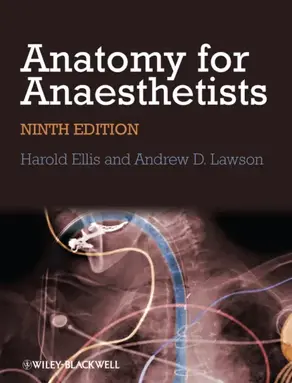
Jubilee edition of the classic text first published in 1963 Anaesthetists require a particularly specialized knowledge of anatomy The anaesthetist must know intimately the respiratory passages, the major veins and the peripheral nerves to deliver safe and effective pain control. As one of the great teachers of anatomy, Professor Harold Ellis is eminently qualified to elegantly provide the anatomical detail required of anaesthetists. Modern approaches to practice, including the use of imaging to guide anaesthetic practice, add further depth to the fine full-colour anatomical illustrations. Designed for anaesthetists, Anatomy for Anaesthetists covers: • The Respiratory Pathway, Lungs, Thoracic Wall and Diaphragm • The Heart and Great Veins of the Neck • The Peripheral Nerves • The Autonomic Nervous System • The Cranial Nerves • The Anatomy of Pain Clinical Notes throughout provide the clinical context for the anatomical detail. Designed for trainees, but of continuing relevance to practicing anaesthetists, and now in its Golden Jubilee edition, Anatomy for Anaesthetists provides a central pillar of anaesthetic knowledge.
Жанр в блоке книги Зарубежная Образовательная Литература
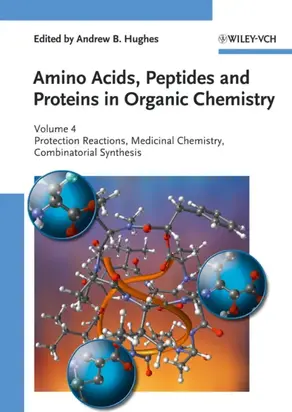
This is the fourth of five books in the Amino Acids, Peptides and Proteins in Organic Synthesis series. Closing a gap in the literature, this is the only series to cover this important topic in organic and biochemistry. Drawing upon the combined expertise of the international «who's who» in amino acid research, these volumes represent a real benchmark for amino acid chemistry, providing a comprehensive discussion of the occurrence, uses and applications of amino acids and, by extension, their polymeric forms, peptides and proteins. The practical value of each volume is heightened by the inclusion of experimental procedures. The 5 volumes cover the following topics: Volume 1: Origins and Synthesis of Amino Acids Volume 2: Modified Amino Acids, Organocatalysis and Enzymes Volume 3: Building Blocks, Catalysis and Coupling Chemistry Volume 4: Protection Reactions, Medicinal Chemistry, Combinatorial Synthesis Volume 5: Analysis and Function of Amino Acids and Peptides The fourth volume in this series is structured in three main sections. The first section is about protection reactions and amino acid based peptidomimetics. The second, and most extensive, part is devoted to the medicinal chemistry of amino acids. It includes, among others, the chemistry of alpha- and beta amino acids, peptide drugs, and advances in N- and O-glycopeptide synthesis. The final part deals with amino acids in combinatorial synthesis. Methods, such as phage display, library peptide synthesis, and computational design are described. Originally planned as a six volume series, Amino Acids, Peptides and Proteins in Organic Chemistry now completes with five volumes but remains comprehensive in both scope and coverage. Further information about the 5 Volume Set and purchasing details can be viewed here.
Жанр в блоке книги Зарубежная Образовательная Литература
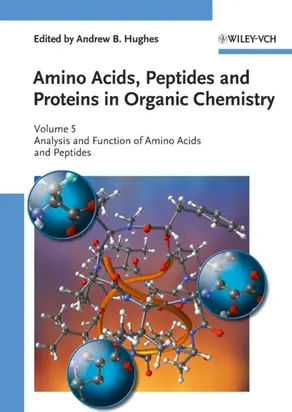
This is the last of five books in the Amino Acids, Peptides and Proteins in Organic Synthesis series. Closing a gap in the literature, this is the only series to cover this important topic in organic and biochemistry. Drawing upon the combined expertise of the international «who's who» in amino acid research, these volumes represent a real benchmark for amino acid chemistry, providing a comprehensive discussion of the occurrence, uses and applications of amino acids and, by extension, their polymeric forms, peptides and proteins. The practical value of each volume is heightened by the inclusion of experimental procedures. The 5 volumes cover the following topics: Volume 1: Origins and Synthesis of Amino Acids Volume 2: Modified Amino Acids, Organocatalysis and Enzymes Volume 3: Building Blocks, Catalysis and Coupling Chemistry Volume 4: Protection Reactions, Medicinal Chemistry, Combinatorial Synthesis Volume 5: Analysis and Function of Amino Acids and Peptides Volume 5 of this series presents a wealth of methods to analyze amino acids and peptides. Classical approaches are described, such as X-ray analysis, chromatographic methods, NMR, AFM, mass spectrometry and 2D-gel electrophoresis, as well as newer approaches, including Surface Plasmon Resonance and array technologies. Originally planned as a six volume series, Amino Acids, Peptides and Proteins in Organic Chemistry now completes with five volumes but remains comprehensive in both scope and coverage. Further information about the 5 Volume Set and purchasing details can be viewed here.

Жанр в блоке книги Зарубежная Образовательная Литература
This is the third of five books in the Amino Acids, Peptides and Proteins in Organic Synthesis series. Closing a gap in the literature, this is the only series to cover this important topic in organic and biochemistry. Drawing upon the combined expertise of the international «who's who» in amino acid research, these volumes represent a real benchmark for amino acid chemistry, providing a comprehensive discussion of the occurrence, uses and applications of amino acids and, by extension, their polymeric forms, peptides and proteins. The practical value of each volume is heightened by the inclusion of experimental procedures. The 5 volumes cover the following topics: Volume 1: Origins and Synthesis of Amino Acids Volume 2: Modified Amino Acids, Organocatalysis and Enzymes Volume 3: Building Blocks, Catalysis and Coupling Chemistry Volume 4: Protection Reactions, Medicinal Chemistry, Combinatorial Synthesis Volume 5: Analysis and Function of Amino Acids and Peptides This third volume in the series presents an in depth account of recent developments in the (bio-)synthesis of amino acids and peptides. Divided into two parts, the first section deals with amino acids as building blocks, including the generation of alpha-amino acids, beta-lactams, and heterocycles. The second section is devoted to the synthesis of peptides, with the focus on solid phase synthesis. However, solution phase peptide synthesis is covered as well, as are topics such as coupling reagents, chemical ligation, peptide purification and automation. Originally planned as a six volume series, Amino Acids, Peptides and Proteins in Organic Chemistry now completes with five volumes but remains comprehensive in both scope and coverage. Further information about the 5 Volume Set and purchasing details can be viewed here.

6 Количество книг
2 Количество книг
2 Количество книг
