

Reckwitz Andreas Скачать все книги 2 Количество книг



Жанр в блоке книги Социология
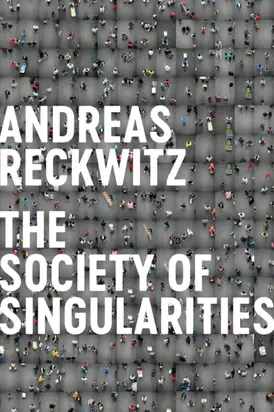
Our contemporary societies place more and more emphasis on the singular and the unique. The industrial societies of the early 20th century produced standardized products, cities, subjects and organizations which tended to look the same, but in our late-modern societies, we value the exceptional – unique objects, experiences, places, individuals, events and communities which are beyond the ordinary and which claim a certain authenticity. Industrial society’s logic of the general has been replaced by late modernity’s logic of the particular. <br /> <br /> In this major new book, Andreas Reckwitz examines the causes, structures and consequences of the society of singularities in which we now live. The transformation from industrial to cultural capitalism, the rise of digital technologies and their ‘culture machine’ and the emergence of an educated, urban new middle class form a powerful engine for the singularization of the social. In late modernity, what is singular is valorized and stirs the emotions, while what is general has to remain in the background, and this has profound social consequences. The society of singularities systematically produces devaluation and inequality: winner-takes-all markets, job polarization, the neglect of rural regions and the alienation of the traditional middle class. The emergence of populism and the rise of aggressive forms of nationalism which emphasize the cultural authenticity of one’s own people thus turn out to be the other side of singularization.<br /> <br /> This prize-winning book offers a new perspective on how modern societies have changed in recent decades and it will be of great value to anyone interested in the forces that are shaping our world today.

Жанр в блоке книги Социология
Contemporary society has seen an unprecedented rise in both the demand and the desire to be creative, to bring something new into the world. Once the reserve of artistic subcultures, creativity has now become a universal model for culture and an imperative in many parts of society. In this new book, cultural sociologist Andreas Reckwitz investigates how the ideal of creativity has grown into a major social force, from the art of the avant-garde and postmodernism to the ‘creative industries’ and the innovation economy, the psychology of creativity and self-growth, the media representation of creative stars, and the urban design of ‘creative cities’. Where creativity is often assumed to be a force for good, Reckwitz looks critically at how this imperative has developed from the 1970s to the present day. Though we may well perceive creativity as the realization of some natural and innate potential within us, it has rather to be understood within the structures of a very specific culture of the new in late modern society. The Invention of Creativity is a bold and refreshing counter to conventional wisdom that shows how our age is defined by radical and restrictive processes of social aestheticization. It will be of great interest to those working in a variety of disciplines, from cultural and social theory to art history and aesthetics.

10 Количество книг
2 Количество книг
1 Количество книг
