

J. Alan Buglass Скачать все книги 4 Количество книг



Жанр в блоке книги Зарубежная Образовательная Литература
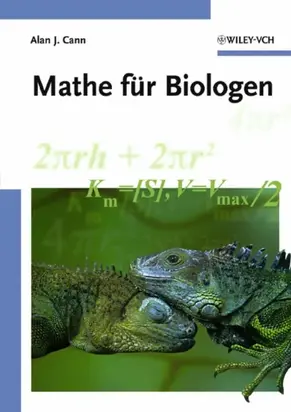
Um ein biologisches Experiment richtig planen, durchfuhren und auswerten zu konnen, muss man uber fundierte Kenntnisse grundlegender mathematischer und statistischer Operationen verfugen. Mathe fur Biologen bietet einen leicht verstandlichen Zugang zur Mathematik, Statistik und Datenverarbeitung. Ob in Form von Exponentialrechnungen, Logarithmen oder bei der Berechnung von Molaritaten, Verdunnungen und Volumina – ohne Mathematik geht im Labor gar nichts. Die Kenntnis aller relevanten Ma?einheiten und Umrechnungsverhaltnisse ist ebenso unverzichtbar wie eine sichere Beherrschung der wichtigsten statistischen Methoden und der Prinzipien der Wahrscheinlichkeitsrechnung. All dies vermittelt Mathe fur Biologen. Besonders junge Wissenschaftler, Diplomanden, Doktoranden und Angehorige des technischen Personals durften die einfuhlsame Didaktik, den klaren Aufbau und die verstandliche Sprache des Bandes zu schatzen wissen. Jedes der elf Kapitel enthalt Kontrollfragen, anhand derer der Leser seine Lernfortschritte uberprufen kann. Die Losungen werden im Anhang ausfuhrlich hergeleitet und erlautert. Das umfangreiche Glossar erschlie?t die wichtigsten Fachbegriffe. So empfiehlt sich der Band sowohl als Begleiter bei der taglichen Laborarbeit als auch zum Nachschlagen beim Verfassen wissenschaftlicher Arbeiten.
Жанр в блоке книги Зарубежная Образовательная Литература
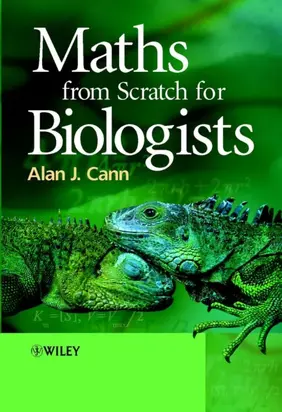
Numerical ability is an essential skill for everyone studying the biological sciences but many students are frightened by the 'perceived' difficulty of mathematics, and are nervous about applying mathematical skills in their chosen field of study. Having taught introductory maths and statistics for many years, Alan Cann understands these challenges and just how invaluable an accessible, confidence building textbook could be to the fearful student. Unable to find a book pitched at the right level, that concentrated on why numerical skills are useful to biologists, he wrote his own. The result is Maths from Scratch for Biologists , a highly instructive, informal text that explains step by step how and why you need to tackle maths within the biological sciences. Features: * An accessible, jargon-busting approach to help readers master basic mathematical, statistical and data handling techniques in biology * Numerous end of chapter problems to reinforce key concepts and encourage students to test their newly acquired skills through practise * A handy, time-saving glossary * A supplementary website with numerous problems and self-test exercises
Жанр в блоке книги Математика
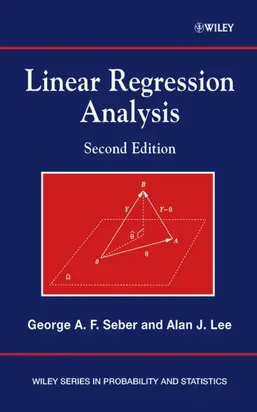
Concise, mathematically clear, and comprehensive treatment of the subject. * Expanded coverage of diagnostics and methods of model fitting. * Requires no specialized knowledge beyond a good grasp of matrix algebra and some acquaintance with straight-line regression and simple analysis of variance models. * More than 200 problems throughout the book plus outline solutions for the exercises. * This revision has been extensively class-tested.
Жанр в блоке книги Техническая Литература
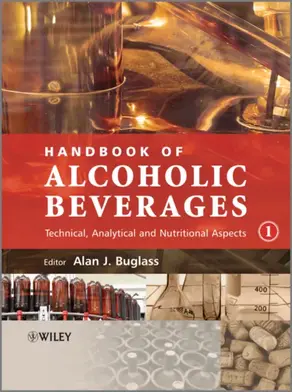
A comprehensive two- volume set that describes the science and technology involved in the production and analysis of alcoholic beverages. At the heart of all alcoholic beverages is the process of fermentation, particularly alcoholic fermentation, whereby sugars are converted to ethanol and many other minor products. The Handbook of Alcoholic Beverages tracks the major fermentation process, and the major chemical, physical and technical processes that accompany the production of the world’s most familiar alcoholic drinks. Indigenous beverages and small-scale production are alsocovered to asignificant extent. The overall approach is multidisciplinary, reflecting the true nature of the subject. Thus, aspects of biochemistry, biology (including microbiology), chemistry, health science, nutrition, physics and technology are all necessarily involved, but the emphasis is on chemistry in many areas of the book. Emphasis is also on more recent developments and innovations, but there is sufficient background for less experienced readers. The approach is unified, in that although different beverages are dealt with in different chapters, there is extensive cross-referencing and comparison between the subjects of each chapter. Divided into five parts, this comprehensive two-volume work presents: INTRODUCTION, BACKGROUND AND HISTORY: A simple introduction to the history and development of alcohol and some recent trends and developments, FERMENTED BEVERAGES: BEERS, CIDERS, WINES AND RELATED DRINKS: the latest innovations and aspects of the different fermentation processes used in beer, wine, cider, liquer wines, fruit wines, low-alcohol and related beverages. SPIRITS: cover distillation methods and stills used in the production of whisky, cereal- and cane-based spirits, brandy, fruit spirits and liquers ANALYTICAL METHODS: covering the monitoring of processes in the production of alcoholic beverages, as well as sample preparation, chromatographic, spectroscopic, electrochemical, physical, sensory and organoleptic methods of analysis. NUTRITION AND HEALTH ASPECTS RELATING TO ALCOHOLIC BEVERAGES: includes a discussion on nutritional aspects, both macro- and micro-nutrients, of alcoholic beverages, their ingestion, absorption and catabolism, the health consequences of alcohol, and details of the additives and residues within the various beverages and their raw materials.

10 Количество книг
0 Количество книг
2 Количество книг
